Tell us about the job
Takes about a minute. No obligation.
Boiler repair in Natrona County starts with parts that have been working. Homes in Natrona County, WY run heat about ten months a year, from September through June. The burner, the heat exchanger, and the ignition system each cycle every time the boiler fires, and a long heating season accumulates that stress across every one of those components. A contractor quoting a repair here checks wear on those cycling parts first, because that is where the load lands. Seals and expansion joints that might last indefinitely in a milder climate show fatigue here on a predictable schedule.
Boilers in houses this old are frequently running on parts that manufacturers stopped cataloging years ago. Half the homes in Natrona County, Wyoming were built in 1977 or earlier (2020-2024 ACS 5-year). When a contractor opens a unit to diagnose a fault, the question is not just what failed but whether a replacement part still exists or has to be sourced from a shrinking pool of suppliers. That search changes what a repair costs and how long it takes to complete.
The Parts of a Boiler a Contractor Checks First
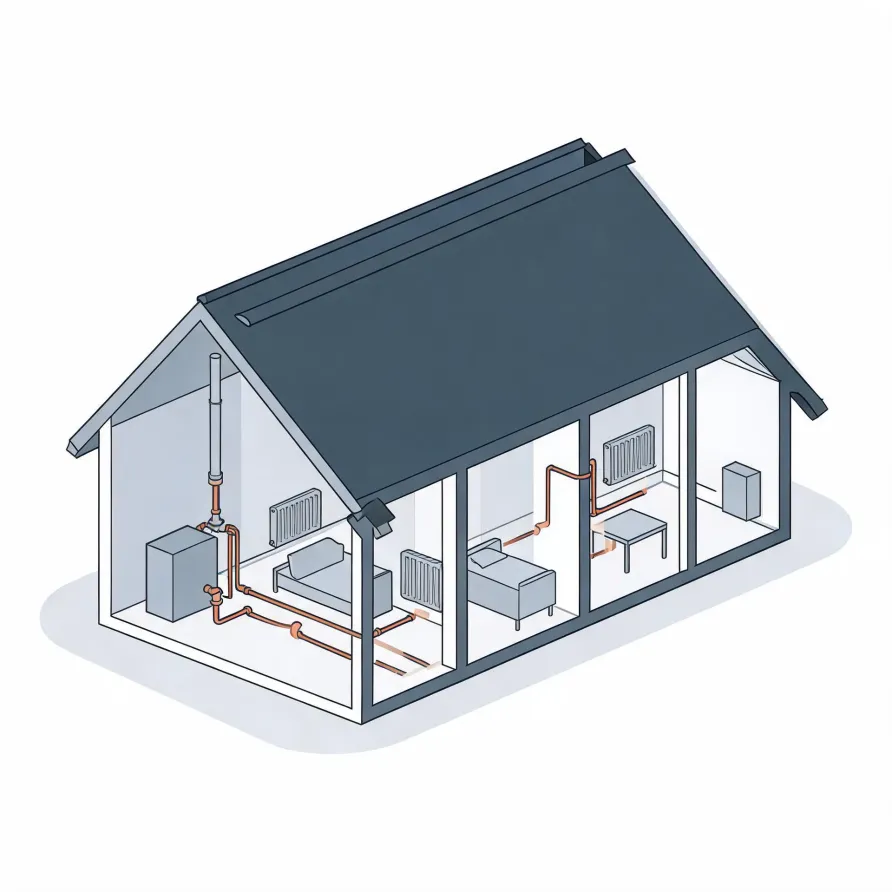
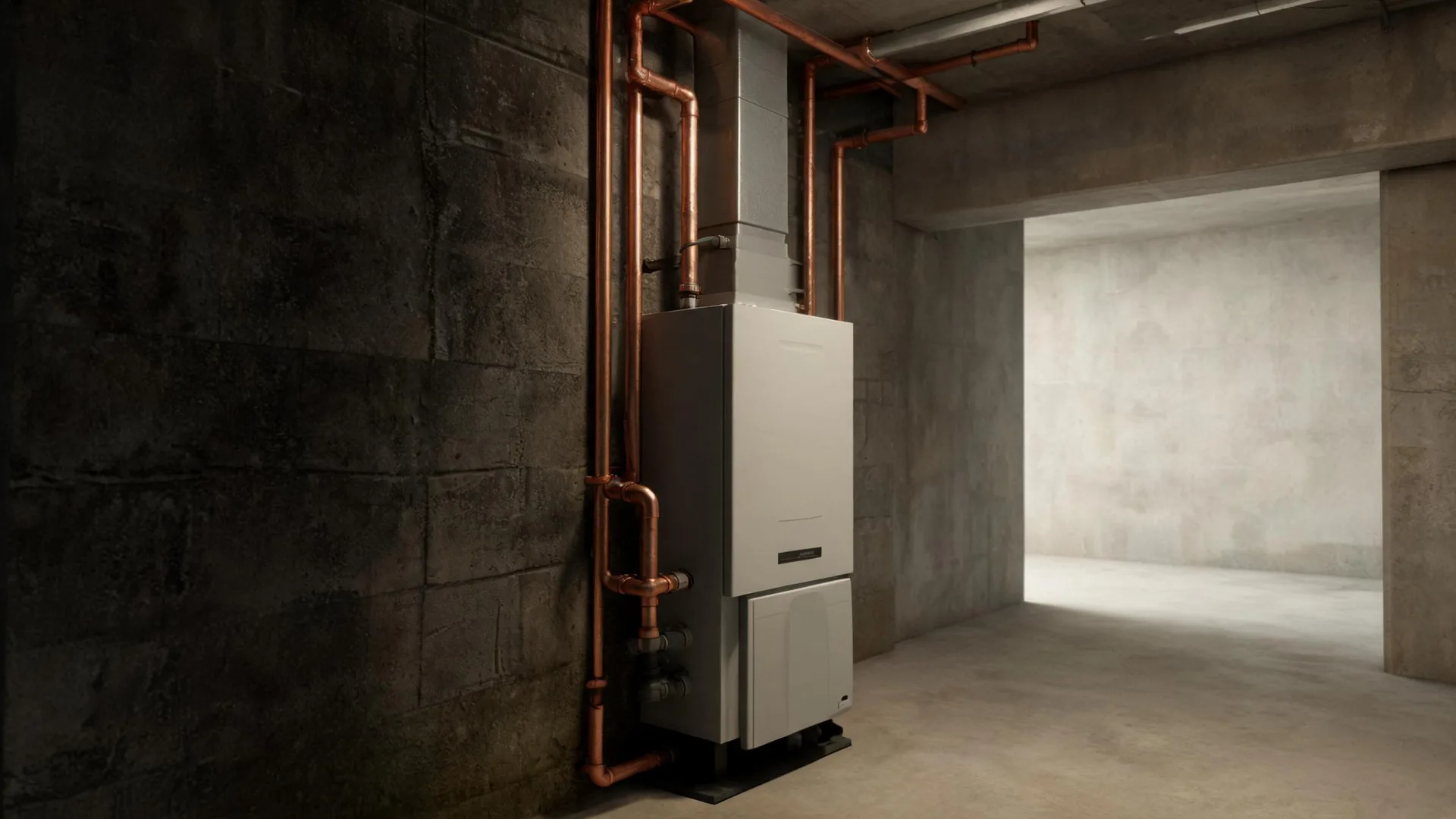
The boiler itself sits in the basement or a mechanical room and is the heart of the system. It heats water and pushes it out to the rest of the house. When a boiler is running poorly or not at all, a contractor starts here, checking the burner, the heat exchanger, and the controls that tell the unit when to fire.
Radiators or baseboard units sit throughout the living spaces and release heat into each room. Connecting them to the boiler is a network of pipes, along with the circulator pump that keeps hot water moving through that loop. A stuck or failing pump, a radiator that stays cold, or a pipe that has lost pressure are all signs that point a contractor to a specific part of the system.
The drawing shows the general layout of a boiler system, and a licensed contractor determines which components apply to your particular house and where the problem actually lies.
Find a contractor in Natrona CountyNatrona County, by the numbers
462 severe weather events were recorded in Natrona County, Wyoming between 2015 and 2024.
NOAA National Centers for Environmental Information, Storm Events Database, bulk CSV export, events 2015-01-01 through 2024-12-31.Half the homes in Natrona County, Wyoming were built in 1977 or earlier (2020-2024 ACS 5-year).
U.S. Census Bureau, 2020-2024 American Community Survey 5-Year EstimatesNatrona County, Wyoming holds 37,309 housing units (2020-2024 ACS 5-year).
U.S. Census Bureau, 2020-2024 American Community Survey 5-Year EstimatesOwners occupy 73.7% of the occupied homes in Natrona County, Wyoming (2020-2024 ACS 5-year).
U.S. Census Bureau, 2020-2024 American Community Survey 5-Year EstimatesSevere Weather Events in Natrona County
Boilers work hardest when outdoor conditions are most punishing, and Wyoming weather can be hard on mechanical systems over time. How often the county sees severe weather shapes how much stress the equipment accumulates and how soon repair needs arise.
462 severe weather events, 2015–2024. Source: NOAA National Centers for Environmental Information, Storm Events Database.