Tell us about the job
Takes about a minute. No obligation.
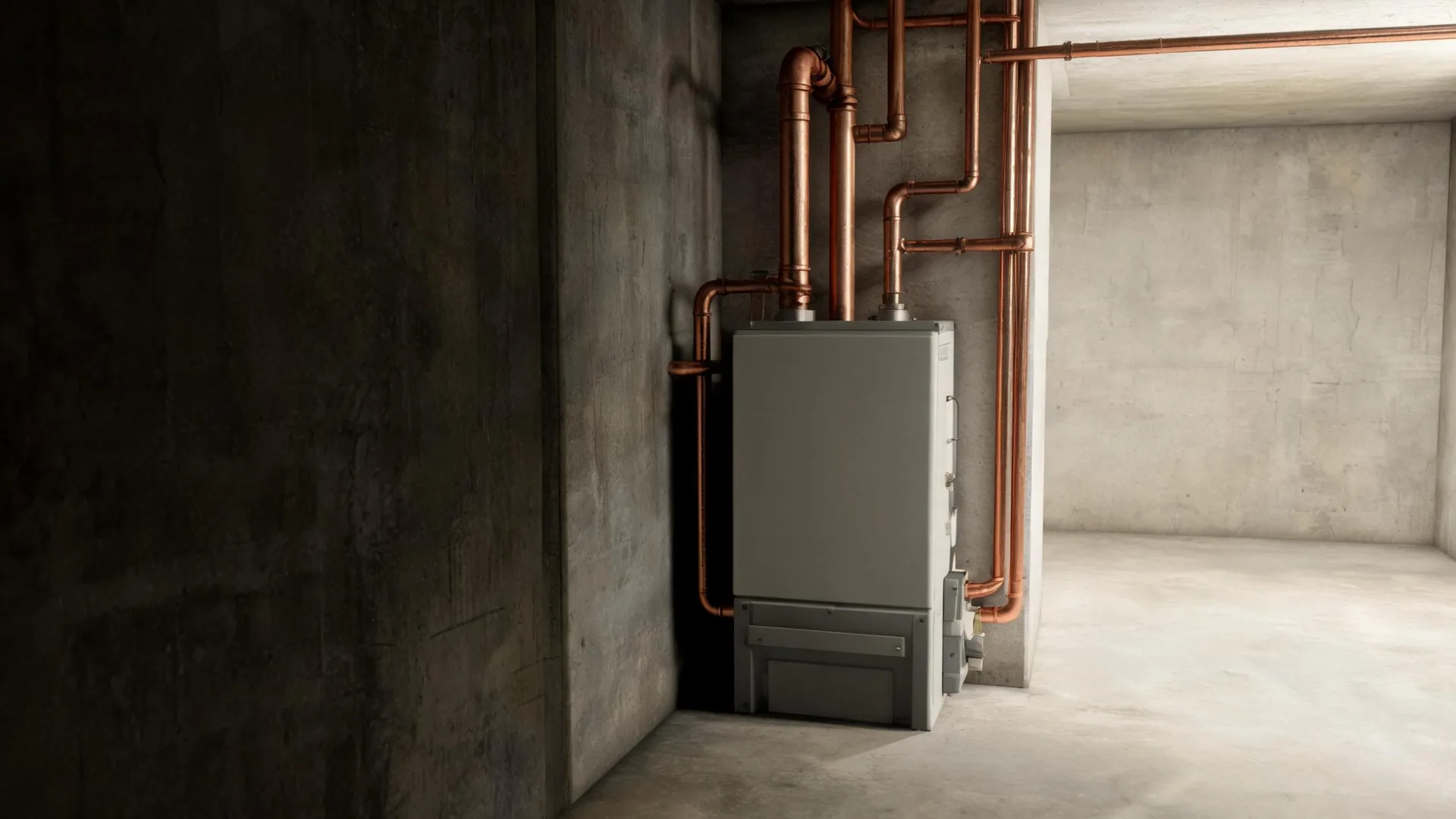
Sizing a boiler for a Platte County home demands accuracy because the burner, heat exchanger, and ignition system carry a genuine workload here with little idle time to mask a marginal install. Homes in Platte County, WY run heat about nine months a year, from September through May. A boiler that is undersized cycles harder than it was built to, and the heat exchanger takes that strain first. A contractor quoting a replacement has to work from a proper load calculation, not from the size of whatever came out, because an original install done without one compounds across every subsequent season the equipment runs.
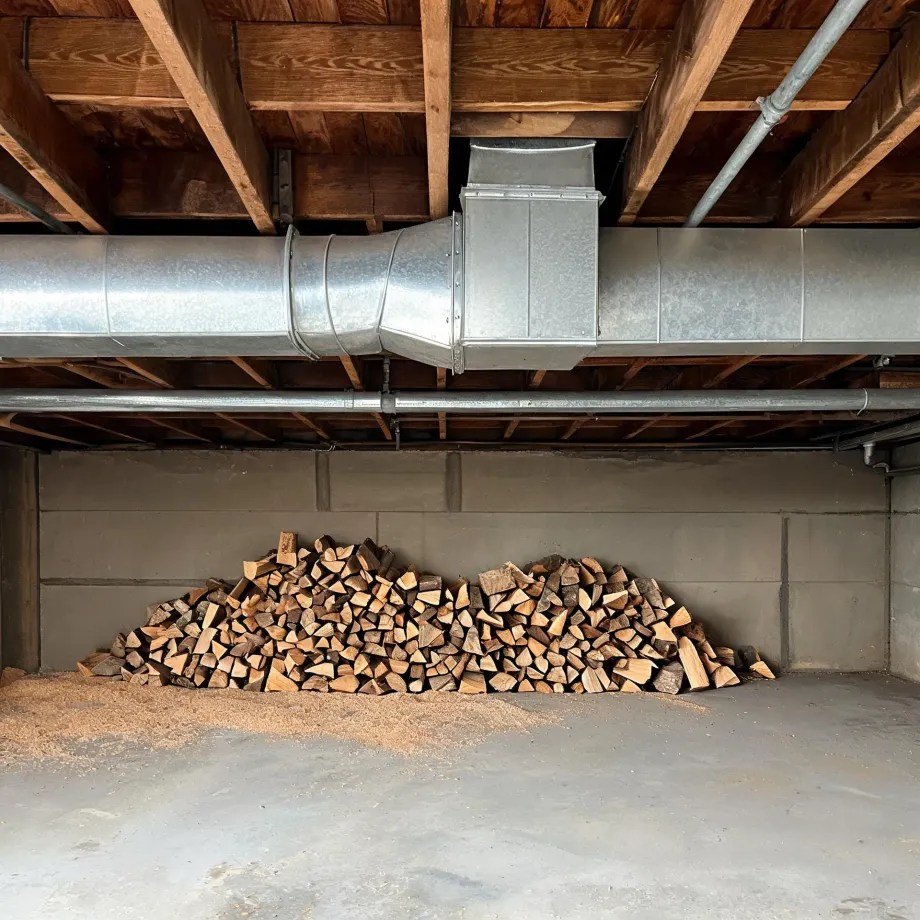
Ductwork laid down for a previous generation of heating equipment carries assumptions baked into the house: where the runs go, how they were sized, what pressure they were built to move. Half the homes in Platte County, Wyoming were built in 1976 or earlier (2020-2024 ACS 5-year). A contractor installing a boiler into stock like this has to assess what those ducts will actually do with a new system before a quote means anything. If the routing works, the job is straightforward. If it does not, the ductwork becomes the job, and the boiler waits.
What Gets Installed With a New Boiler
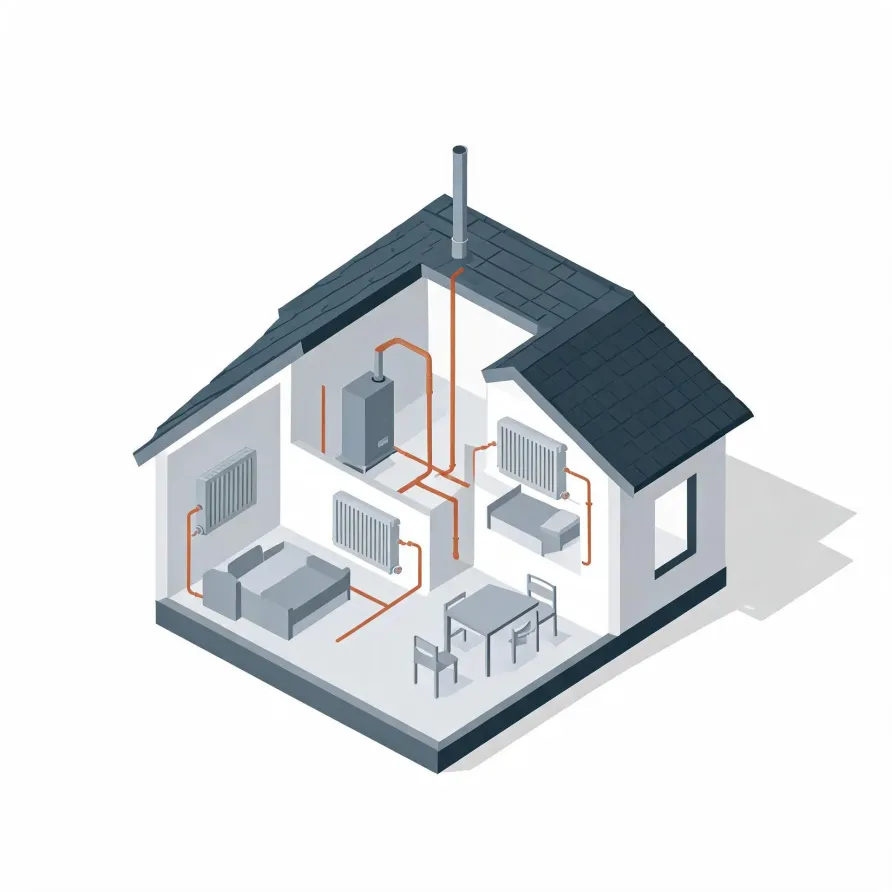
The boiler itself sits in a mechanical room, basement, or utility closet and is the unit that heats water for the whole system. Along the supply and return lines, the circulator pump moves that heated water out to the living spaces and back again. Both pieces are set in place and connected before anything else in the house sees heat.
Radiators or radiant floor loops sit at the far end of those lines, one per zone or room, and each one gives up heat to the space around it. The expansion tank, typically mounted near the boiler, absorbs pressure changes as water heats and cools. A pressure relief valve and an air separator round out what a contractor installs alongside the boiler itself.
The drawing shows a general layout of these components, and a licensed contractor determines exactly what applies to your house.
Find a contractor in Platte CountyPlatte County, by the numbers
905 severe weather events were recorded in Platte County, Wyoming between 2015 and 2024.
NOAA National Centers for Environmental Information, Storm Events Database, bulk CSV export, events 2015-01-01 through 2024-12-31.Half the homes in Platte County, Wyoming were built in 1976 or earlier (2020-2024 ACS 5-year).
U.S. Census Bureau, 2020-2024 American Community Survey 5-Year EstimatesPlatte County, Wyoming holds 4,688 housing units (2020-2024 ACS 5-year).
U.S. Census Bureau, 2020-2024 American Community Survey 5-Year EstimatesOwners occupy 76.1% of the occupied homes in Platte County, Wyoming (2020-2024 ACS 5-year).
U.S. Census Bureau, 2020-2024 American Community Survey 5-Year EstimatesSevere Weather Events in Platte County
Platte County winters put real load on heating equipment, and the conditions that push a boiler hard are the same ones tracked in storm records. How much work a system is built to handle depends on what the local climate actually delivers.
905 severe weather events, 2015–2024. Source: NOAA National Centers for Environmental Information, Storm Events Database.