Tell us about the job
Takes about a minute. No obligation.
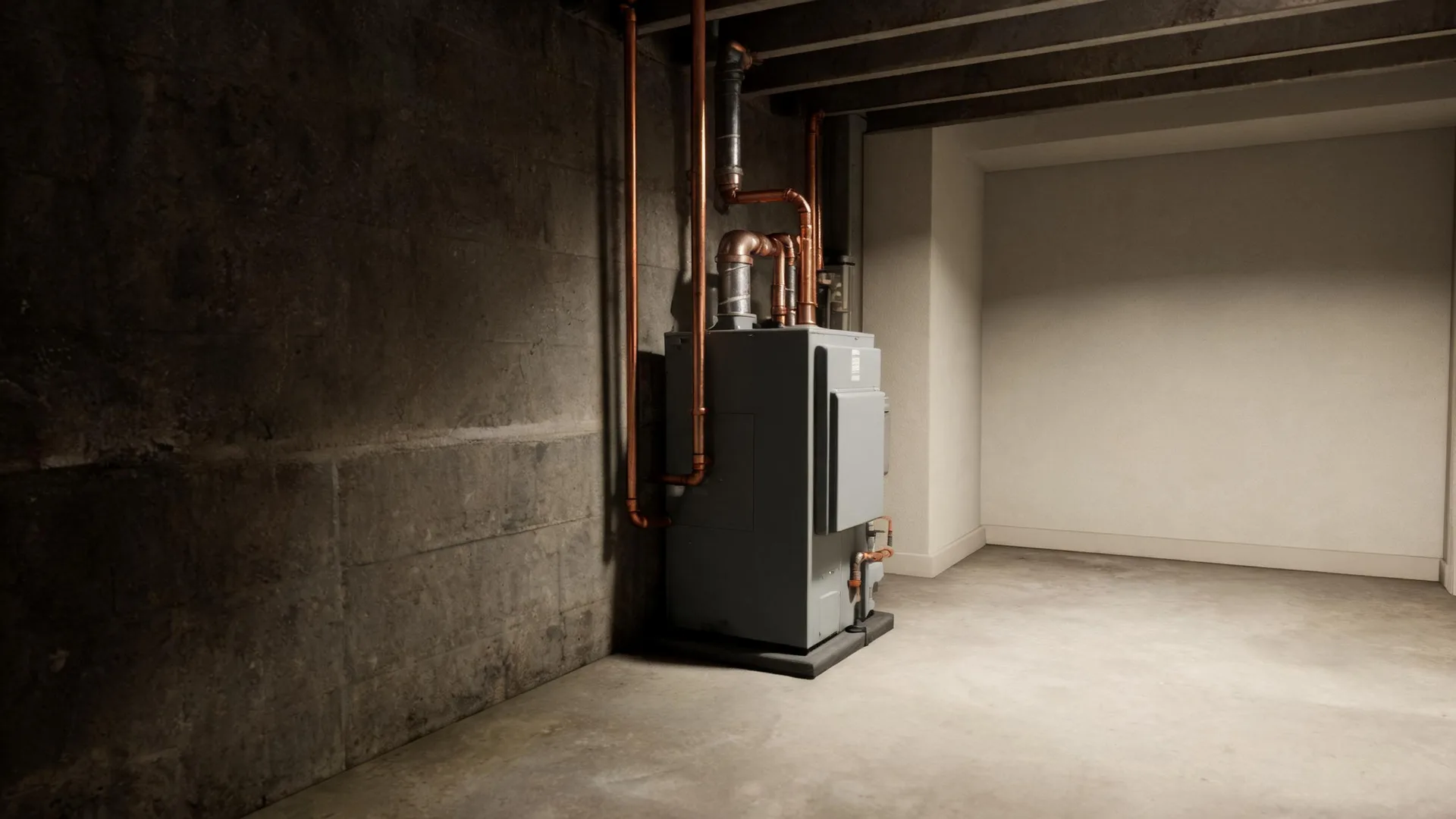
Sizing a boiler for this county means accounting for what the burner and heat exchanger are actually asked to carry. Homes in Goshen County, WY run heat about nine months a year, from September through May. A contractor doing a load calculation here has to treat cycling wear as a primary variable, because the ignition system and the heat exchanger are working through the bulk of the calendar rather than a fraction of it. A unit that is slightly undersized shows that strain at the heat exchanger seams and the burner assembly well before a homeowner expects it. The install quality and the sizing decision land on the same components, and both of them show up in the same places when something gives.
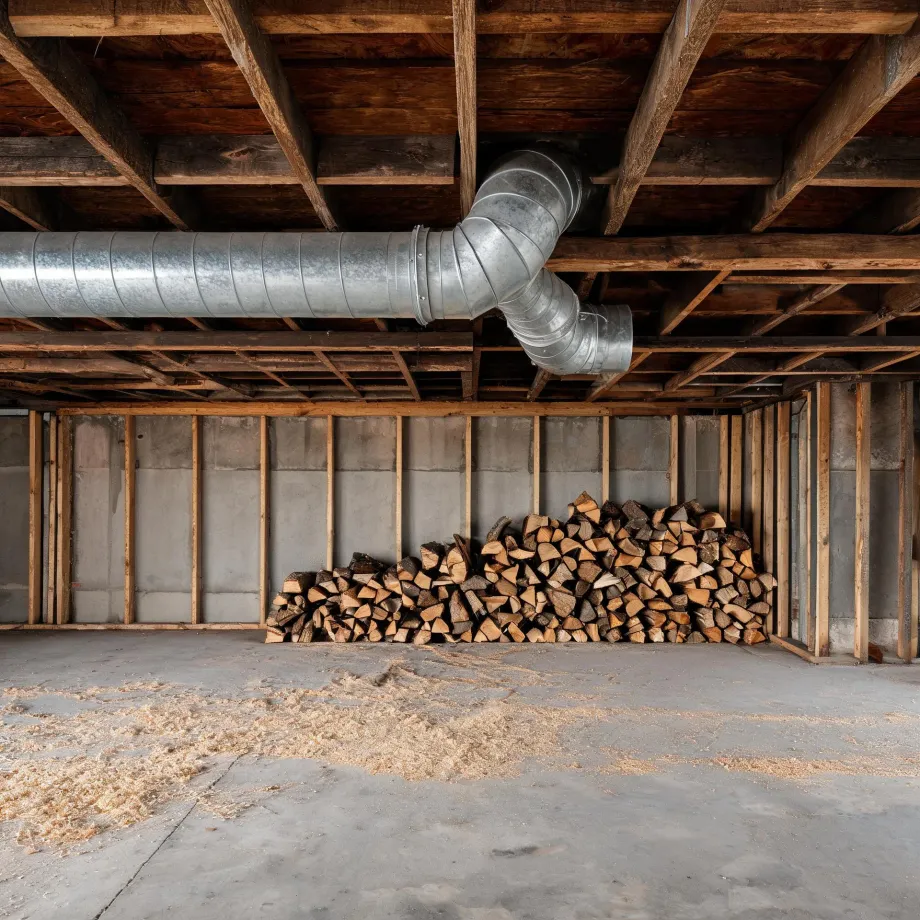
Ductwork laid down for equipment that has since been replaced does not automatically fit what a new boiler needs, and in Goshen County that mismatch is where installations get complicated. Half the homes in Goshen County, Wyoming were built in 1971 or earlier (2020-2024 ACS 5-year). A contractor quoting a new boiler in a house like that has to assess whether existing runs, clearances, and connections are usable before the equipment itself is even priced. What is already in the walls and the basement decides the scope.
What Gets Installed With a New Boiler
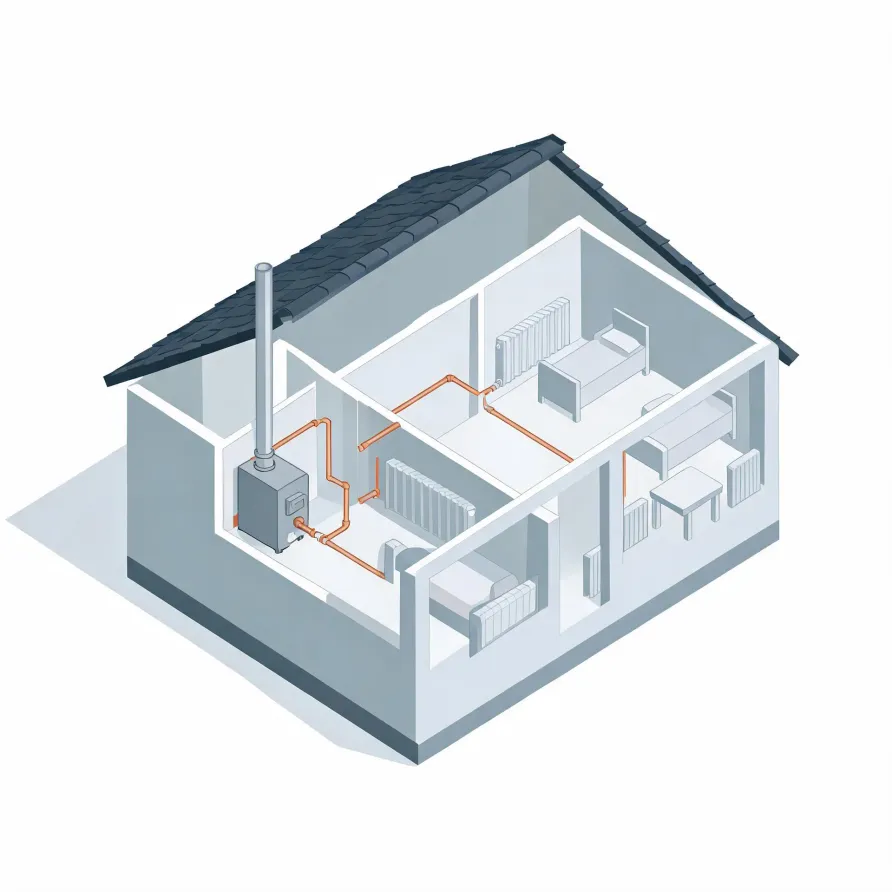
The boiler itself sits in a mechanical room, basement, or utility closet and is the unit that heats water for the whole system. Paired with it are the expansion tank, which absorbs pressure changes in the water as it heats, and the circulator pump, which pushes that heated water through the pipes.
From the boiler, supply pipes run to the heat emitters throughout the house. Those emitters are either radiators, baseboard units, or radiant floor loops depending on what the house is set up for. A pressure relief valve and a backflow preventer also connect directly to the boiler as required safety components.
The drawing shows a representative layout, and a licensed contractor determines exactly which components apply to this house and how they connect.
Find a contractor in Goshen CountyGoshen County by the numbers
343 severe weather events were recorded in Goshen County, Wyoming between 2015 and 2024.
NOAA National Centers for Environmental Information, Storm Events Database, bulk CSV export, events 2015-01-01 through 2024-12-31.Half the homes in Goshen County, Wyoming were built in 1971 or earlier (2020-2024 ACS 5-year).
U.S. Census Bureau, 2020-2024 American Community Survey 5-Year EstimatesGoshen County, Wyoming holds 5,856 housing units (2020-2024 ACS 5-year).
U.S. Census Bureau, 2020-2024 American Community Survey 5-Year EstimatesOwners occupy 73.2% of the occupied homes in Goshen County, Wyoming (2020-2024 ACS 5-year).
U.S. Census Bureau, 2020-2024 American Community Survey 5-Year EstimatesSevere Weather Events in Goshen County
Boiler systems in Goshen County work against whatever the local climate brings, and that workload shapes what equipment a home needs and how hard it runs. Weather history is a baseline fact for sizing and installation decisions in this area.
343 severe weather events, 2015–2024. Source: NOAA National Centers for Environmental Information, Storm Events Database.