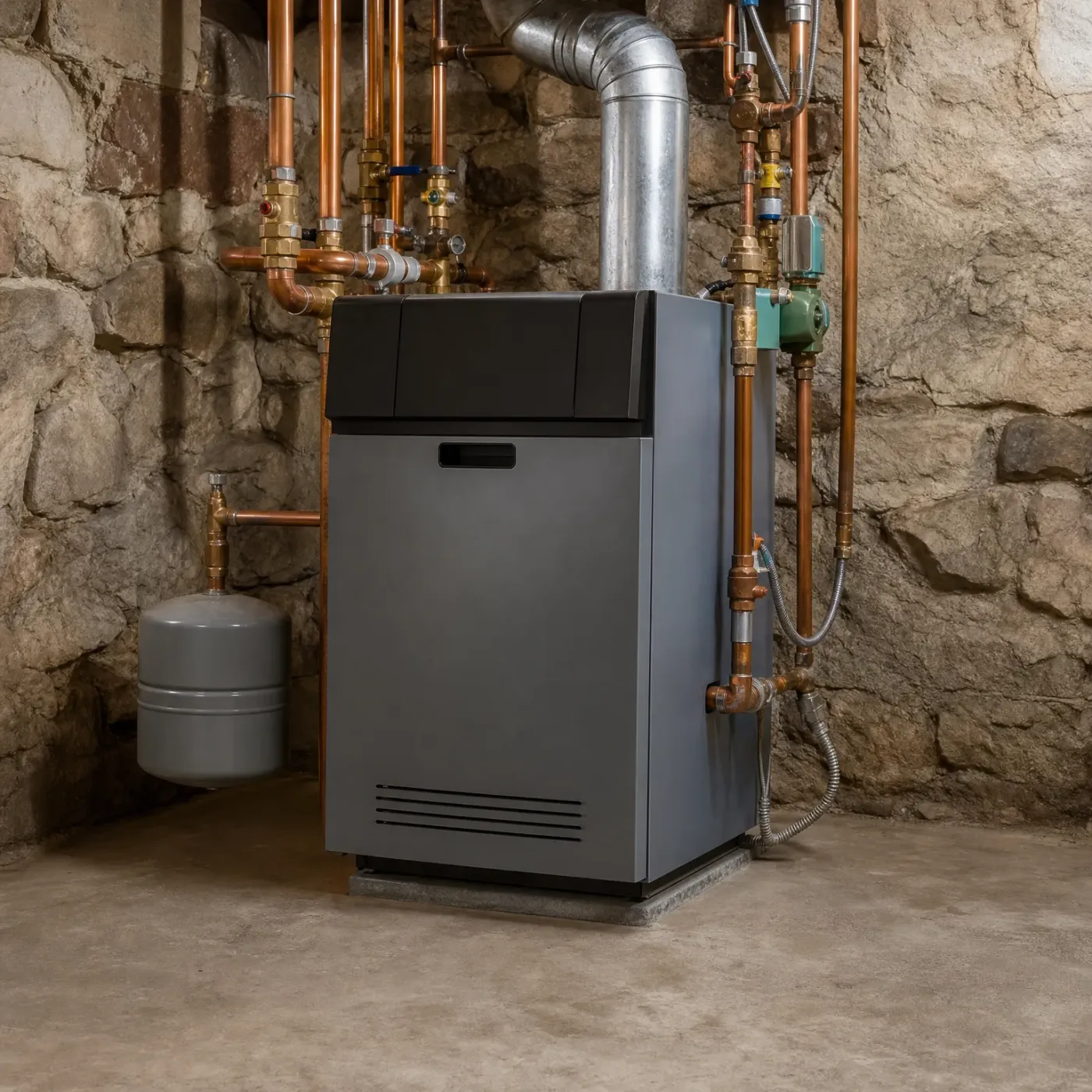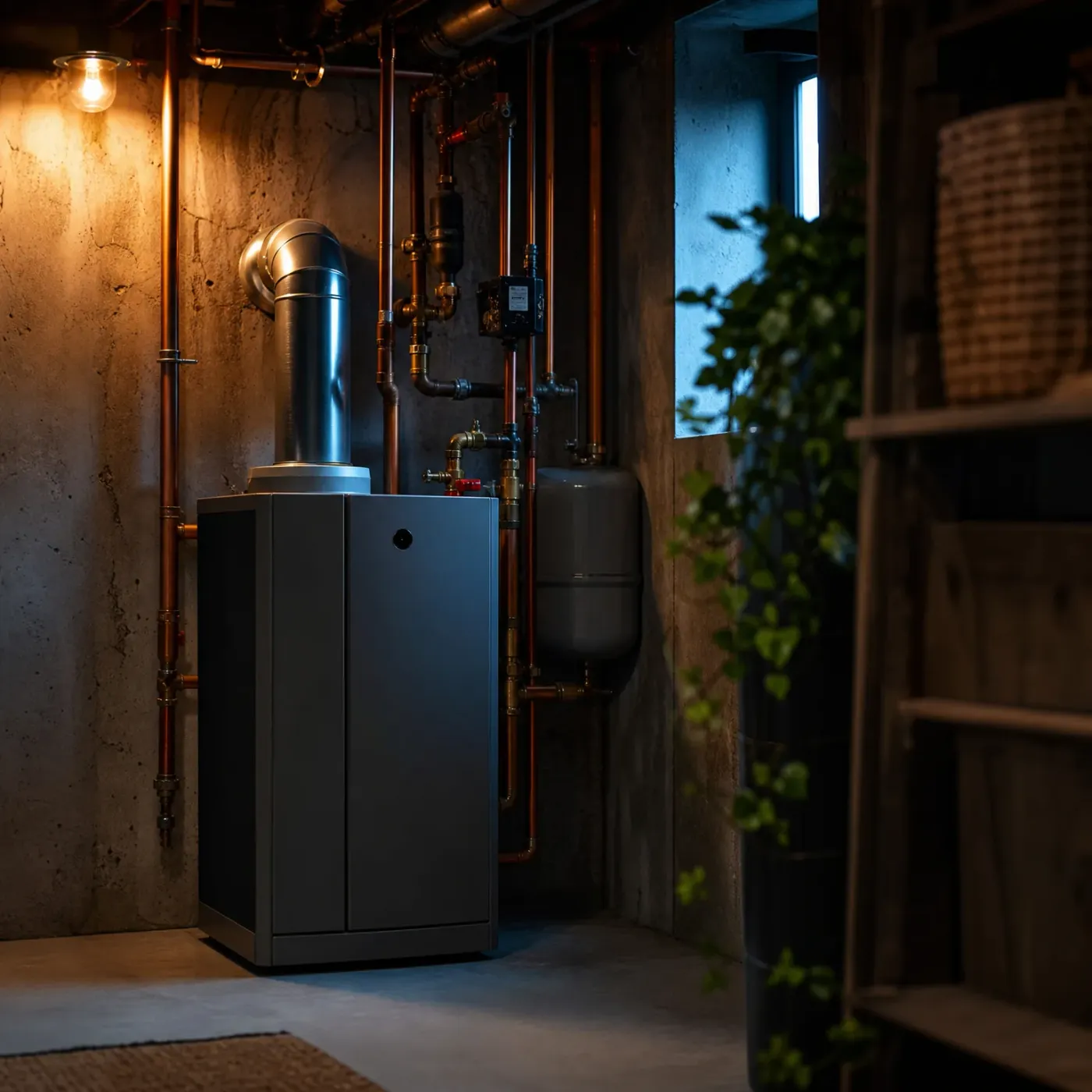







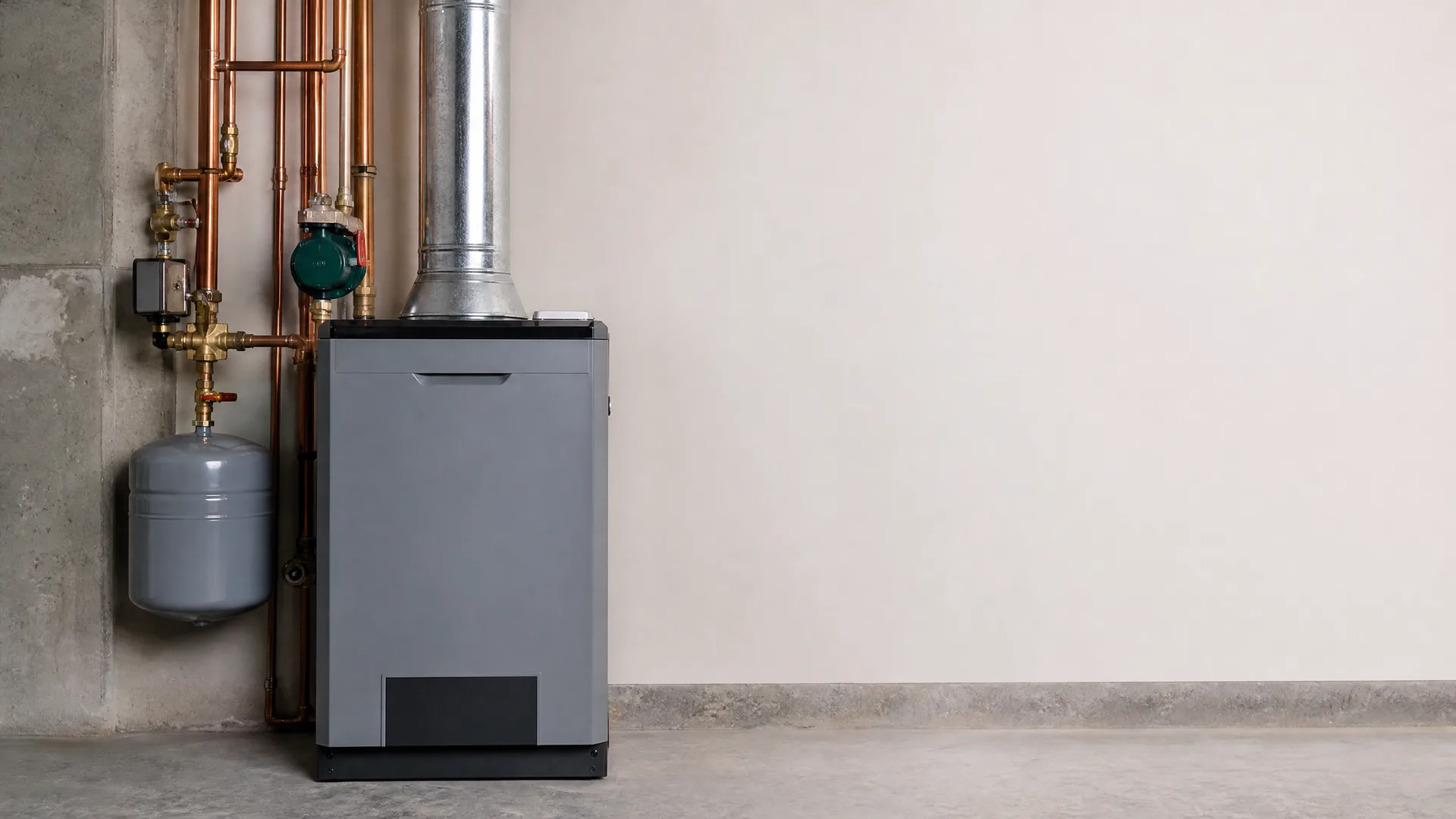


A dark grey floor-standing boiler with a metal flue stands against a concrete basement wall, surrounded by copper pipework, valves and a wall-mounted expansion tank, with ivy and a shelving unit at right.

Hand off the boiler problem

Why your radiators won't heat up in Wyoming

Cold radiators in a Wyoming winter usually mean the boiler isn't moving heat the way it should, even if it's running. Could be trapped air, a stuck valve, a failing pump, or something electrical. This page walks through what causes it and what to check. When you're ready for a hand, send the form and quit calling around for someone who can look at it.

Hand it off

A radiator that stays cold while the boiler runs usually means heat isn't reaching that radiator, not that the boiler has failed. Air trapped at the top of the unit is the most common reason. It collects there and pushes the hot water down and out, so the bottom gets warm and the top stays cold. A valve stuck closed does the same thing from a different cause, shutting a radiator off from the loop entirely. If the whole house runs cool rather than just one room, the circulator pump may be weak or the thermostat may be calling for less heat than the house needs. With winters here running hard for months, a boiler working around a blockage or a bad pump uses more gas to do the same job, and the radiator that's cold today is often the one that fails outright by January.

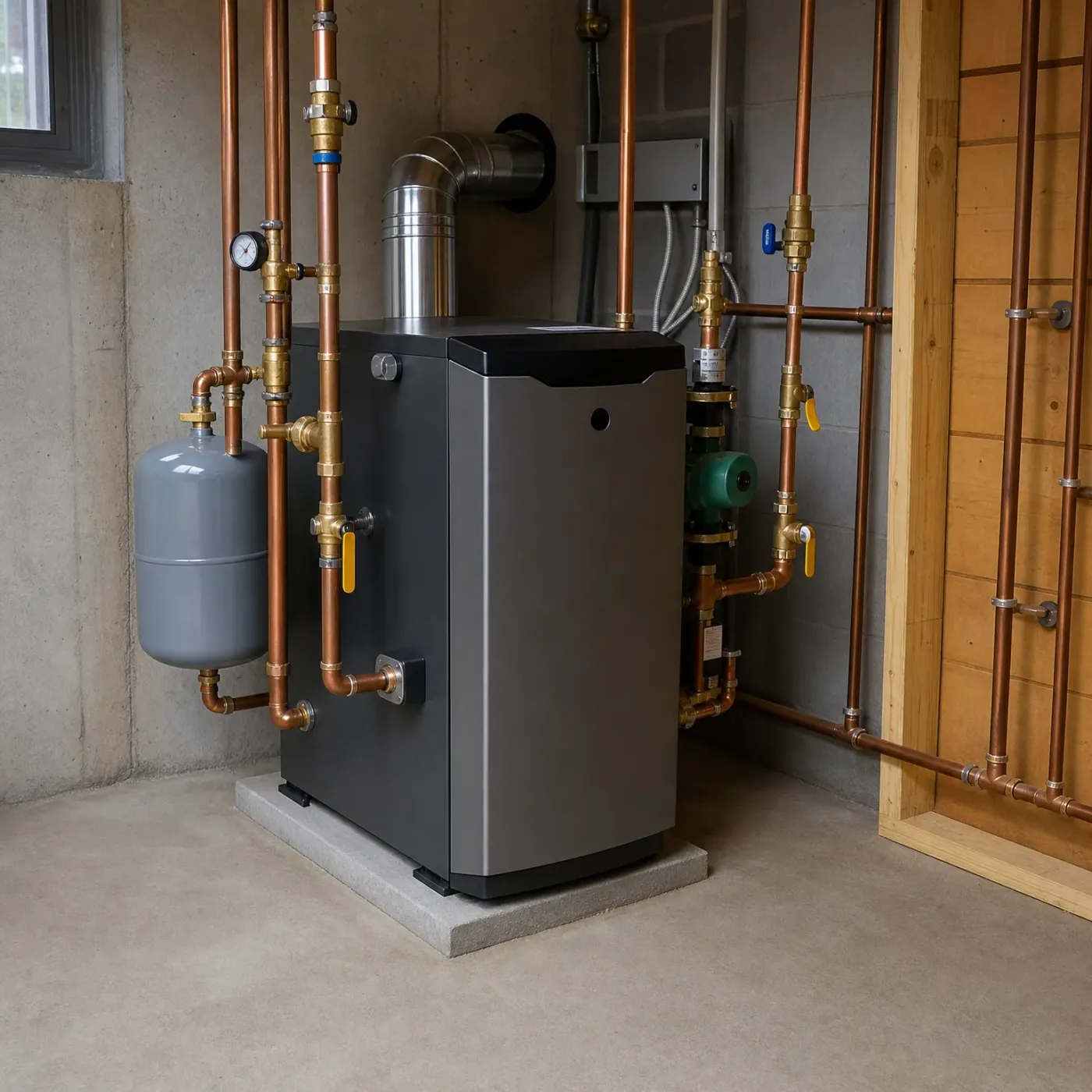
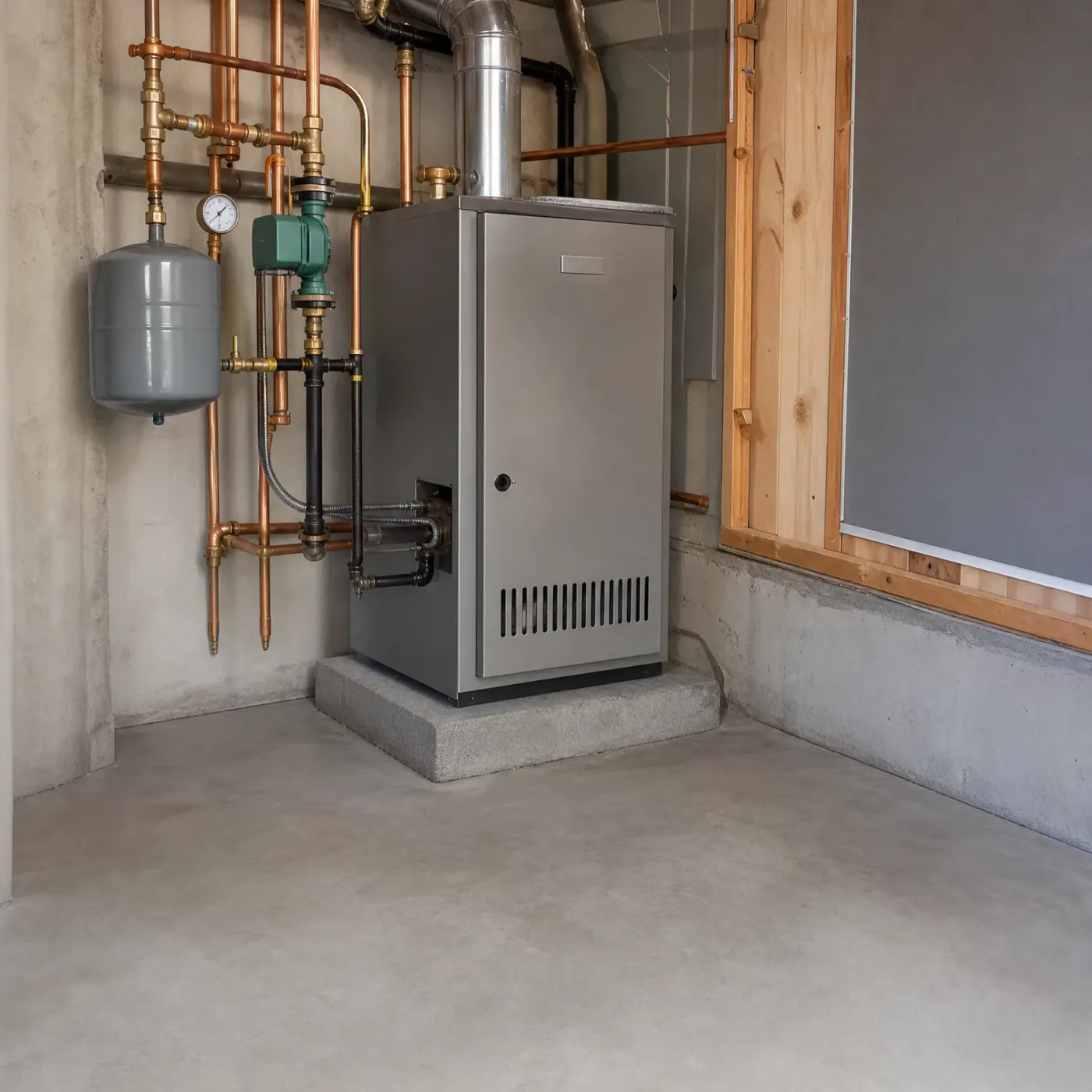
A gray boiler on a concrete pad in a basement corner, connected to copper and black pipes with a gauge, circulator pump, and gray expansion tank, beside a wood-framed wall.
Pressure holding steady, pump running, water moving through the pipes and reaching every radiator in the house.
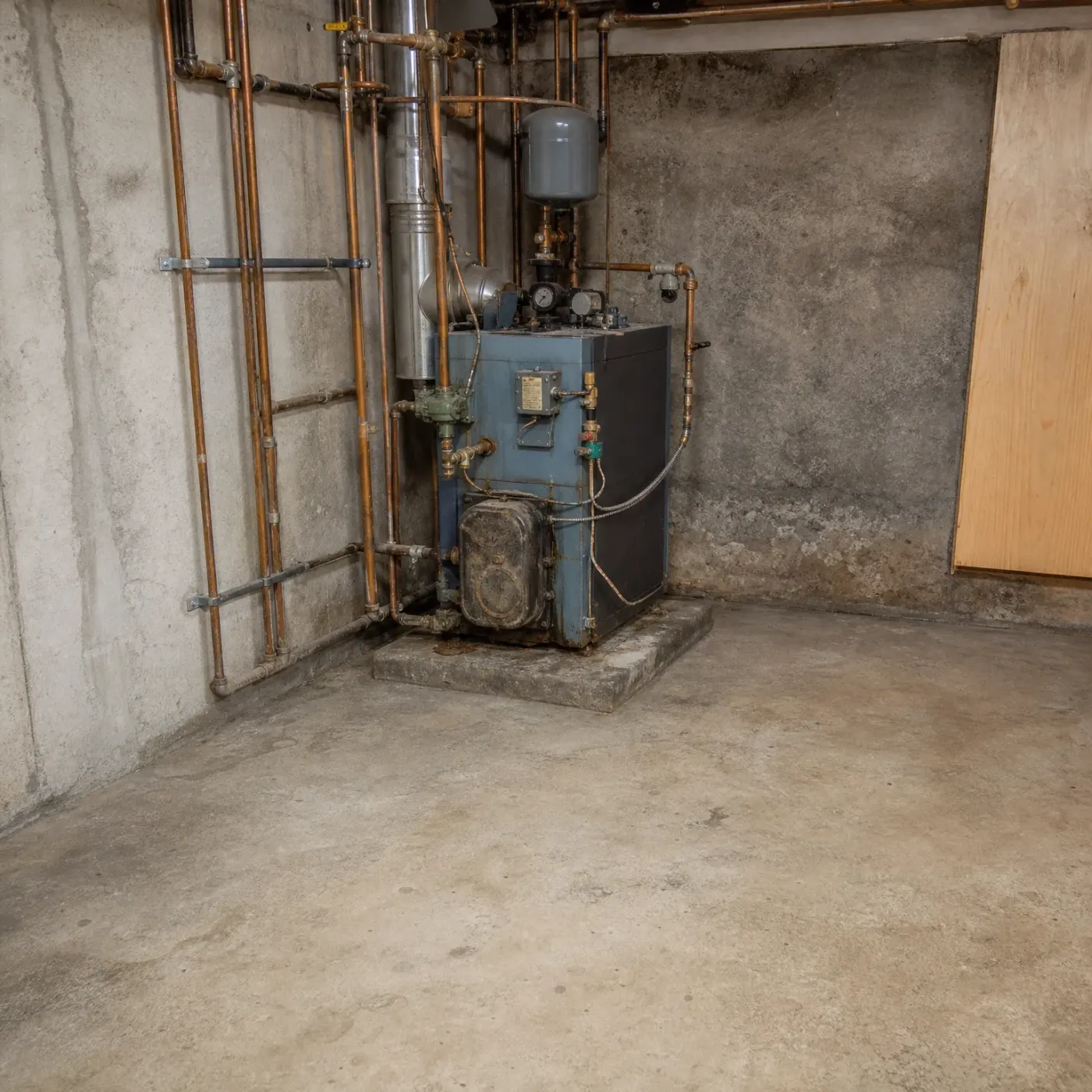
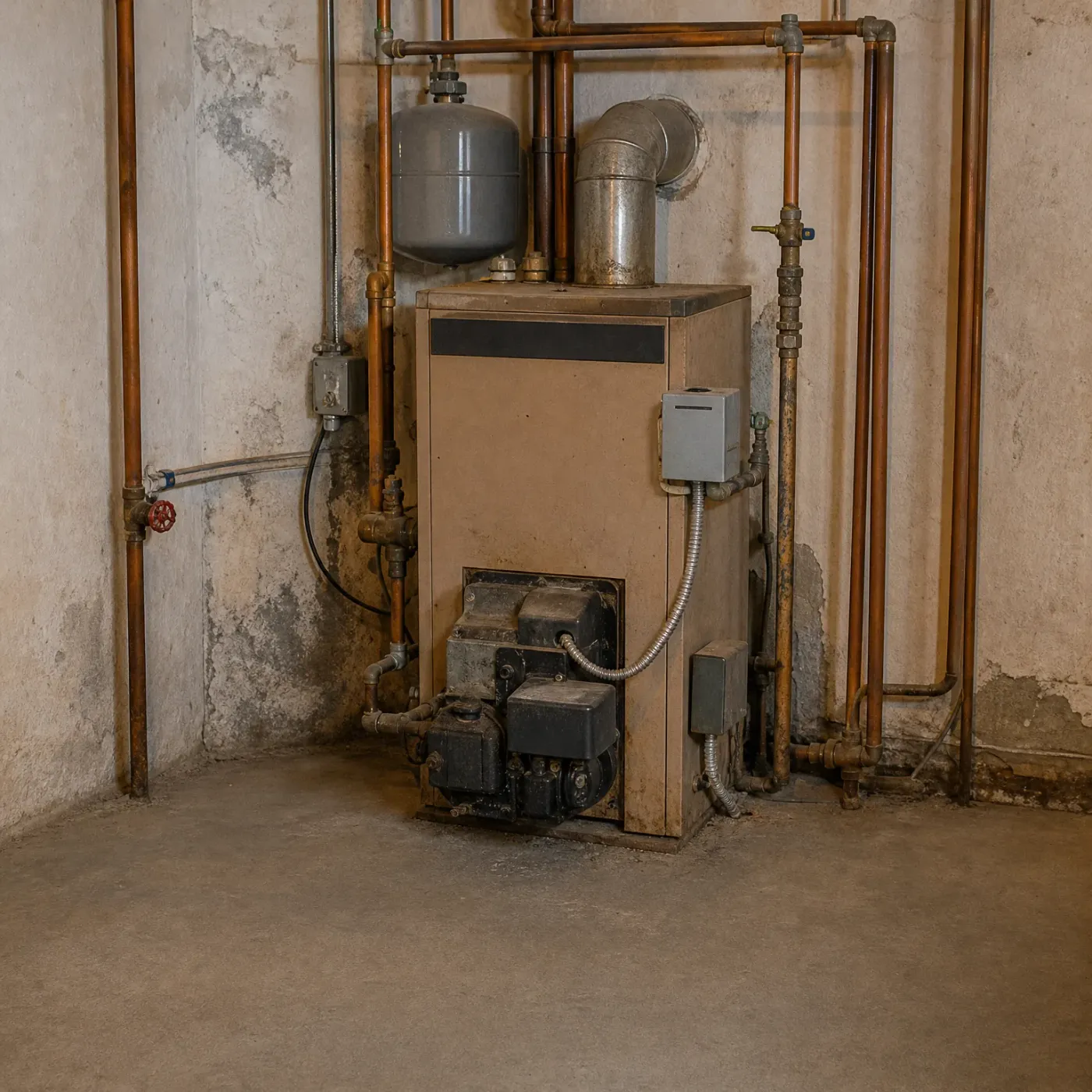
An older oil-fired boiler with a burner unit, flue pipe, expansion tank and copper piping stands in the corner of a concrete-floored basement with weathered plaster walls.
One radiator cold at the bottom no matter how long the boiler runs, which points to a blockage or a valve that won't open.

Why is only one radiator cold when the rest heat up fine?

You've bled the air out of the system, the boiler is running, and every other radiator in the house warms up fine. But this one stays cold, or only gets warm at the top and cold at the bottom. That pattern rules out air in the system, so something else is blocking heat from that single unit.

A closed or stuck valve on that radiator is the usual cause

Every radiator has its own valve, and if it's partly closed or seized, water can't get through even though the rest of the system is under pressure and moving fine. On older cast iron radiators, the valve can stick shut from mineral buildup after years of sitting open or closed. Cold at the bottom with warmth at the top usually means sludge or rust has settled in the lower section, which blocks flow the same way a stuck valve does. Either way, the problem is local to that radiator, not the boiler. A contractor can tell which it is by feeling the pipes going in and out, or by removing the valve to check it.

A smiling man in a gray long-sleeved shirt stands in a kitchen looking to the side, with open shelves of dishes, a white mug on the counter, a potted plant, and a view through a doorway into a living room.
A smiling bearded man in a green sweater sits at a white marble kitchen island with a mug, potted plant and bowl of fruit, in a bright white interior with open shelving and an arched doorway.
A smiling man with dark curly hair and a beard, wearing a dark green knit sweater, stands at a white marble kitchen counter with a dark blue mug, with open shelving, pendant lights and a houseplant behind him.
A smiling man in a green ribbed sweater stands behind a wooden table holding a ceramic mug of coffee in a kitchen with white subway tile, shelves of potted plants, and a bowl of fruit.
  1. Boiler fires and heats water circulating through the system.

  2. Pump pushes hot water out through the supply pipes.

  3. Water enters each radiator through its inlet valve.

  4. Trapped air or sludge blocks water from filling the radiator.

A closed laptop and a cream mug of coffee on a coaster sit on a dark wooden table, with a potted plant at left and a kitchen counter, tiled backsplash and shelf of ceramics in the background.

A cold radiator in a Wyoming house in January isn't a small thing

With gas this cheap here, the boiler is already working harder than the bill shows. A radiator that won't heat means part of that heat never makes it into the room, so the boiler runs longer to hit the same temperature on the thermostat. Rooms past that radiator stay colder than they should, and the rest of the house ends up carrying the load. Left alone, a stuck valve or a failing pump doesn't fix itself over a Wyoming winter. It tends to spread, pulling in a second radiator or putting more strain on the pump.

You already know not to wait on something like this. The part that takes time isn't fixing it, it's finding someone who can look at it soon. Calling a few places, explaining the same cold radiator each time, waiting on callbacks, sorting through who actually works on boilers versus furnaces. Send this in and that search is done. You're not left tracking down a contractor while your living room stays cold.

A gray upholstered sofa with a textured cushion sits beside a dark round side table holding a vase of green foliage, with a table lamp and sheer-curtained window behind.
The gable end of a weathered vertical-board wooden building with a snow-covered roof, framed against snow-laden conifers and a pale sky with falling snowflakes.

Statewide, winter nights average 13°F, according to NOAA climate data. At that temperature, your boiler is running long, steady cycles almost every night from November through March, pushing hot water to every radiator in the house. If one of them is cold or only half warm, it's not pulling its share of that heat, and the rooms around it feel it fast when the air outside is that cold. A problem that might go unnoticed on a mild night shows up right away here. Once you send the form, you're done hunting for someone who can look at it. No calling around, no explaining the cold radiator twice to two different companies. That part of it is off your plate.

NOAA nClimDiv 1991-2020 county normals weighted by homes

Send one request and you're done looking

Answer a few questions instead of calling shop after shop.

Sending the form costs nothing.

A gray floor-standing boiler with a metal flue pipe, copper piping, a circulator pump and a gray expansion tank, installed against a concrete wall.

Sludge builds low, air sits high

Bleeding a radiator only clears air from the top. If the cold spot is at the bottom instead, that's sludge, loose bits of rust and mineral scale that settle in the lowest point of the unit over years of use. It blocks water from filling the bottom section even after the air is gone. A bled radiator that's still cold on the lower half usually needs the sludge flushed out, not more bleeding.

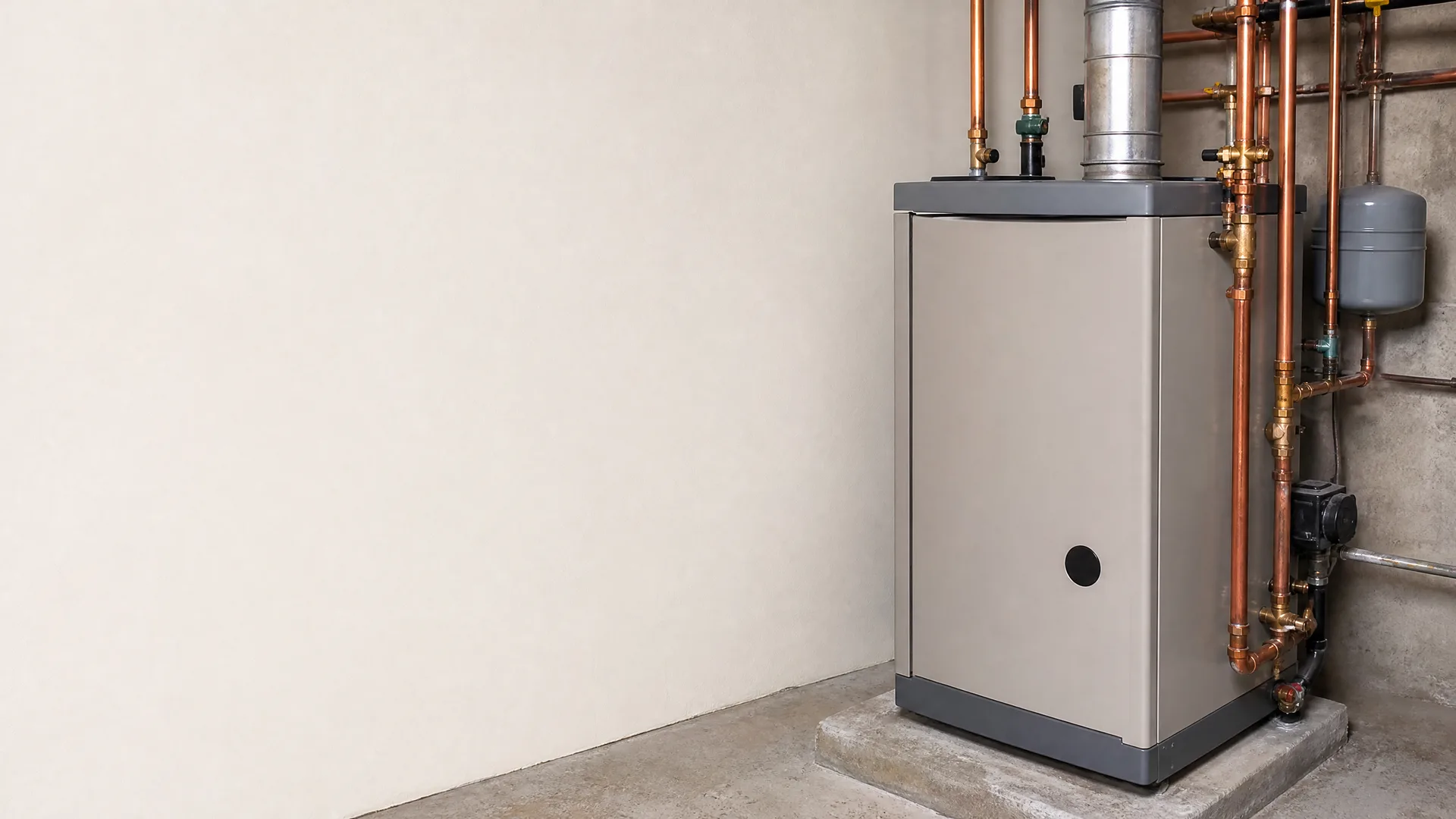
A tall grey floor-standing boiler on a concrete plinth in a corner of a room, with copper pipework, a flue, a circulator pump and an expansion vessel to its right, beside a plain cream wall.

The valve that opens only partway

Each radiator has an inlet valve that controls how much hot water gets in. Over time the pin inside can seize partway closed, or the valve head can get knocked and stop turning freely. From the outside it looks fine and still turns, but the radiator only ever gets lukewarm. A valve stuck half open lets just enough water through to warm the pipe, not the radiator.

What are you noticing in your own house right now

You walk past it and put your hand on it out of habit. Top's warm, bottom's cold, or the whole thing is cold while the pipe leading into it is warm. Maybe you hear the boiler running fine, maybe you hear a knock or a gurgle in the pipes near that room. The room itself feels off before you even touch the radiator, colder than the rest of the house, so you've started shutting the door to keep it in. Left alone, that one room keeps losing ground and the boiler keeps running longer to make up for it, which shows up on the gas bill before it shows up anywhere else.

A smiling man with dark curly hair in a navy t-shirt sits on a gray couch indoors, with a large-leafed plant and a window in the background.
A bearded man in a plaid flannel shirt stands in a kitchen looking out a window toward snow-covered shrubs, with a steaming mug on the windowsill and potted plants on a shelf behind him.
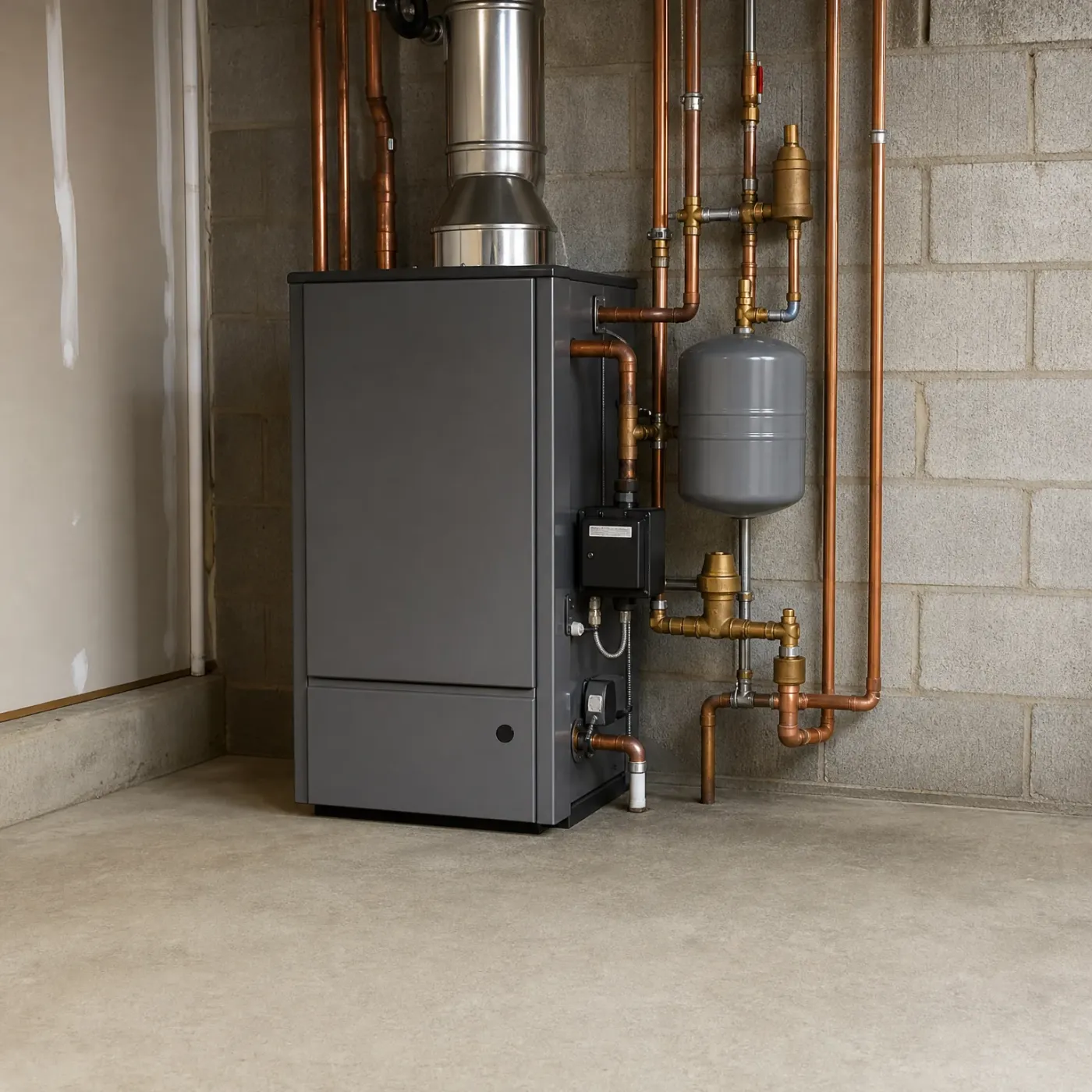
A gray floor-standing boiler with a metal flue stands against a concrete block wall, connected to copper pipes, brass valves and a gray expansion tank, on a bare concrete floor.

Boiler running right

This is what it looks like when the system is doing its job: copper lines feeding every radiator, pressure steady, the expansion tank holding its charge, the flue drawing clean. Heat leaves the boiler and gets to every room it's supposed to.
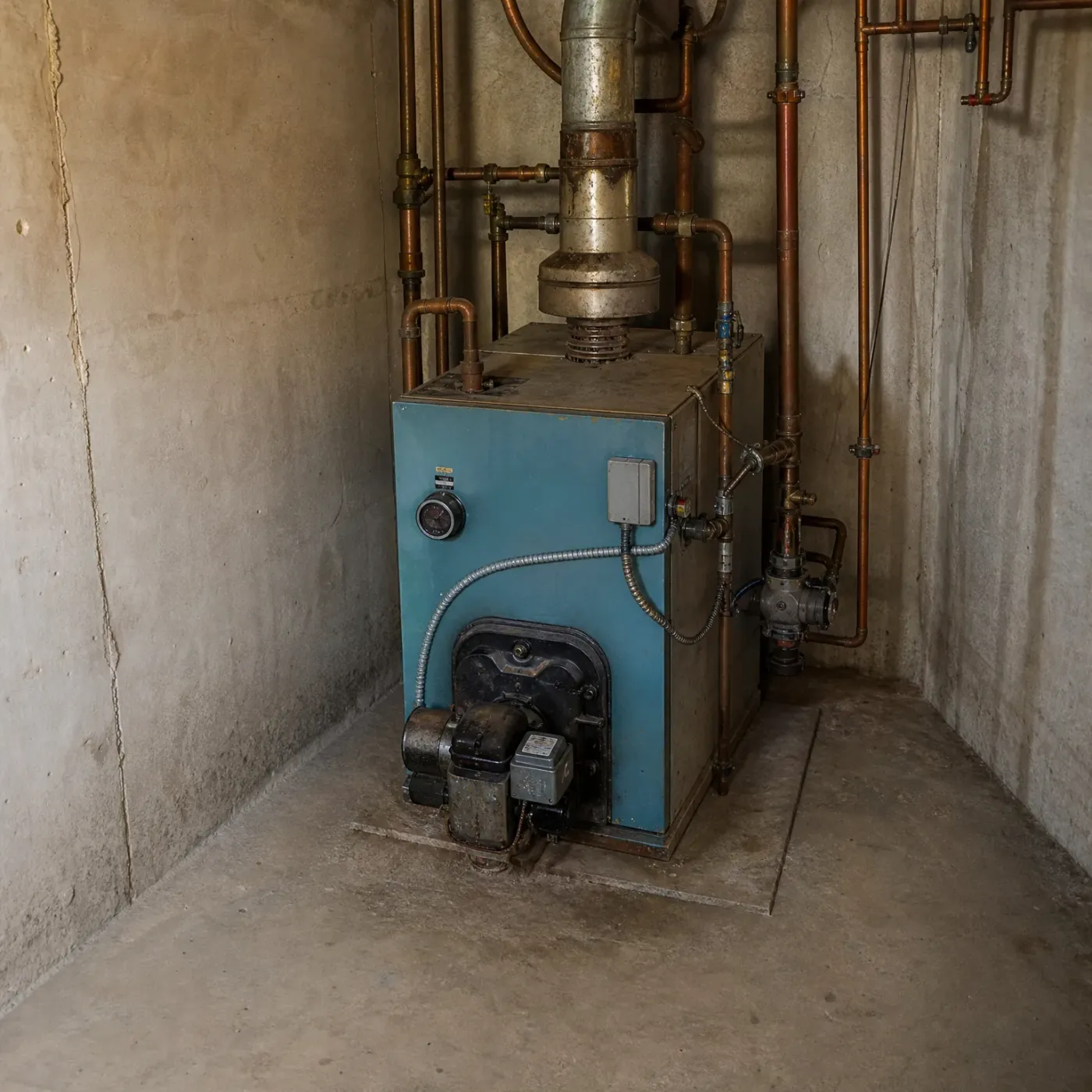
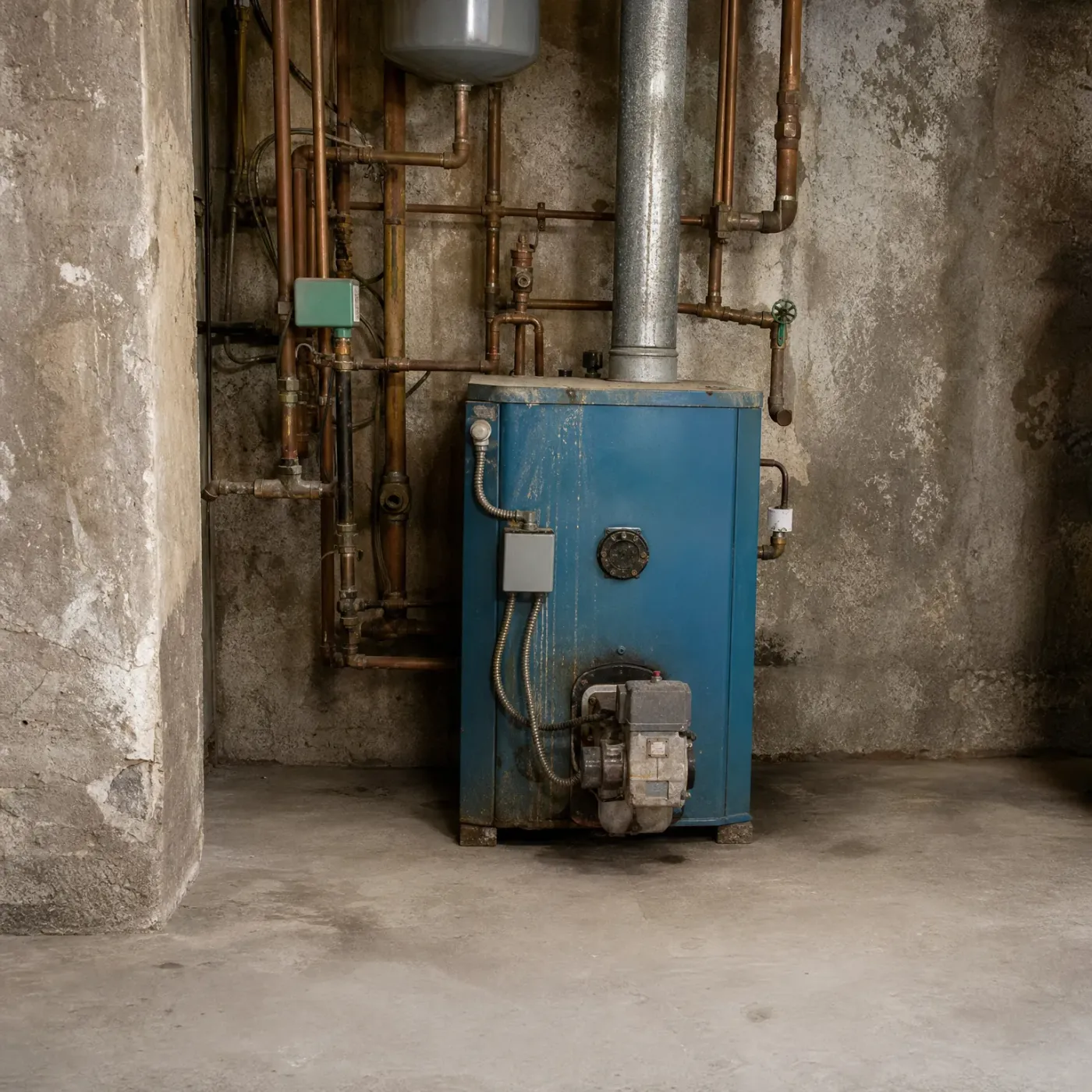
A blue oil-fired boiler with a burner unit and pressure gauge stands in a concrete basement corner, connected to copper pipes and a metal flue.

Boiler in trouble

An older unit like this one has had more years for sludge to settle in the bottom of the boiler and the lowest radiators, and more chances for a valve to seize or a pump to weaken. The signs show up as a radiator that won't heat, long before the boiler itself quits.

A blue cabinet boiler with a metal flue pipe and copper piping stands against a bare concrete wall in a basement with a concrete floor.
Before you get your boiler repair
A gray residential boiler on a concrete pad in a basement with stone walls, connected to copper piping, brass valves, a circulator pump, an expansion tank, and a metal flue duct.
After you get your boiler repair

Bleed It or Call for Help

Bleed it yourself

  • A bleed key clears trapped air from the top of the radiator in a few minutes and costs almost nothing.
  • This fixes the problem only when the cold spot is at the top and the bottom still heats up warm.
  • If the radiator refills with air every few weeks, something upstream is pulling air into the system and bleeding won't stop it.
  • Bleeding does nothing for sludge sitting at the bottom of the radiator or a valve that's stuck shut.
  • You can do this on a weekend afternoon without waiting on anyone, and it tells you right away whether air was the issue.

Call a contractor

  • A contractor can tell within minutes whether the cold spot is air, sludge, or a valve that won't open, instead of you guessing and bleeding the wrong fix.
  • Clearing sludge out of a radiator means draining and flushing the loop, not something a bleed key reaches.
  • A stuck or broken valve usually needs replacing, which means working with the boiler's plumbing directly.
  • Once this gets handled, you're done calling around, explaining the cold radiator twice, and comparing who can come out first.
  • If the pump or the boiler's circulation is the real cause, that's electrical and mechanical work that goes past a radiator fix.
  • A contractor checks the whole loop at once, so a cold radiator in one room doesn't turn into three more by next winter.
A dark gray floor-standing boiler on a concrete pad in a basement, surrounded by copper piping, brass valves, a gray expansion tank, a circulator pump, and a metal flue pipe against concrete block walls.

Boiler and piping in good order

Copper lines run tight to every brass fitting, pressure gauge holding steady, expansion tank charged. Water leaves the boiler and reaches each radiator in the house at full heat, with nothing sitting in the lines to block it.

A blue boiler on a raised concrete pad in a basement corner, with copper and steel pipes, a gauge cluster, an expansion tank, and a metal flue running up the bare concrete walls.

An older boiler left unchecked

Same flue, same pipe run, but years of sludge and air can settle in unseen. A boiler like this can run fine and still leave a radiator cold, because the problem is in what's built up inside, not in whether it's firing.

Winter nights average 13°F statewide

At 13°F the boiler has to keep pushing hot water through every radiator for hours at a stretch, all night, most nights from November into March. A cold radiator isn't resting easy through that, it's forcing the boiler to run even longer to make up for the room it isn't heating.

NOAA nClimDiv 1991-2020 county normals weighted by homes

So Where Does That Leave You

  • A cold radiator almost always means trapped air, sludge buildup, or a stuck valve, not a failed boiler.
  • Where the cold spot sits on the radiator, top or bottom, points to which of those three it is.
  • Left alone through a Wyoming winter, the boiler keeps running longer to cover the heat that radiator isn't giving off.
  • Bleeding the air out fixes the top-cold cases but does nothing for sludge sitting at the bottom.
  • A stuck valve or a blocked line usually needs a hand on the actual part to clear or replace.
  • Sending the form means someone licensed takes it from here instead of you calling around and explaining the cold radiator again to every contractor you find.

One cold radiator while the rest of the house heats up fine almost always comes down to one of three things: air trapped at the top, sludge settled at the bottom, or a valve that won't open all the way. Where the cold spot sits tells you which one you're dealing with. Top cold, bottom warm, that's air, and a bleed key handles it in a few minutes. Bottom cold no matter what you try, that's sludge or a stuck valve, and neither one clears with a bleed key no matter how many times you try it. Left through a Wyoming winter, none of this fixes itself. The boiler keeps firing longer each night to cover the heat that radiator should be putting into the room, and the gas bill carries that weight even while the radiator stays cold. The air you can check yourself. The sludge and the stuck valve need a hand on the actual part, someone opening the valve body or flushing the line, not another winter of hoping it clears on its own. If you've already bled it and it's still cold, or the cold spot is at the bottom, that's the system telling you which problem you've got. Sending the form means you're done being the one who has to find out who handles this, call around, and explain the same cold radiator to every contractor you reach. Someone licensed takes it from there.

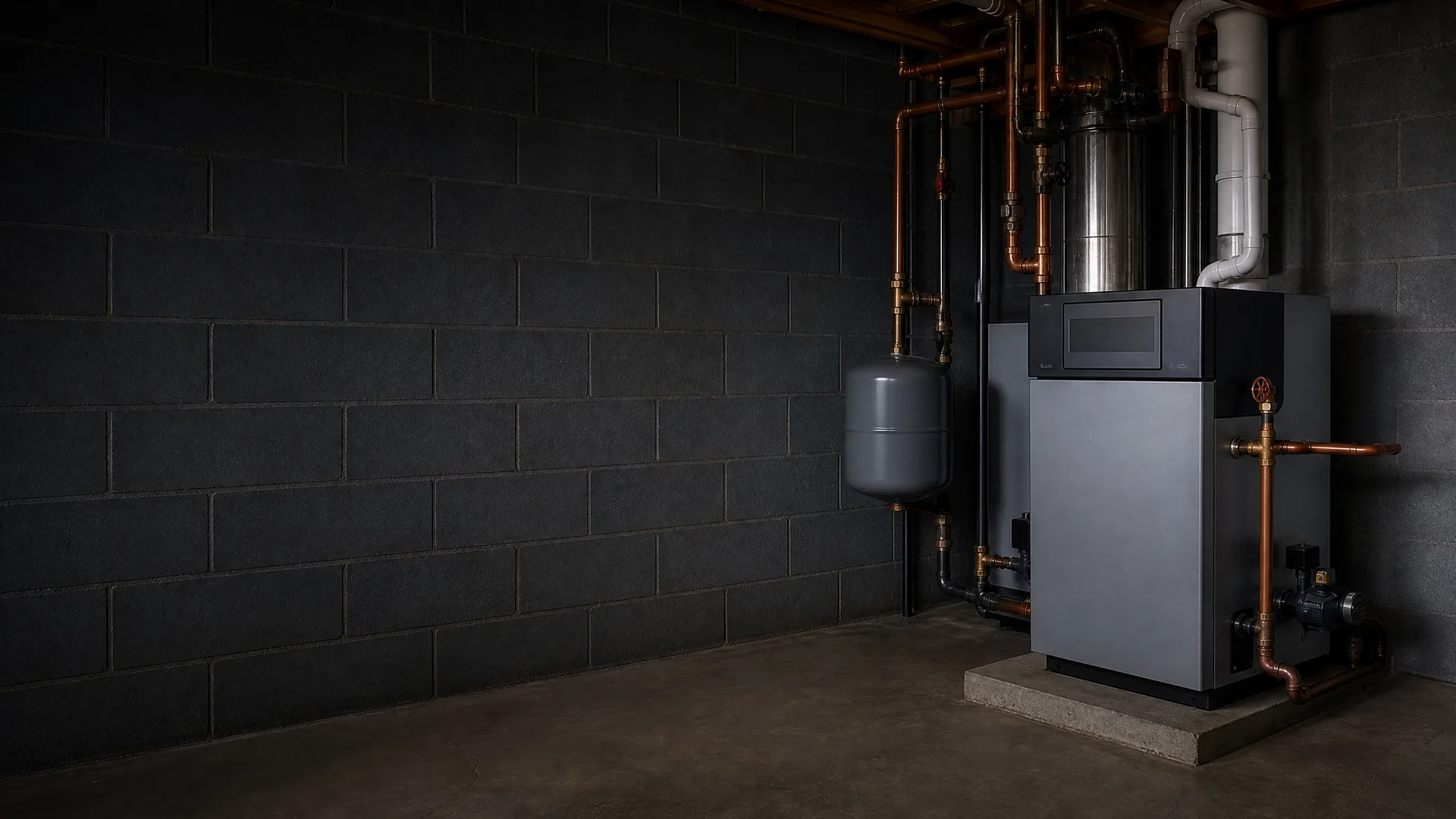
A gray boiler unit with a control panel sits on a concrete pad in a basement room with dark concrete block walls, connected to copper and metal piping, a gray expansion tank, and an insulated flue.

Finding a pro stops being your job

Describe your boiler job once, to one pro.

Step 1 of 3: Equipment