Why your boiler makes a banging noise in Wyoming

Step 1 of 3: Equipment

Why does my boiler make a banging noise?

A boiler that bangs, knocks or pops when it fires up or runs is hard to ignore, especially once the sound shows up every time the heat comes on. With gas heat running hard through a Wyoming winter, you want to know whether that noise means something is wearing out or breaking, or whether it is just a normal part of how the system behaves this time of year.

It's almost always kettling, caused by mineral buildup on the heat exchanger

The banging comes from water trapped under a layer of limescale or sludge on the heat exchanger. That water turns to steam before it can circulate, and the steam pockets collapse with a knock or a bang you can hear through the house. It's called kettling because it sounds like a kettle starting to boil. The buildup gets worse the longer it sits, and a boiler that bangs occasionally today can bang every time it fires within a season. It doesn't fix itself, and running it that way stresses the heat exchanger further. With gas heat carrying most Wyoming homes through winter, a boiler that's straining shows up fast in how often it runs and how hard it works to hold a room's temperature.

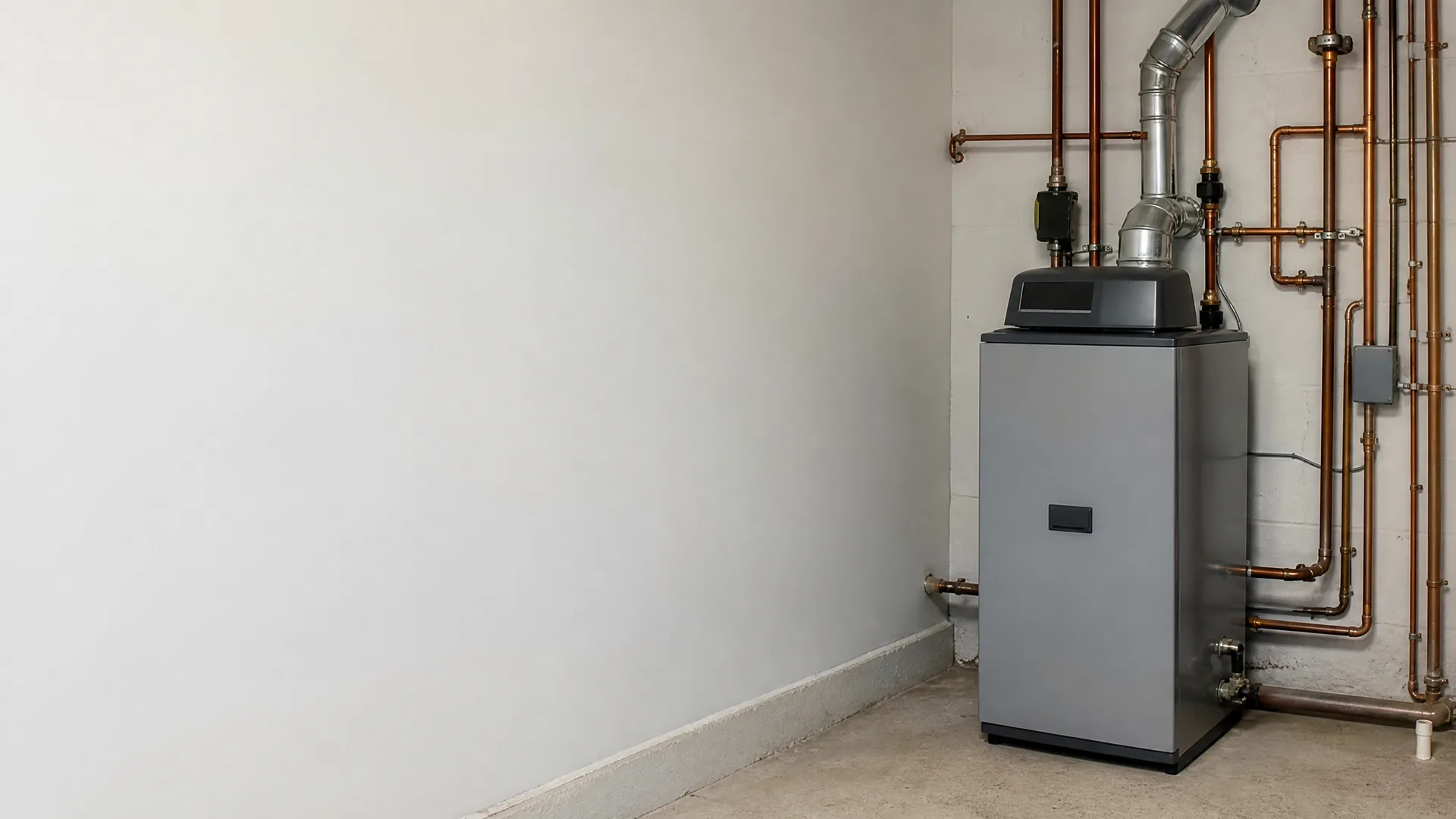
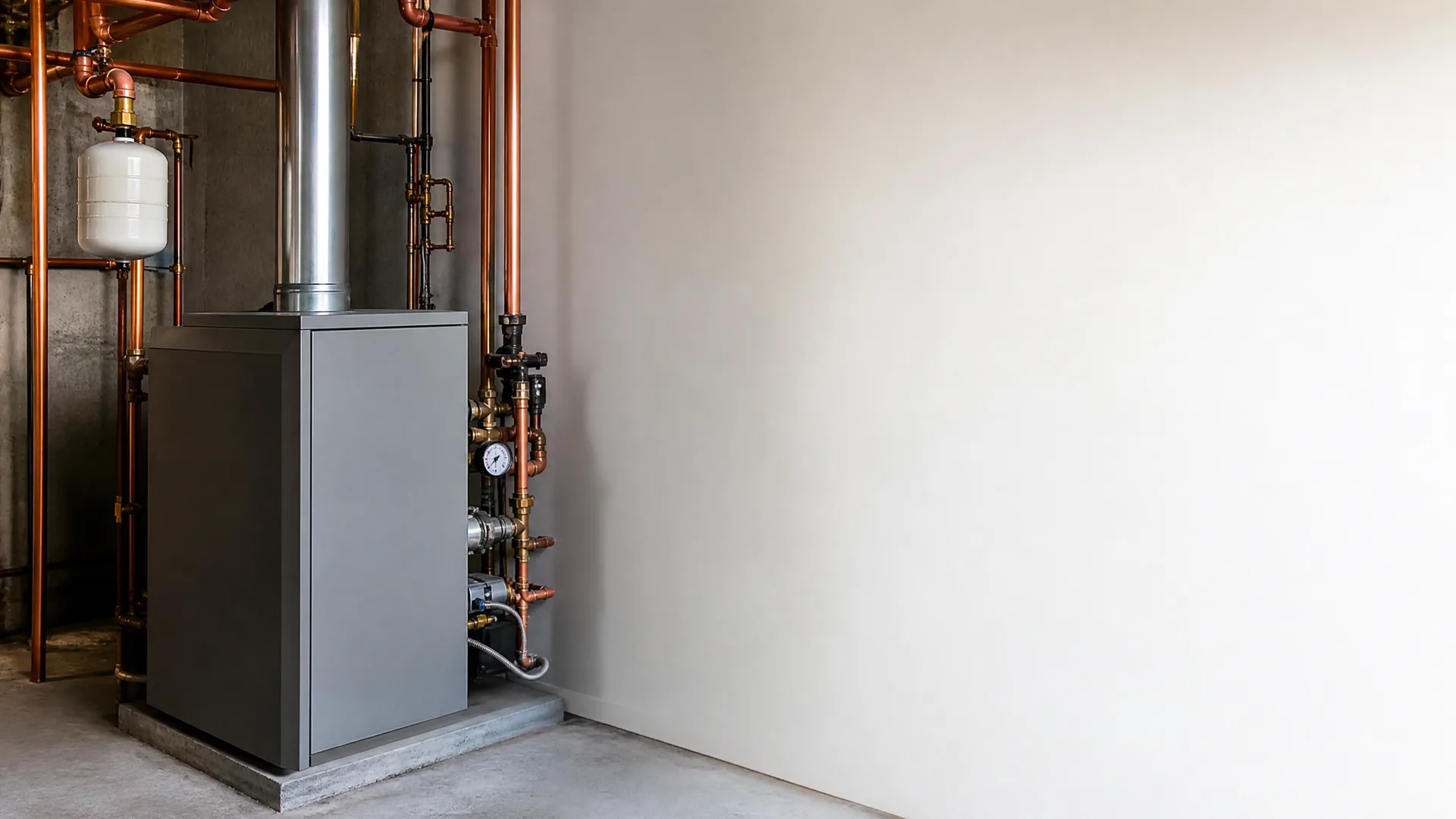
A grey floor-standing boiler with a metal flue and copper pipework, valves and a pressure gauge stands in the corner of a room with plain light walls and a concrete floor.

Kettling means scale buildup

The banging sound is usually called kettling. Water trapped under a layer of scale or sediment on the heat exchanger flashes to steam before it can circulate, and the pockets of steam collapse with a knock you can hear through the house. The longer that layer builds, the harder the boiler has to work to heat the same water, and the louder the noise gets each winter.

A gray floor-standing boiler with a metal flue pipe stands in the corner of a plain painted basement room, connected to copper pipes running along the wall.

Trapped air works too

Banging can also come from air trapped in the system instead of scale. As water moves through a line with an air pocket, it hits that pocket and makes a knocking sound at the same point in the cycle every time. A contractor can bleed the system to rule this out before looking at the heat exchanger itself, and in a lot of cases that's the quicker fix to check first.

Try It Yourself or Call It In

Bleed It Yourself

  • Shutting the system down and bleeding air from the radiators or lines can quiet a bang that's caused by trapped air rather than scale.
  • It costs you nothing but time, and you can try it the same evening the noise starts.
  • If the banging comes back within a week or two, air wasn't the real problem and the scale is still building on the heat exchanger.
  • You won't know which one it was until you've already tried it, so you're guessing at the cause instead of finding it.
  • A boiler that keeps kettling while you experiment is still losing efficiency and still stressing the heat exchanger every time it fires.

Have It Diagnosed

  • A tech who works on boilers all winter in Wyoming can usually tell kettling from trapped air by the sound and where it happens in the cycle.
  • Flushing scale off the heat exchanger or descaling the system addresses the actual cause instead of a guess at it.
  • One visit gets you an answer on what's actually wrong, instead of searching, calling around, and explaining the noise to several companies before anyone looks at it.
  • A local contractor who's licensed to work on your system knows which repair actually stops the banging instead of just muffling it for a while.
  • Leaving a kettling boiler alone long enough lets scale keep building, and a heat exchanger that's been running under that strain is more likely to need full replacement.
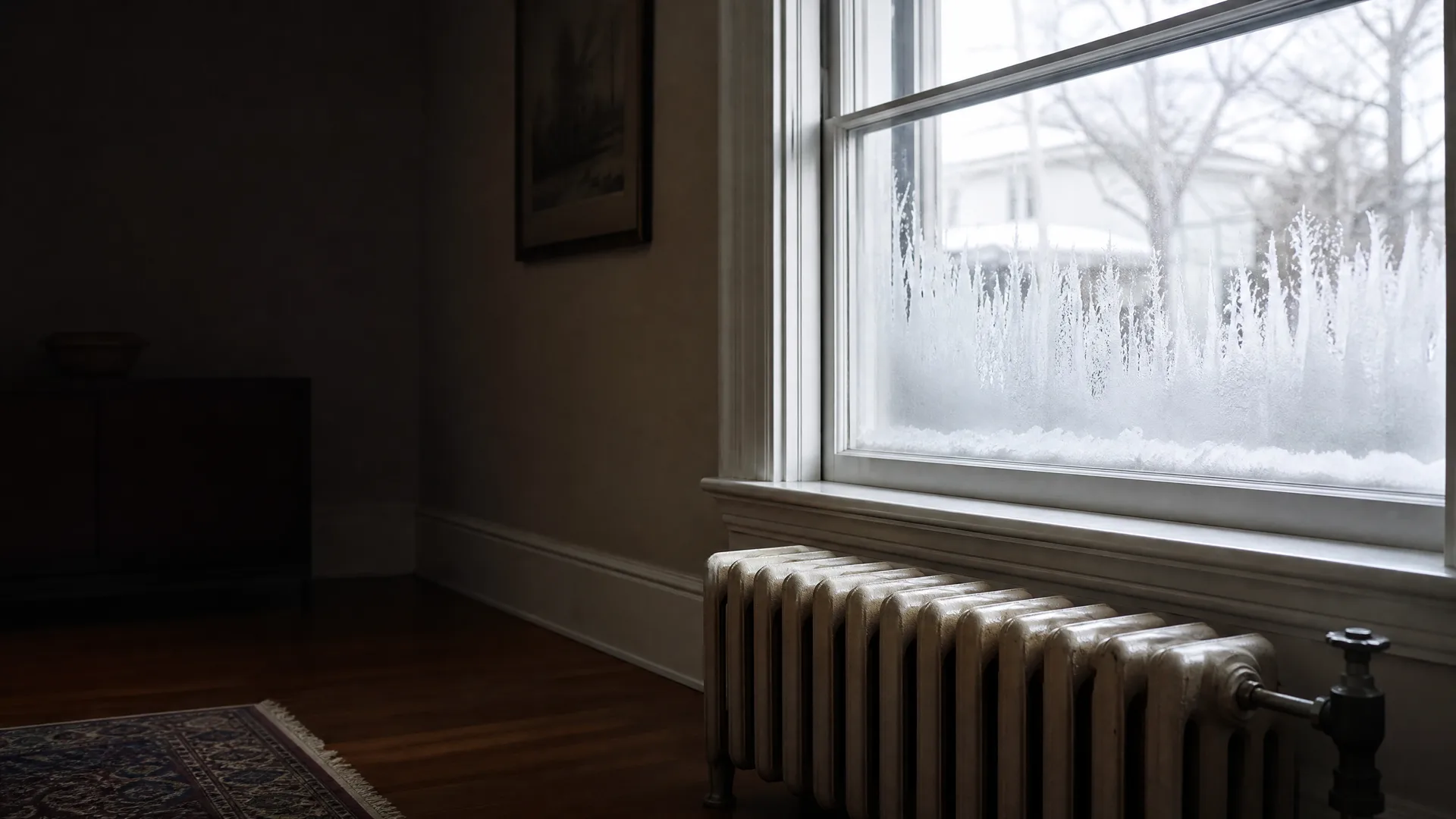
A cast-iron radiator with a valve sits beneath a frost-covered window in a dim room with dark wood floor, a patterned rug, a framed picture, and a low cabinet.

The radiator under the window has frost feathered across the inside of the glass, and the house is quiet except for the tick of the pipes warming up. Then the knock comes, sharp enough that you look over from the couch. It happens again a few seconds later, right as the cast iron starts to put out heat. Outside it is still dark, somewhere well below freezing, the kind of January morning where the furnace next door is probably doing the same thing. You sit with your coffee and wait for the next one, counting the seconds between them, already knowing it will do this every morning until someone who works on boilers for a living looks at the exchanger.

No phone calls to make

The pro who reaches out is licensed in Wyoming.

Asking costs nothing, and the choice to hire stays yours.

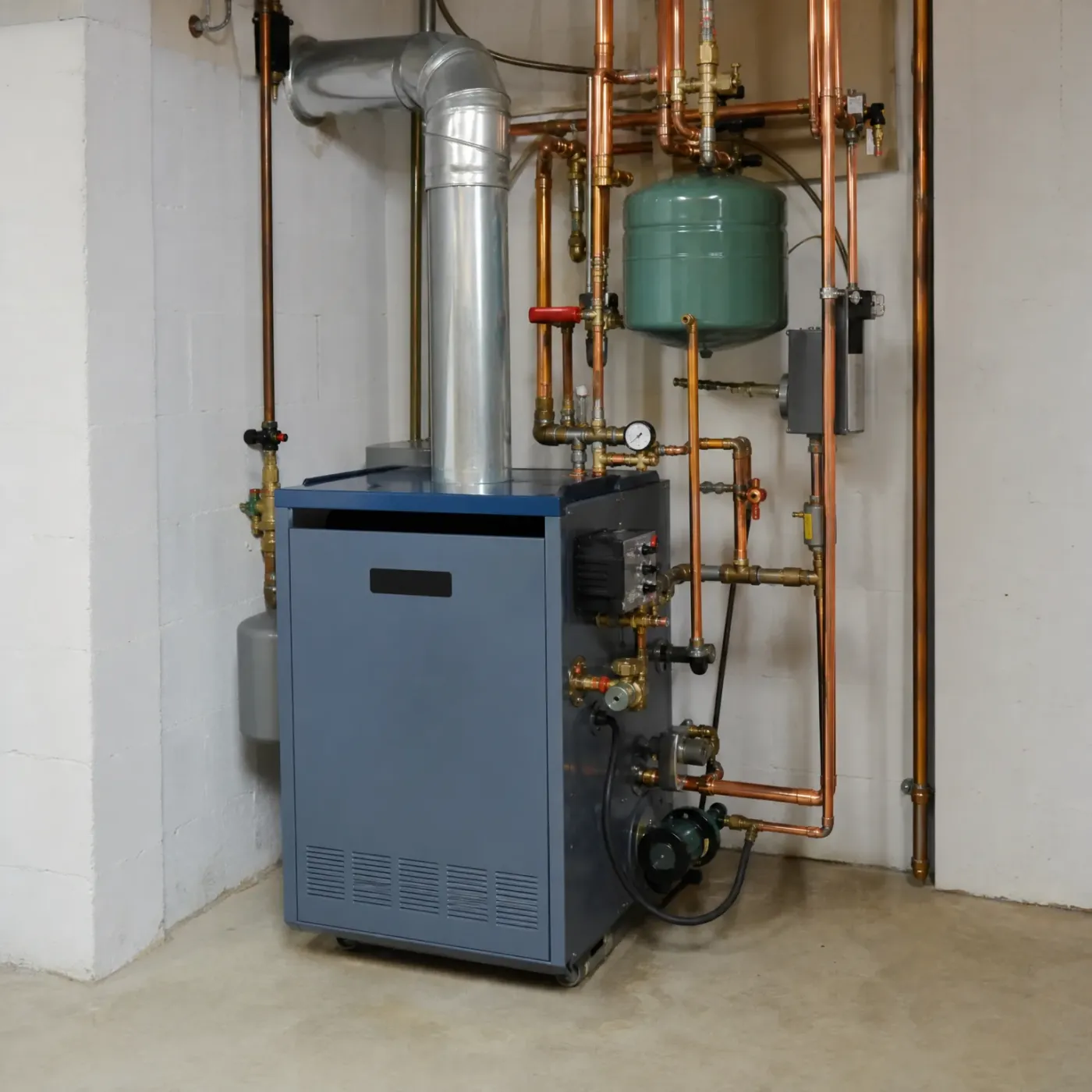
A blue-gray residential boiler in a basement corner, connected to copper piping, a green expansion tank, a circulator pump, gauges, and a metal flue pipe against painted block walls.

Running clean

A boiler like this fires quietly because the heat exchanger is clean and the pipes, pumps and expansion tank are doing their job without a fight. Heat moves through the water with nothing in the way. No bang, no knock, just the burner and the pump.

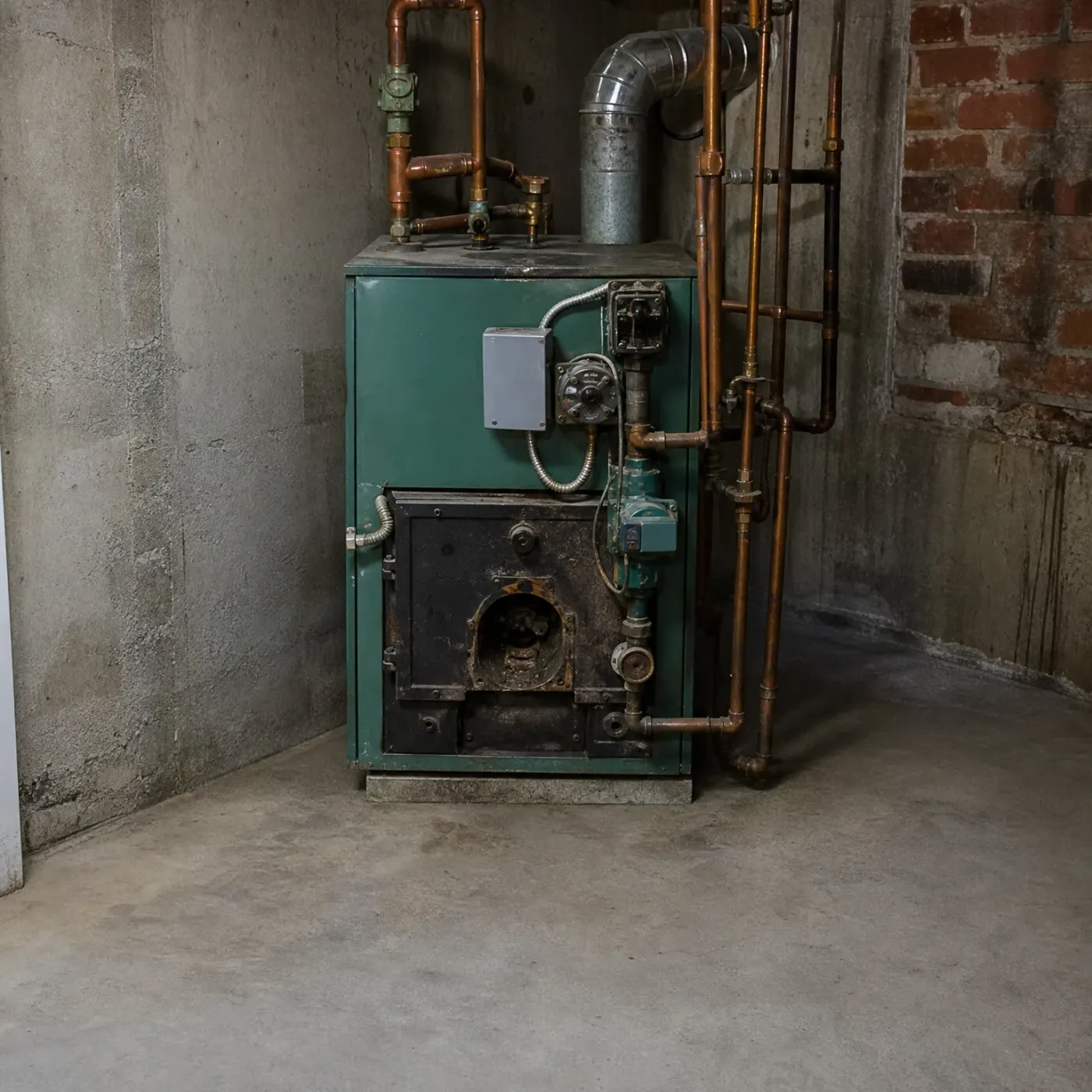
A green cast-iron boiler with a soot-stained front door, copper piping and a metal flue, standing on a concrete floor in a basement corner with concrete and brick walls.

Scaled and failing

This firebox is corroded enough that you can see it with the door open. A boiler left to run this way has had years of scale building on the heat exchanger, and the banging is what that scale sounds like. A Wyoming heating tech who works on these units all winter can tell you from the sound alone whether you're looking at a cleaning or something closer to this.

A gray-haired man in a dark sweater sits on a light gray sofa in a living room, looking toward a sunlit window with trees outside.
A gray-haired man in a dark blue sweater sits on a light gray sofa in a sunlit living room, looking off to the side, with a potted plant, shelving unit, and large glass doors behind him.
A bearded man with graying hair in a dark green sweater sits on a sofa in a living room, looking off to the side, with a sliding glass door and a dim kitchen doorway behind him.
A gray-haired man in a dark knit sweater sits on a light gray sofa in a living room, looking toward a sunlit window, with houseplants, a lamp, and framed art in the background.

The water running through your boiler carries minerals, and those minerals don't stay in the water forever. They settle on the heat exchanger, the part that transfers the burner's heat into the water, and build up as scale. That layer sits between the hot metal and the water that's supposed to carry the heat away. A thin film gets trapped against the metal and heats faster than the water around it, so it flashes to steam before it can mix in. The steam pocket doesn't last. It collapses the moment it touches the cooler water nearby, and that collapse is the bang you hear. It's not one event. It happens over and over as the boiler runs, which is why the noise tends to show up at the same point in the heating cycle. Sediment sitting at the bottom of the heat exchanger does something similar, insulating the metal from a different spot. Either way, the heat exchanger is working harder than it should to move heat into the water, and the noise is telling you that before anything fails outright.

How scale turns into a bang

  • Scale forms when minerals in the water settle on the heat exchanger and build up a layer the heat has to push through.
  • That layer traps a thin film of water against hot metal, and it flashes to steam faster than the water around it.
  • Each steam pocket collapses the instant it touches cooler water nearby, and that collapse is what you hear as a bang.
  • A boiler with a clean heat exchanger heats water evenly, so there is no trapped layer to flash and no collapse to produce the noise.
  • Kettling tends to get louder over weeks or months as more scale builds, rather than appearing full strength on day one.
  • Sediment can also settle in the bottom of the heat exchanger and insulate it from the water, which produces the same effect from a different spot.
A middle-aged woman with shoulder-length dark hair, wearing a gray cardigan over a cream top, sits in an upholstered armchair and looks toward a sunlit window, with a shelf holding framed pictures and a plant behind her.
A woman and a child wrapped together in a thick knitted blanket on a sofa, both with eyes closed, with a lit table lamp and houseplant in the dim background.

Let it keep banging

The noise doesn't damage anything by itself, but scale keeps building while you wait, and the heat exchanger works harder to push warmth through it all winter.

Skip the search

Get it looked at

Someone who works on boilers all through a Wyoming winter can tell you if it's scale, sludge, or just trapped air, and clear it before the exchanger wears harder than it should.

Skip the search
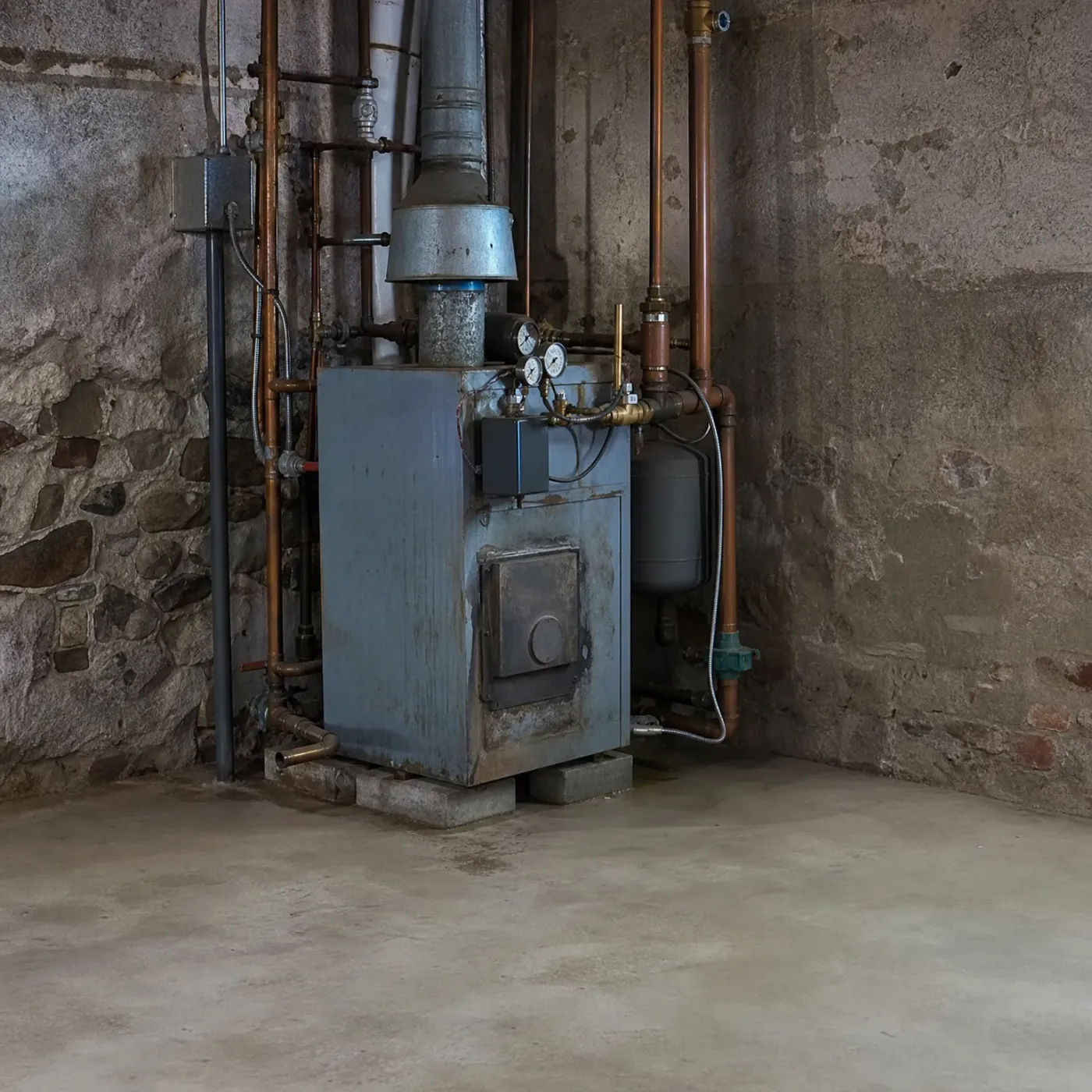
An older gray boiler with a metal flue, copper piping, pressure gauges and an expansion tank sits on concrete blocks in a basement corner with stone and concrete walls.
Before you get your boiler repair
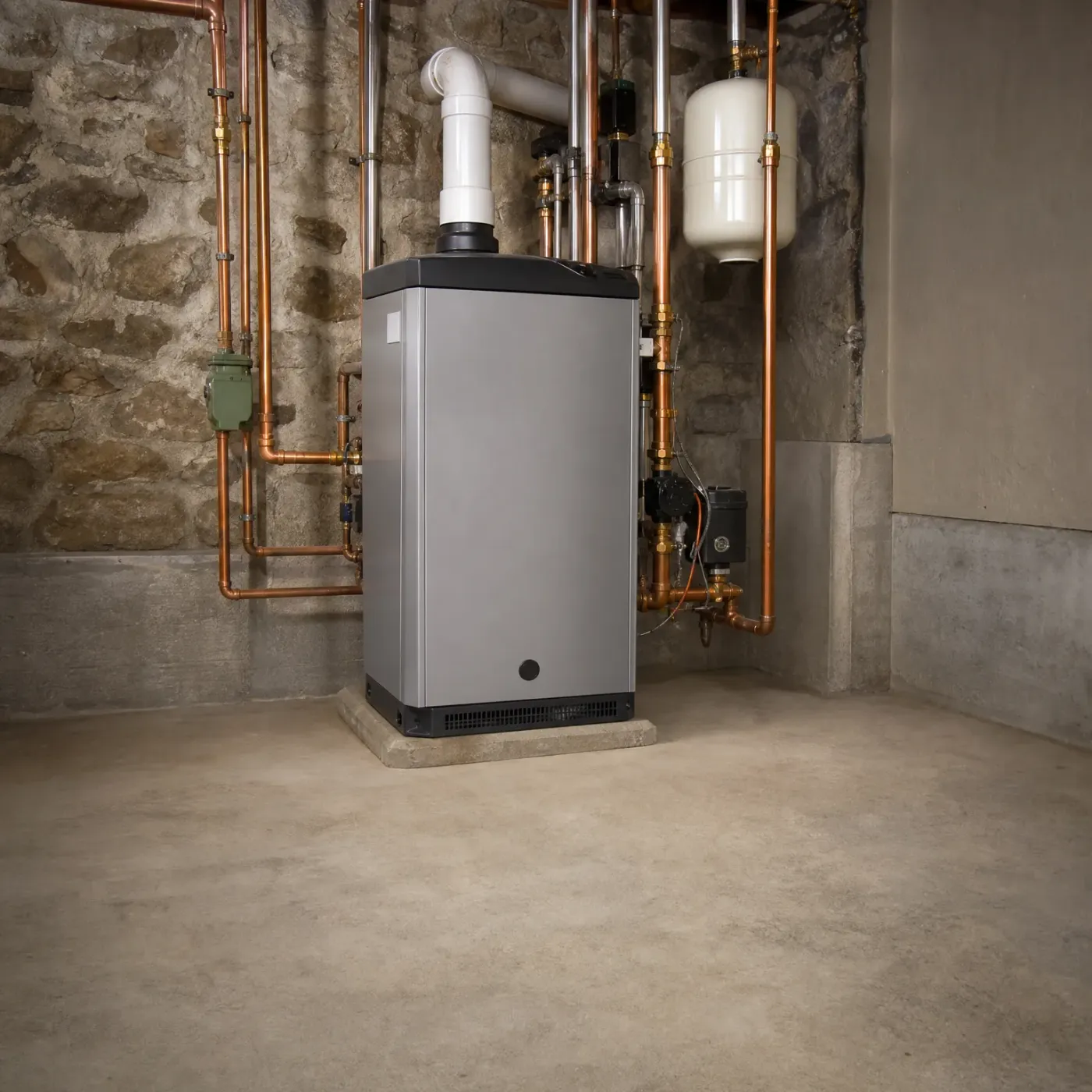
A gray floor-standing boiler on a concrete pad in a basement, connected to copper pipes, a white expansion tank, and a white PVC vent against a stone and concrete wall.
After you get your boiler repair
  1. Water sits under a layer of scale on the heat exchanger

  2. A thin film against the hot metal flashes to steam first

  3. Steam pockets collapse against cooler water around them

  4. Each collapse sends a knock through the pipes and radiators

Winter nights average 13°F statewide

On a 13°F night your boiler runs long and hard to keep up, and that's exactly when a scaled heat exchanger bangs the most. More heat pushed through the same restricted layer means more steam pockets collapsing, night after night all winter.

NOAA nClimDiv 1991-2020 county normals weighted by homes

A banging boiler almost always comes down to scale sitting on the heat exchanger, and the fix is getting that heat exchanger cleaned or flushed before the buildup gets worse. That's not a job to leave to guesswork. A boiler tech who works on these systems every winter in Wyoming has seen this exact noise more times than you have, and knows what a few seconds of banging after startup usually means versus a bang that keeps going once the burner's running. You'll be matched with one contractor, licensed and local, not a handful of companies competing for your callback. No explaining the noise over and over to different installers, no sorting through quotes to figure out who actually knows boilers. Just someone who shows up knowing what to check first, because they've heard this sound in plenty of other houses on cold nights just like yours.

Kitchen corner with cream upper cabinets, oak lower cabinets, white marble-look countertop, beige tile backsplash, a ceramic vase of greenery, a wooden cutting board and bowl, and a black-framed window at right.
Interior corner of a room with a white-framed window and wide sill, beige walls with panel molding, a wooden cabinet holding a ceramic vase with a green leafy plant, and blurred shrubs and trees outside.
A wood-framed armchair with beige cushions and a woven lumbar pillow sits in a corner beside a large window overlooking green trees, with a tall ceramic vase holding leafy branches on the left and plaster walls and wood flooring.
Interior corner with a white-framed window above a sill, beige walls with baseboard molding, a greige shaker-style cabinet with brass knobs and a potted plant on top, light wood flooring and a woven jute rug.
A dark-framed six-pane window with white trim and sill set in gray horizontal lap siding, with hydrangea shrubs below and a white column and shingled roof section at left.

Skip the search

Your request stays with one local pro.

Reach a local pro

Sending the form costs nothing.