Profile view of a bearded man wearing a black baseball cap and a dark gray T-shirt against a plain light background.

Why your boiler is leaking water in Wyoming

Step 1 of 3: Equipment

A leaking boiler is usually losing pressure somewhere it shouldn't. The pressure relief valve lets water out when pressure inside climbs too high, often from a faulty expansion tank or a valve that's worn and seeping even at normal pressure. Leaks also show up at pipe fittings, the pump seal, or the heat exchanger itself if corrosion has set in over the years. Gas heat runs hard through a Wyoming winter, and a boiler working that heating load season after season puts real wear on seals and valves that hold tight the rest of the year. A small drip near a fitting might just need tightening. Water pooling at the base, or a valve that keeps releasing water, points to something failing inside that needs a look before it gets worse or shuts the system down. Either way, the leak won't fix itself, and running a boiler low on water or under the wrong pressure can damage it further.

A woman with long wavy brown hair in a grey ribbed sweater sits on a couch indoors, looking toward a window, with a potted palm-like plant and fireplace behind her.
A woman with long brown hair wearing a green V-neck top and beige cardigan sits on a light sofa, looking off to the side, with a dining table, lamp and framed picture in the background.
A woman with long dark hair in a cream knit sweater sits on a beige sofa indoors, looking toward a bright window with a houseplant and framed picture in the background.
A woman with long dark hair in a green knit sweater sits on a couch indoors, smiling and looking toward a window with a blurred room behind her.

Where the Water Is Coming From

  • Water pooling under the circulator pump usually means the shaft seal has worn out and needs replacing.
  • A corroded or cracked heat exchanger can weep water slowly, often leaving rust-colored stains near the base.
  • Loose fittings at the pipe joints tend to drip only when the system heats up and the metal expands.
  • The pressure relief valve discharge pipe is the first place to check since it carries water away by design when pressure spikes.
  • A failing expansion tank lets pressure build until the relief valve opens more often than it should.
  • Sediment buildup inside the tank can cause corrosion that eats through metal from the inside over months or years.

Finding the source tells you what's wrong before anyone opens up the boiler. Water under the circulator pump points to the shaft seal, a part that wears from normal use and eventually lets water past it. That's a different repair than a relief valve that keeps opening because pressure keeps climbing. Rust-colored staining near the base of the unit often traces back to the heat exchanger itself, cracked or corroded enough to weep slowly rather than leak outright. That kind of damage usually builds for months before it shows on the outside. Fittings that only drip when the system is running, and stay dry once it cools, point to loose joints where the metal expands under heat and pulls just enough to open a gap. The discharge pipe off the pressure relief valve is worth checking first, since it's built to carry water away whenever pressure spikes, and water there doesn't always mean something is broken. But if it happens often, the expansion tank is usually why, losing its ability to absorb pressure changes and forcing the relief valve to do the work instead. Inside the tank, sediment settles over time and corrodes metal from the inside, a process that can run for years before it finally eats through. Knowing which of these matches what you're seeing narrows down the repair before anyone sets foot in your house.

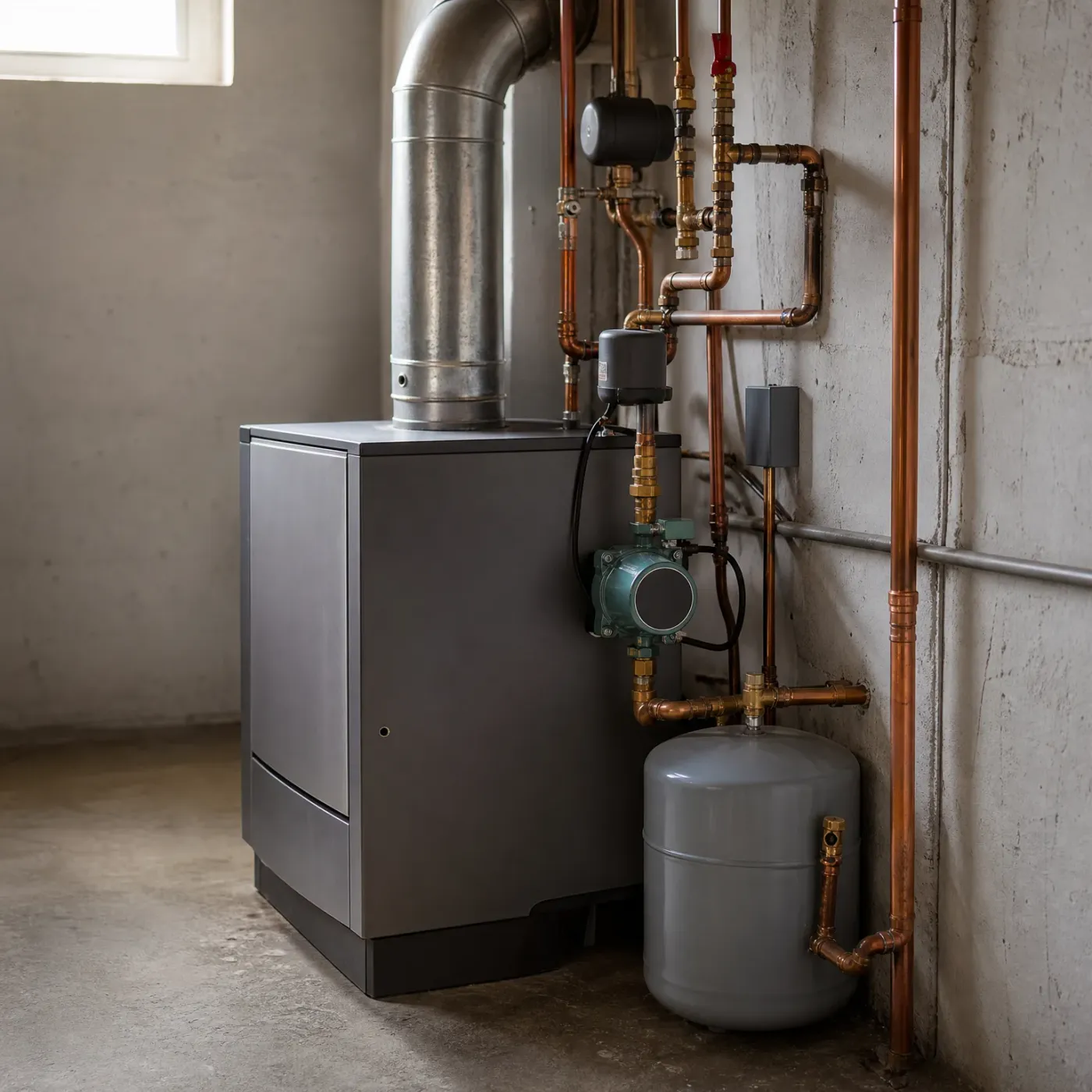
A gray boiler on a concrete pad in a basement, connected to copper piping, valves, circulator pumps, a metal flue, and a wall-mounted expansion tank.
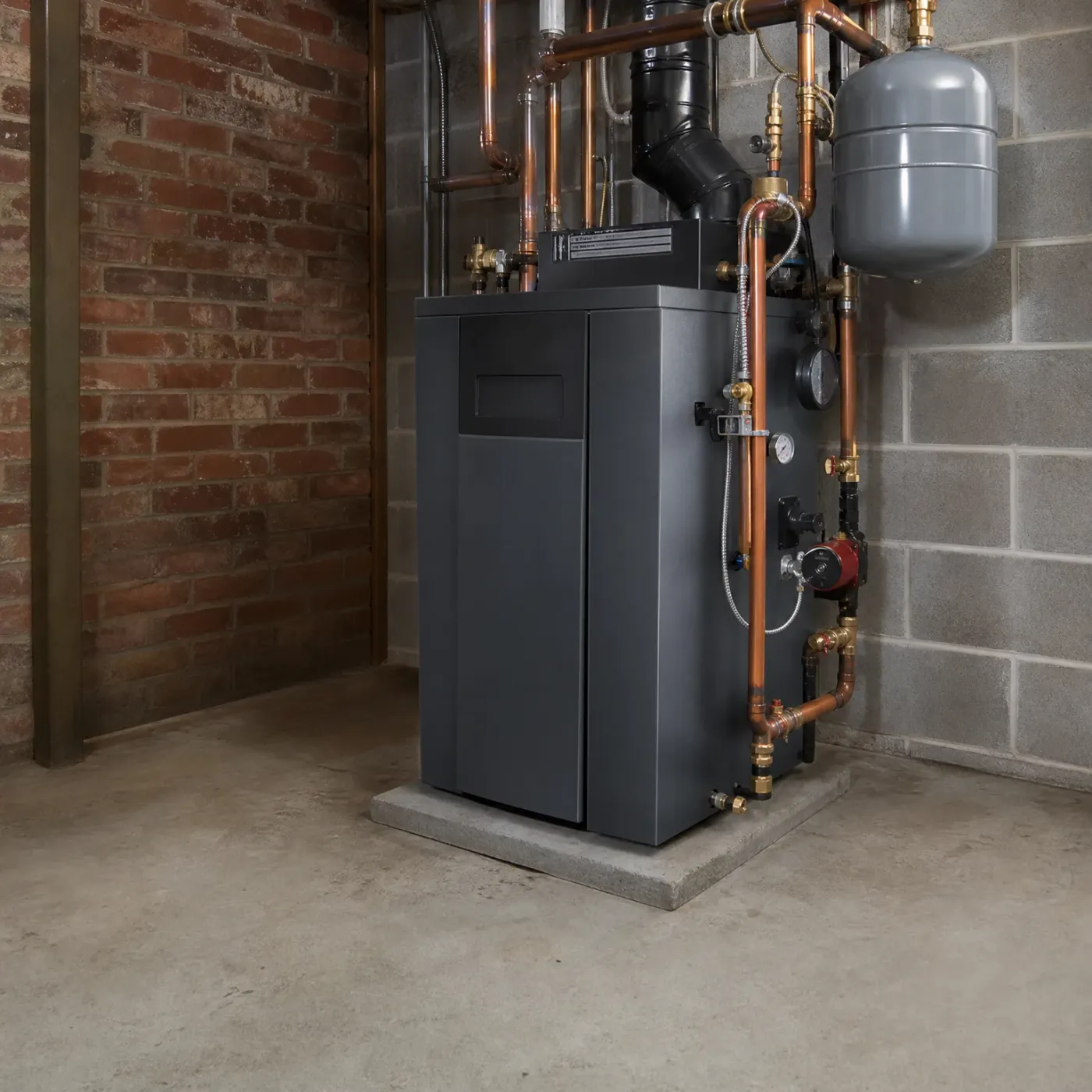
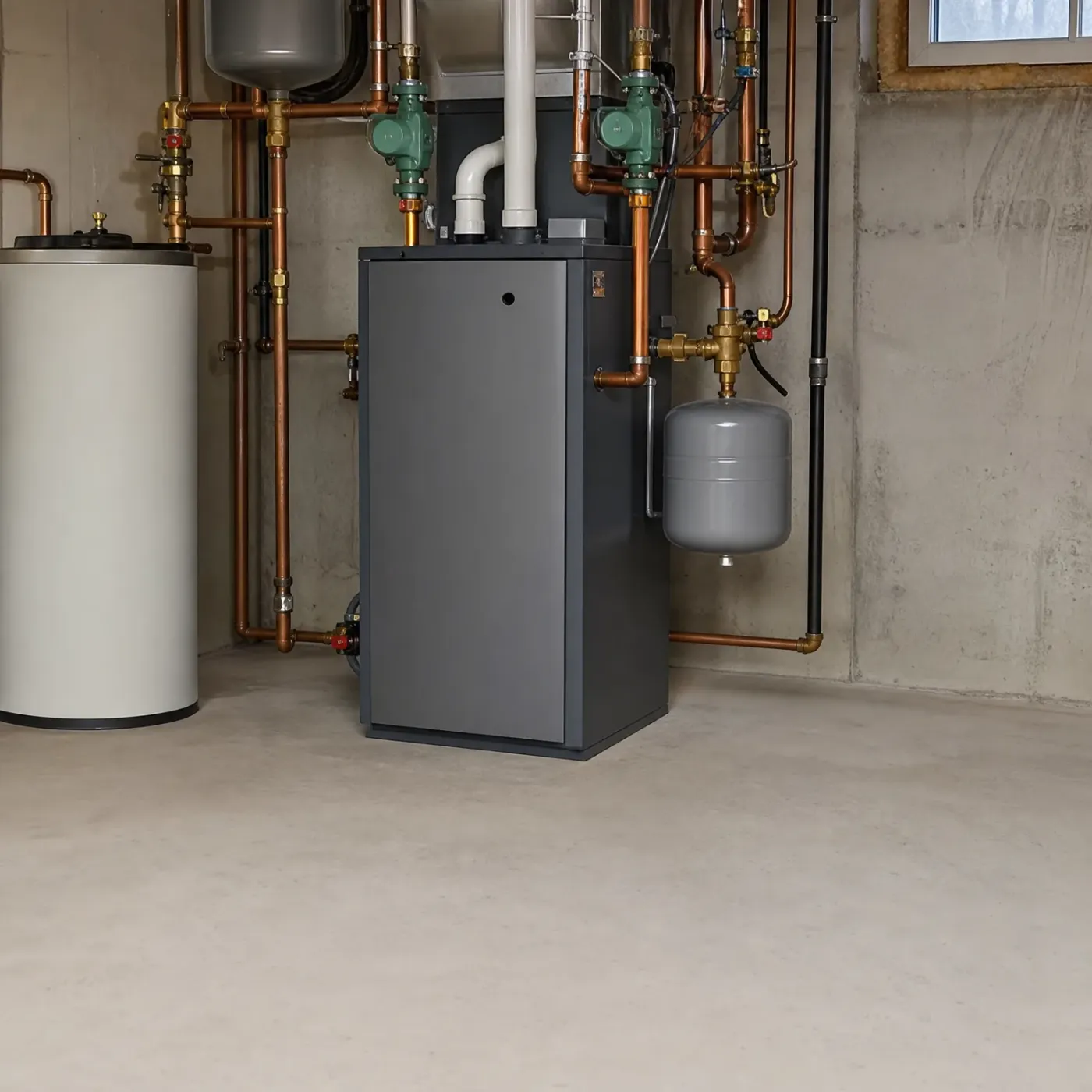
Every fitting dry, the pressure gauge steady, and the expansion tank holding its charge the way it should.
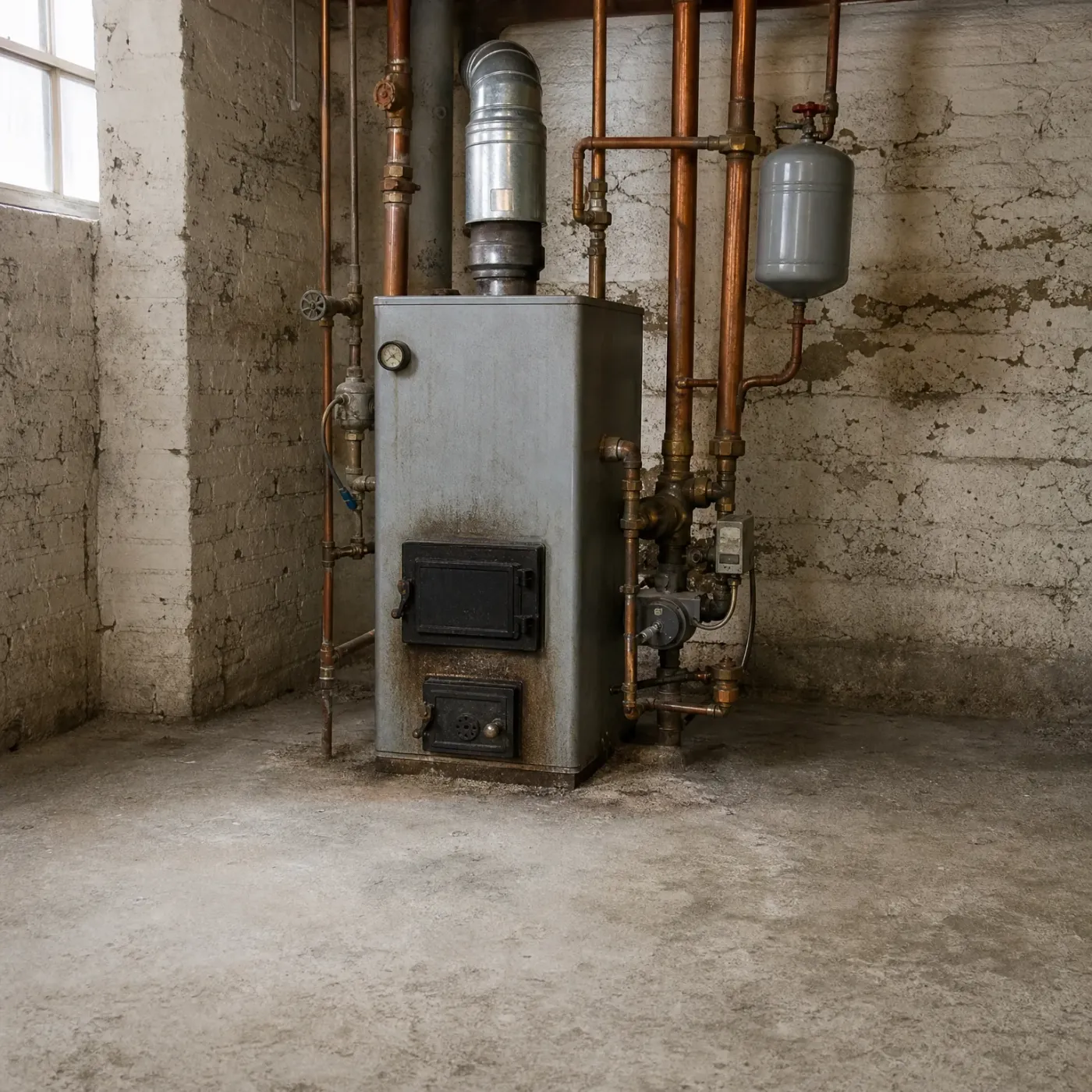
An old gray boiler with copper piping, a flue duct, pressure gauge and an expansion tank stands in the corner of a basement with painted masonry walls and a bare concrete floor.
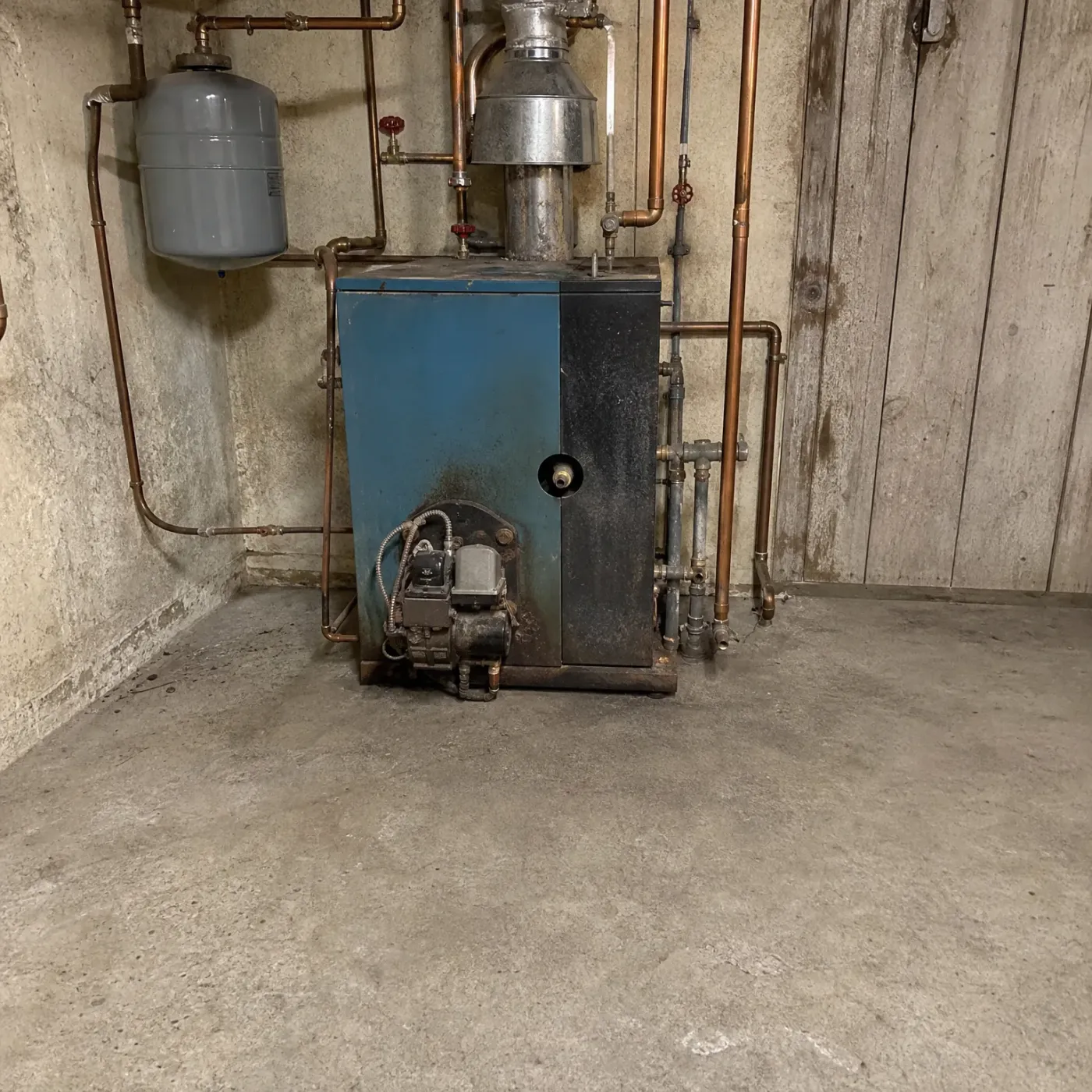
Rust streaks down the cast iron and a puddle at the base mean a seal or seam has already given out.
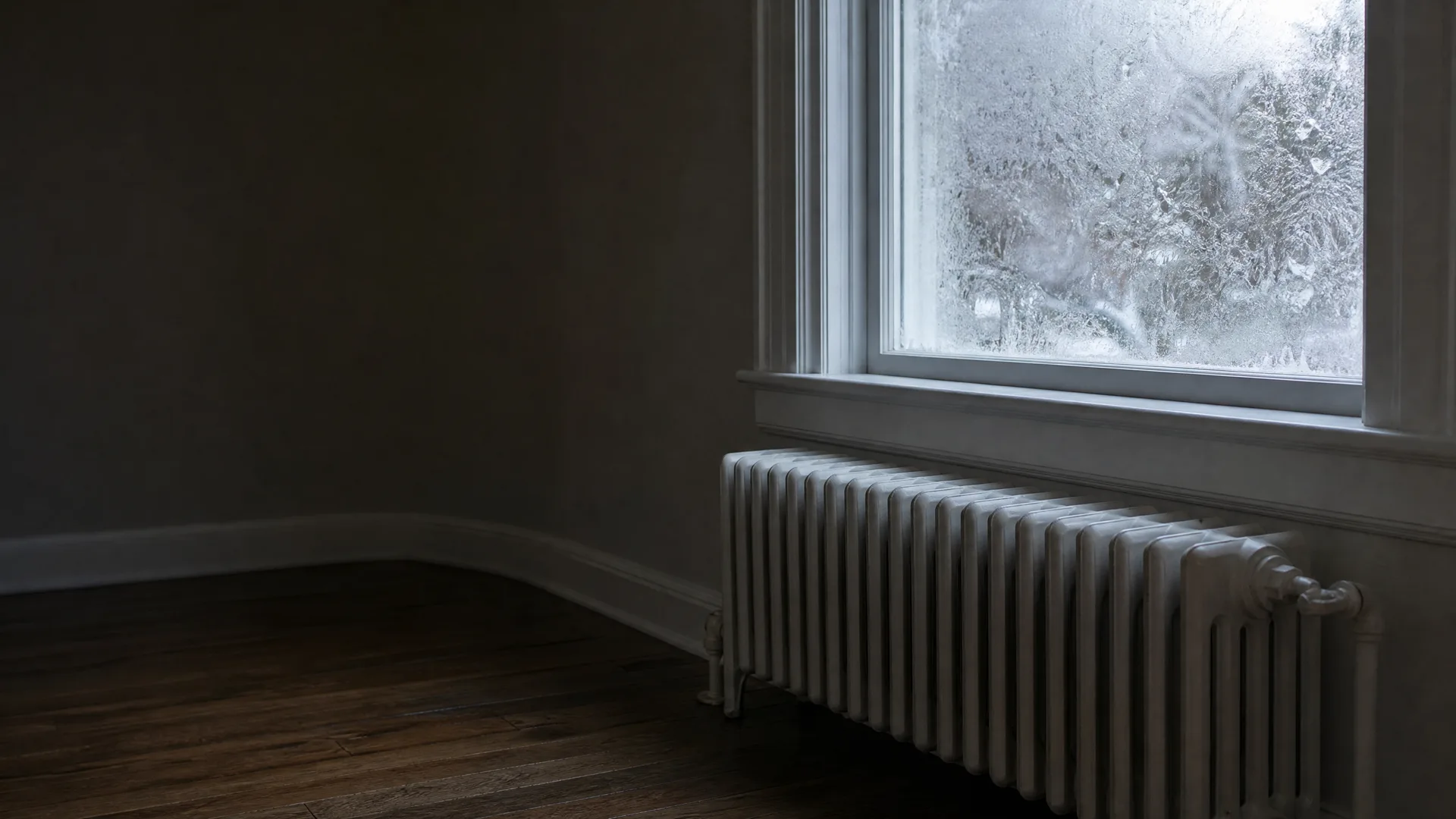
A white cast-iron column radiator under a frosted window in a dim empty room with dark walls and a wood floor, with snowy trees visible outside.

The radiator under the window has frost feathering up the inside of the glass, and you notice the water on the floor before you notice the cold. It is January, early, the kind of morning in Wyoming where the yard is still blue-gray and the furnace next door hasn't kicked on yet. The stain is spreading slow from the base of the cast iron, dark against the wood. You press a towel to it and it keeps coming. Nobody is up yet to ask how long this has been going on. You stand there in your socks, phone in hand, thinking about who you can get out here today, and how many calls that's going to take before someone actually answers.

Get your boiler to the right pro

A boiler leak in January doesn't wait for a convenient week. Water on the floor next to a cold radiator means something has already failed, and most people don't know a shaft seal from a cracked heat exchanger, let alone which one is leaking under their own floor. Figuring that out usually means calling a few plumbers, describing the puddle and the rust stains over and over, then sitting on quotes trying to guess who actually knows cast iron boilers versus who mostly does water heaters. Winters here don't leave much room for that. Gas heat in a Wyoming home depends on a system that holds pressure correctly, and a worn valve or a loose fitting won't fix itself before the next hard freeze. Handing this off means you describe the leak once, to one contractor suited to this kind of repair, instead of running down a list on your own while the floor stays wet and the house gets colder.

Why pressure keeps building back up

An expansion tank holds a cushion of air that gives hot water somewhere to go as it expands. When the bladder inside fails, the tank fills with water instead of air, and the system has nowhere to send that extra volume. Pressure climbs until the relief valve opens to protect the boiler from a ruptured seam or a blown joint. If the valve is draining more than once, the tank is usually the reason, not the valve itself. Dry winter air in Wyoming does not change this. It is a mechanical failure inside the tank, and it keeps happening until that tank is replaced.


What a slow leak looks like at first

Most boiler leaks do not start as a puddle. A cracked heat exchanger or a worn pump seal lets out only a few drops at a time, and that water evaporates before anyone notices it. What stays behind is a ring of mineral residue or a rust-colored stain on the cast iron near the base. By the time water is actually pooling on the floor, the leak has usually been going on for weeks. Checking the base of the boiler and the area around the pump every so often catches this before a cold morning turns into a bigger repair.

An older woman with gray hair in a bun and glasses, wearing a beige knit sweater, smiles while looking to the side in a warmly lit kitchen, with a loaf of bread on the counter in the foreground and a snowy scene outside the window.
A woman with her hair in a bun holds a sleeping young child against her chest, both wrapped in a textured beige knit blanket on a sofa in a dimly lit room with a lamp, framed picture, and bookshelf behind them.

Call a plumber the day you see water, and it's usually a seal, a fitting, or a valve. One part, caught early, swapped out.

Wait through a few more cold Wyoming mornings, and that same leak can reach the heat exchanger or crack the cast iron. Then you're replacing the boiler, not a part.

A blue and black boiler with a burner unit, flue, expansion tank and copper and steel piping stands on a concrete basement floor against a concrete wall and wooden plank partition.
Before you get your boiler repair
A dark gray floor-standing boiler on a concrete pad in a basement, connected to copper piping, valves, a circulator pump, a gauge, a black flue pipe, and a gray expansion tank, with a brick wall on the left and concrete block wall behind.
After you get your boiler repair
A dark gray floor-standing boiler in a concrete-walled basement, connected to copper piping, circulator pumps, a gray expansion tank, and a cream-colored storage tank to the left.

Running dry

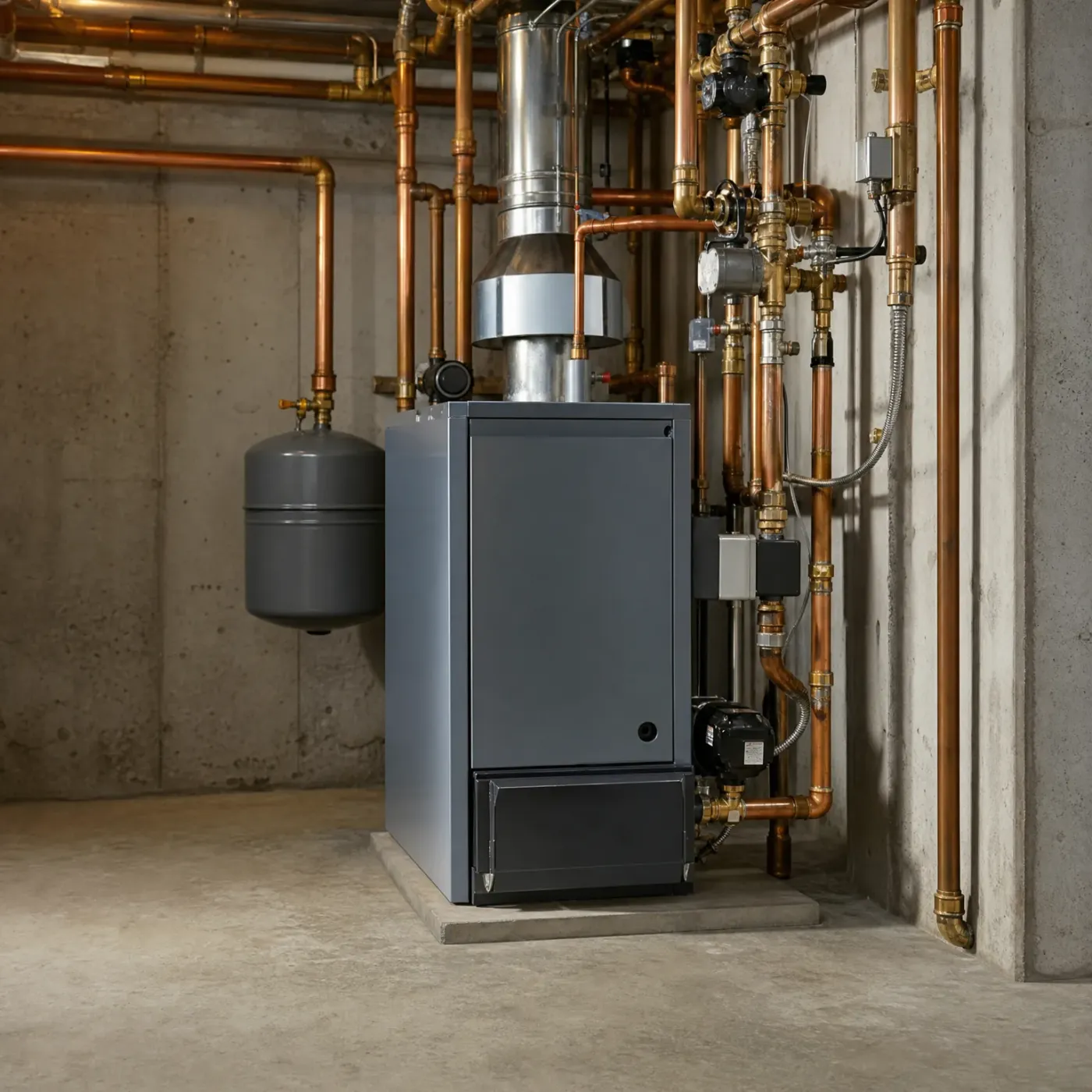
Every fitting dry, the gauge holding steady, the expansion tank doing its job. Hot water moves through the copper and back to the boiler without a drop finding its way onto the floor. This is what a basement mechanical room looks like when nothing needs attention yet.

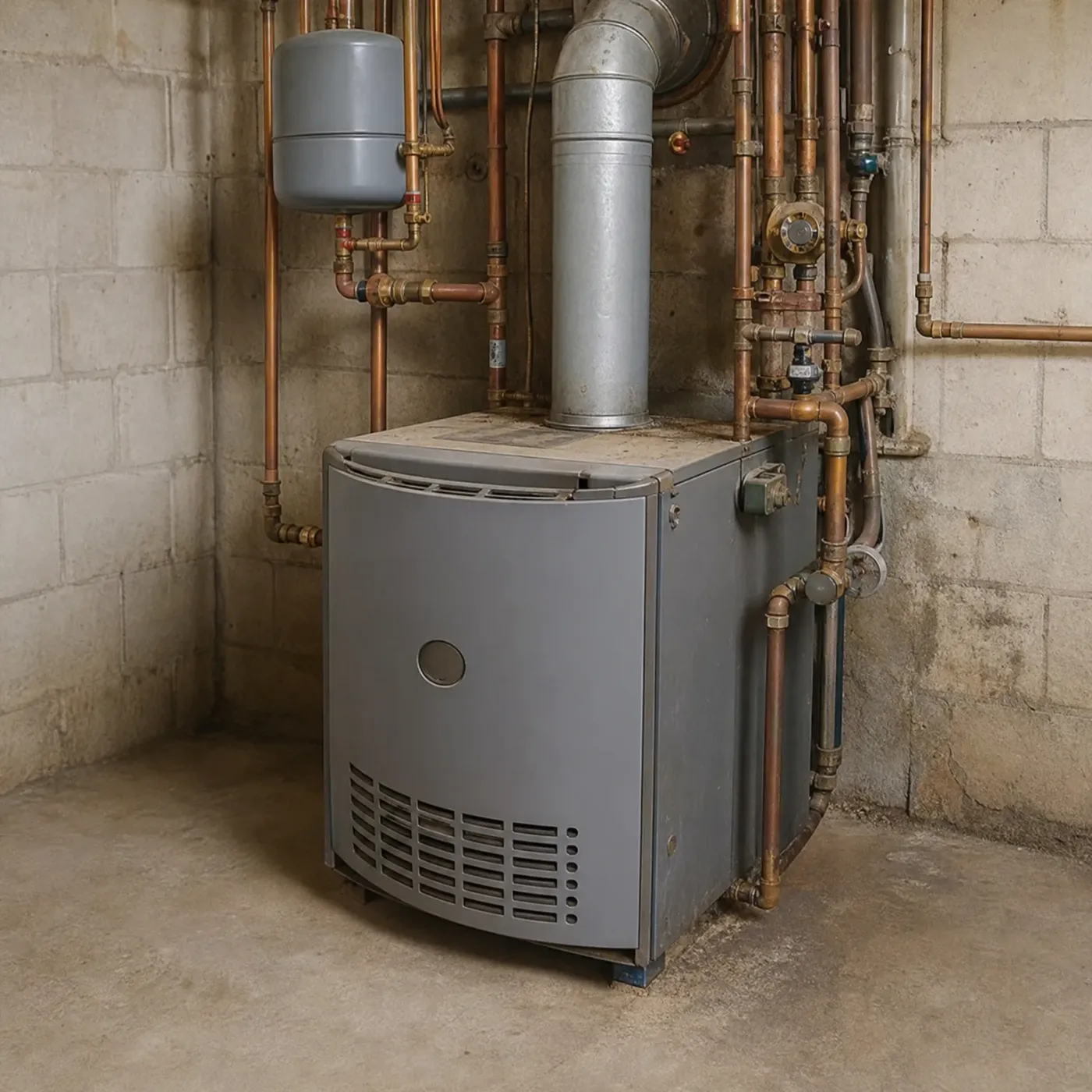
A gray residential boiler with a metal flue pipe stands in a concrete-block basement corner, surrounded by copper piping, valves and a gray expansion tank.

Water on the floor

A puddle at the base of the unit, the flue pipe rising overhead same as always, but something below it has let go. By the time you see water on concrete, a seal or a seam has already failed, not just started to.

Winter nights average 13°F statewide

At 13 below zero overnight, your boiler runs long and hard to keep the house warm, and that's extra hours of pressure cycling through every seal and fitting. A leak that seeps slowly in October can turn into a puddle on a night this cold.

NOAA nClimDiv 1991-2020 county normals weighted by homes

A man seen from behind raises his hand to wave at a woman standing in the open front doorway of a single-story house with gray shingle siding, white columns and a gabled porch entry.

A leak doesn't fix itself

Water on the floor by the boiler means a seal, a fitting, a valve, or the tank behind it has already given out. Waiting through more cold Wyoming mornings doesn't buy you anything. It gives the leak time to reach the heat exchanger or the cast iron, and that's a different repair entirely.

You don't have to figure out which part failed or find someone qualified to fix it. Once you request service, you get matched with a contractor who works on boilers like yours, and that contractor contacts you directly. No calling around, no explaining the puddle under the radiator twice, no sorting through quotes while the house stays cold. You keep the people inside warm. Someone who knows this equipment takes it from there.

A living room corner with a beige upholstered armchair holding navy and striped cushions, a small round wooden side table with a carved bowl and a potted green plant, a framed landscape picture on a pale wall, built-in shelving, and a curtained window.
A gray boiler with a metal flue pipe stands in a concrete-walled basement, connected to copper piping, a circulator pump, and a gray expansion tank on the floor.

The right pro for this job

Answer a few questions

Explain the job once and skip repeating it on every call.

Sending the form costs nothing.