Describe your boiler job, and a local pro who handles it gets in touch.
A boiler that's too big for your house short cycles. It heats the water fast, shuts off, and kicks on again a few minutes later. That wears out the burner and the controls years before they should quit, and it still leaves some rooms cold because the heat never runs long enough to spread evenly. A boiler that's too small just runs and runs on the coldest days and never catches up.
The right size comes from a heat loss calculation on your house, not from the rating on the unit you're replacing. The last one might have been sized wrong to begin with, or sized for a different furnace, different windows, different insulation than what's there now. Square footage alone doesn't get you there either. Two houses the same size in Wyoming can need different size boilers depending on how they're built.
Gas is how most homes here heat, and the boiler has to be matched to your gas line and your venting as much as to the house itself. That's a judgment a contractor makes standing in your basement or your mechanical room, not over the phone.
This is where a local contractor matters. Someone who installs boilers in this part of Wyoming every winter has seen what the cold does to undersized units and what short cycling does to oversized ones in houses just like yours. They know the sizing questions worth asking before the quote, not after the install.
When you put in a request here, it goes to one licensed contractor local to you, not a handful of companies competing for the job. That contractor will look at your house and reach out to you directly about what it actually needs.
What size boiler do I need for my house in Wyoming?
You've got a boiler to replace or you're putting one in for the first time, and you want a number before a contractor shows up. Winters in Wyoming push a boiler hard for months at a time, so getting the size right matters more here than somewhere mild. The furnace salesman rule of thumb or a guess based on square footage alone won't get you there. You want the actual math.
Sizing comes from a heat loss calculation, not your square footage
The right boiler size comes from a room by room heat loss calculation, the kind contractors run using Manual J. It accounts for your square footage, but also your insulation, your windows, your ceiling height, and how cold it gets where you live. Wyoming winters are cold enough that this calculation carries more weight than it would in a milder state. A house here loses heat fast when it's below zero outside, and a boiler sized on square footage alone usually comes out too big to cover that without short cycling, or too small to keep up on the coldest nights. The calculation gives a contractor a number in BTUs that matches your house, not a generic estimate.
A heat loss calculation is what actually sizes a boiler, and it has to account for your house, not a rule of thumb based on square footage. Two homes the same size in the same Wyoming town can need different sized boilers if one has more windows, less insulation, or higher ceilings. Guessing wrong in either direction costs you: too big and the boiler short cycles, too small and it can't keep up on the coldest nights when you need it most. A local contractor who installs boilers in homes like yours through winters here has already seen what that calculation looks like for houses on your street, not just in theory. That matters more than it sounds like, because sizing a boiler for a Wyoming winter is a different job than sizing one for a mild climate, and someone who only sees it occasionally is more likely to default to a guess. One contractor looking at your actual house, with your actual heating bills and layout in hand, is what gets you a number you can trust before anything gets installed.
Square footage alone can't size a boiler because it says nothing about how fast the house loses heat. A heat loss calculation adds up the walls, the windows, the ceiling, and the air that leaks out, room by room.
Two houses with the same square footage can need boilers with a real difference in output once that math is done. The number on the nameplate should come from that calculation, not from the size of the house alone.
Sizing it off the old boiler
If the one you're replacing kept the house warm, it's tempting to just match the number on the nameplate. But that boiler may have been oversized from the start, a common result when sizing was done by square footage or by a contractor rounding up to be safe. If insulation or windows have changed since it went in, the old number is even less reliable now. Matching it carries the same short cycling risk forward into the new install, and you lose the chance to correct a problem that may have been there since day one.
Sizing it from a heat loss calculation
A heat loss calculation starts fresh. It looks at your house as it is now, the walls, the windows, the insulation, and comes up with the number your house actually needs to stay warm on the coldest day of a Wyoming winter. It doesn't carry over anyone else's guesswork, including whatever sizing went into the boiler you have now. A contractor who runs this for Wyoming homes every season knows how the numbers here tend to land, and what usually gets missed in a quicker estimate.
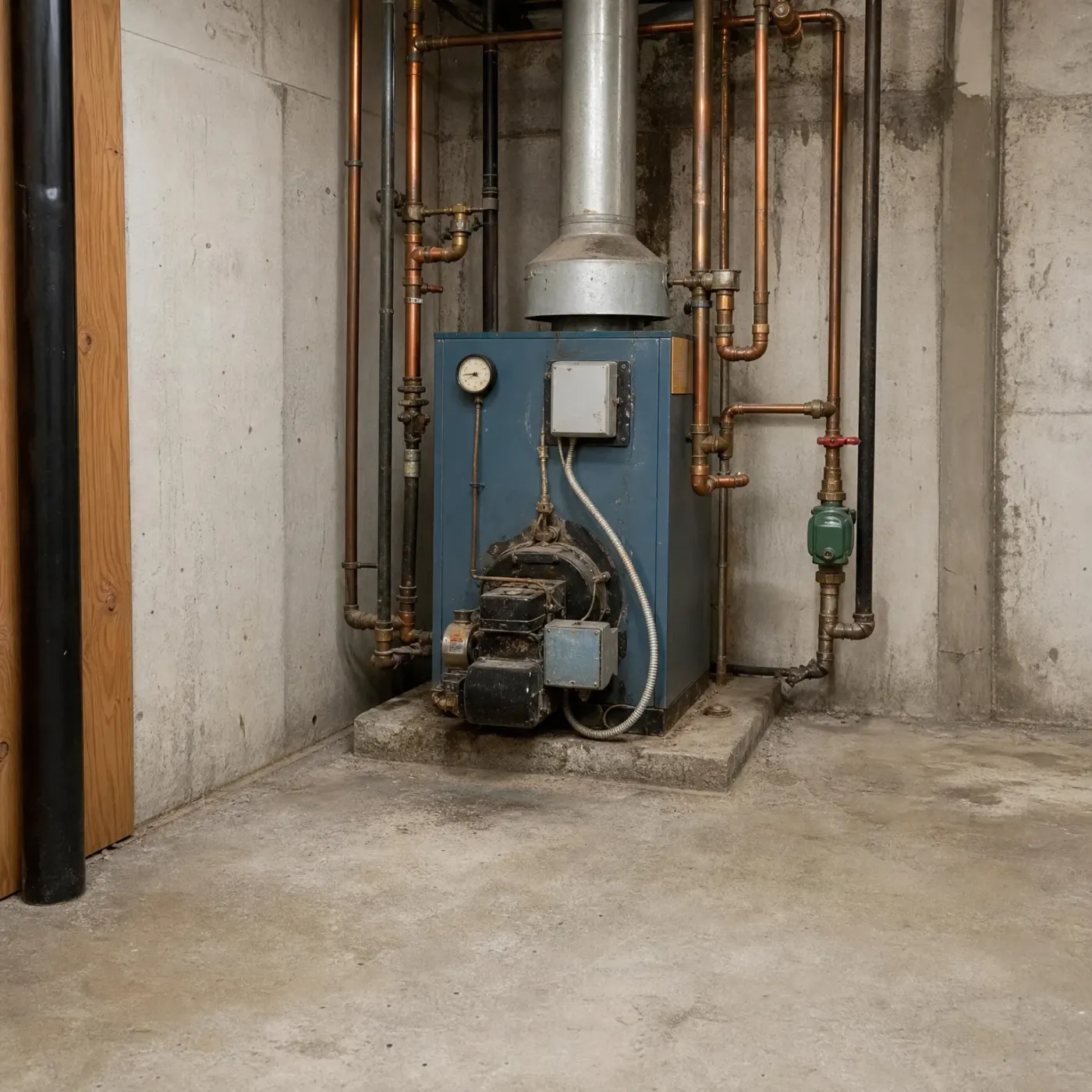
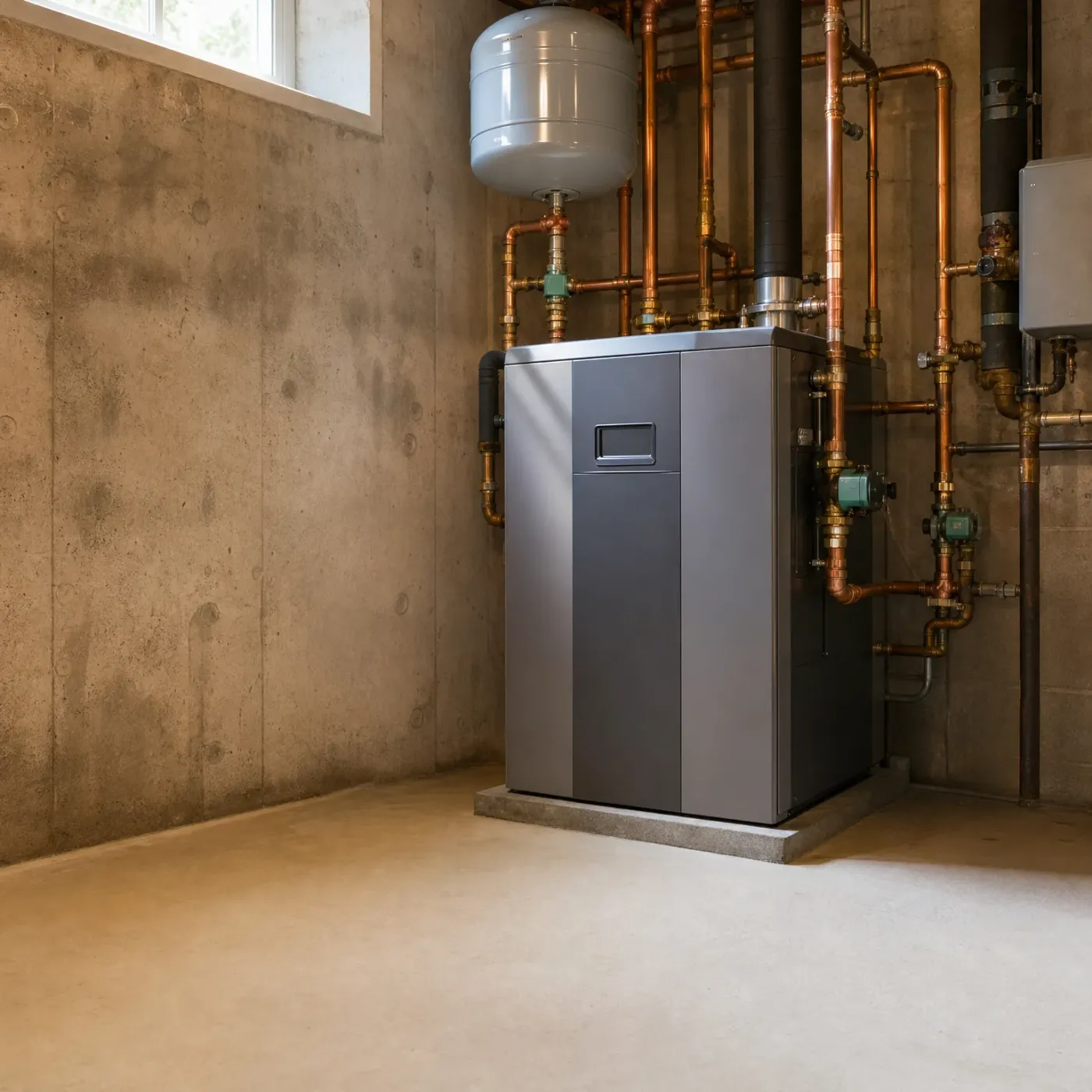
Before you get your boiler installationAfter you get your boiler installation
Short cycling
A boiler too big for your house heats the water fast, shuts off, then fires again a few minutes later. That wears out the burner and controls long before they should quit.
On a typical winter night, it's averaging 13°F out there once you're away from town centers. Your boiler has to make up for that heat loss hour after hour until morning, which is exactly why the load calculation has to be right for your house, not just a stand-in for the old unit.
NOAA nClimDiv 1991-2020 county normals weighted by homes
The right size for your boiler comes from a heat loss calculation on your house, not from the square footage, not from the old boiler's nameplate, and not from a guess made to beat a cold night. Get that number right and the boiler runs long, steady cycles that hold the house even, and the burner and controls last as long as they're supposed to. A licensed contractor working in Wyoming sees these winters every year and knows what a Wyoming house actually loses in a night that drops to 13°F. When you request a match, you're connected with one contractor local to you, not a handful of companies competing for the job, so you can talk through your house with someone who already knows the climate he's sizing for. That's the whole answer: the number on paper matters less than the work that goes into getting it right, and that work is what a proper installation is for.