Skip collecting and comparing quotes for the new boiler.
A gas boiler in Wyoming typically runs 15 to 20 years before it needs replacing. Yours might go longer if it's been maintained well, or shorter if it's been running hard on cold nights with little attention. Summers here are hot and dry, so your boiler isn't working against the heat the way an AC system would. Most of its wear comes from winter, year after year, cycling on through the cold months.
If yours is getting old, or it's already failing, the question isn't really how long boilers last. It's what to do about yours, now, in your house.
That usually means finding someone who can look at the actual unit and tell you whether it's worth repairing or whether it's time to replace it. On your own, that means searching for contractors, calling a few, explaining the same problem over and over, then waiting on quotes to compare line by line. It takes time you probably don't have to spare, especially if your heat is already acting up.
This page connects you with one licensed contractor near you in Wyoming, someone who installs and services boilers in homes like yours every winter. They know what tends to fail first in this climate, what a gas boiler should cost to run on the cheap power rates here, and what a straight installation looks like versus one complicated by old piping or venting. Because it's one contractor, not five, you're not fielding a round of calls from companies competing for the job. You're talking to someone who can actually look at your system and tell you where it stands.
The details below cover what shortens a boiler's life, what signs mean it's time to replace rather than repair, and what to expect going into an install. The button on this page is how you get a contractor out to look at yours.
A gas boiler in Wyoming typically runs 15 to 20 years before it needs replacing. Most of the wear comes from the winter months, when the boiler runs for hours at a stretch on the coldest nights. Summers here are hot and dry, so the boiler sits idle for a good stretch of the year, which gives it a rest a boiler running year-round wouldn't get. Still, 15 to 20 years is a range, not a guarantee. A boiler that's been flushed and serviced on schedule can push past 20. One that's been ignored, or that's been working overtime because the house loses heat fast, can start failing closer to 12 or 13. If yours is already past 15, it's worth having someone look at the heat exchanger and the controls before another winter puts real demand on it. Catching a cracked exchanger or a failing pump in the fall beats finding out on the coldest night in January.
Before you get your boiler installationAfter you get your boiler installation
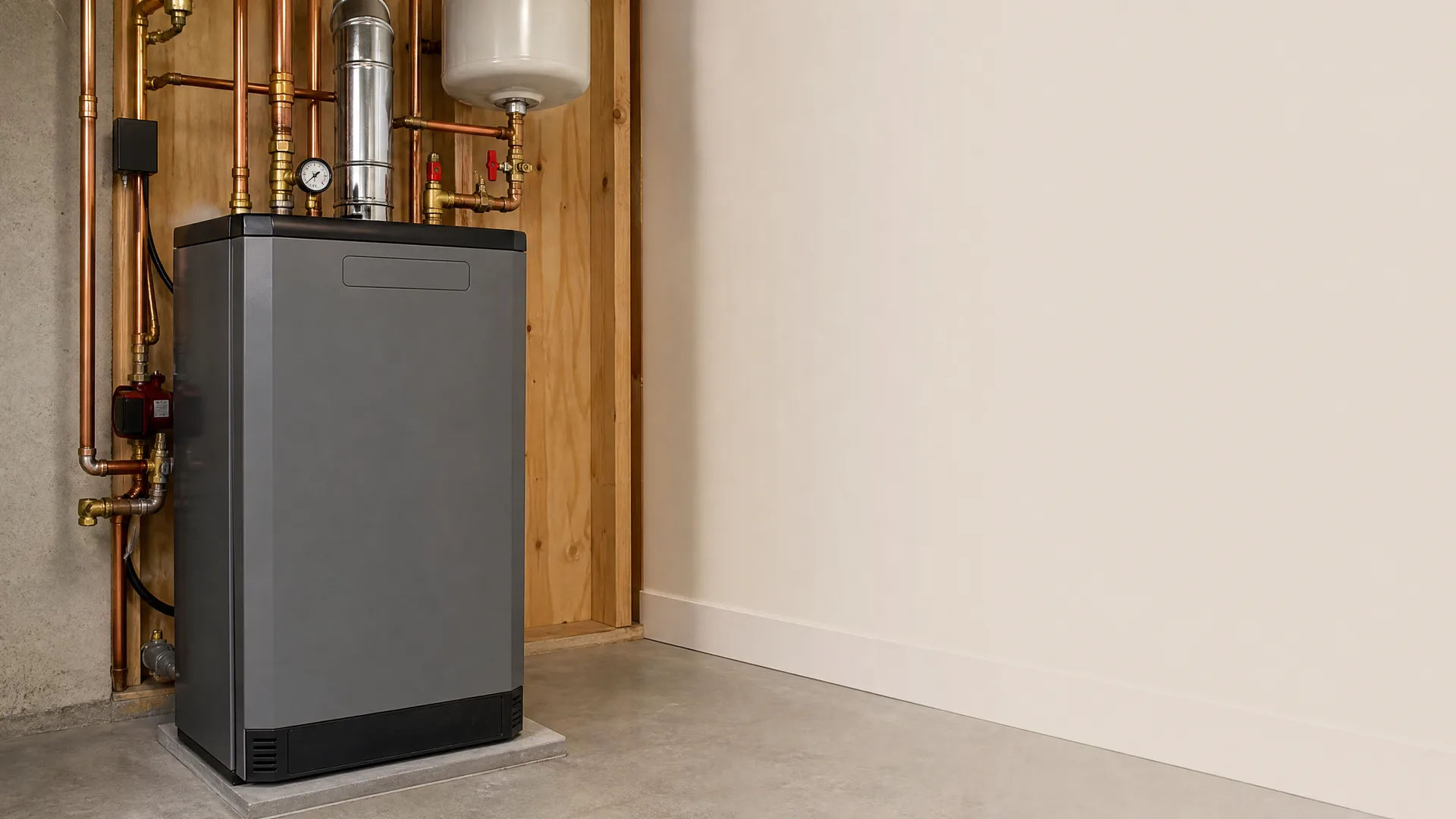
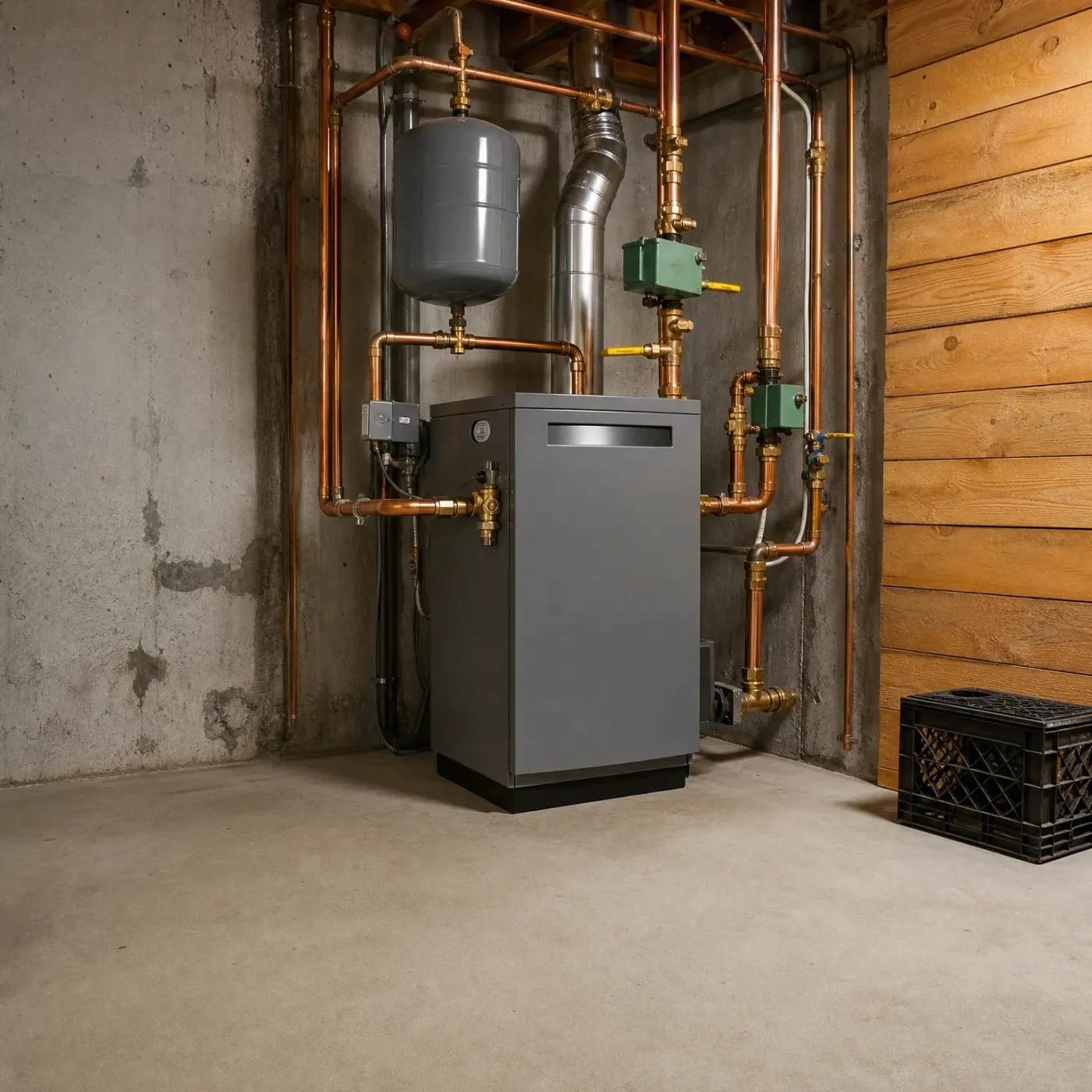
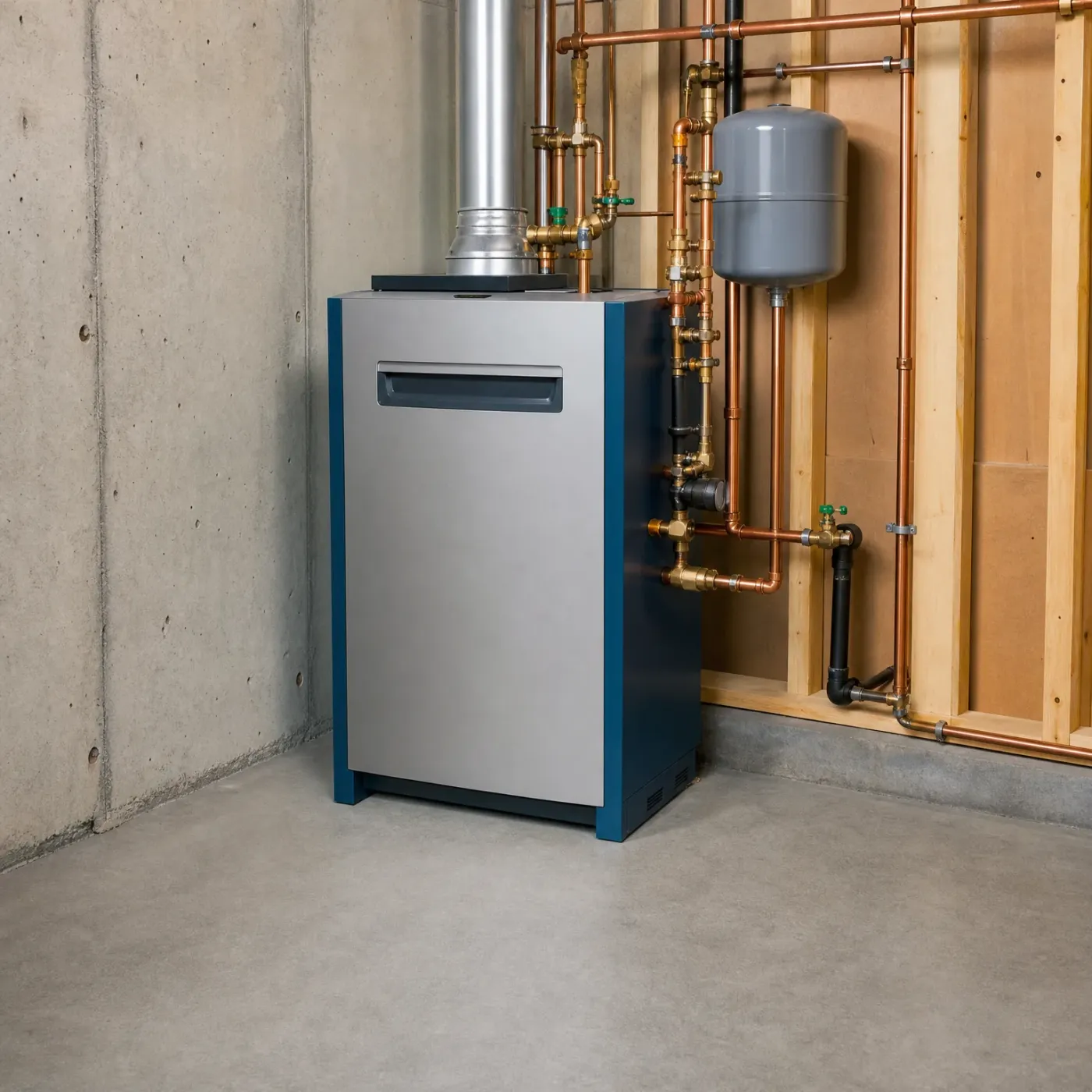
Running the way it should
A boiler like this heats evenly on a cold night and shuts off clean when the thermostat is satisfied. The pipes and fittings stay dry, the expansion tank holds pressure, and the flue draws exhaust straight out above the unit.
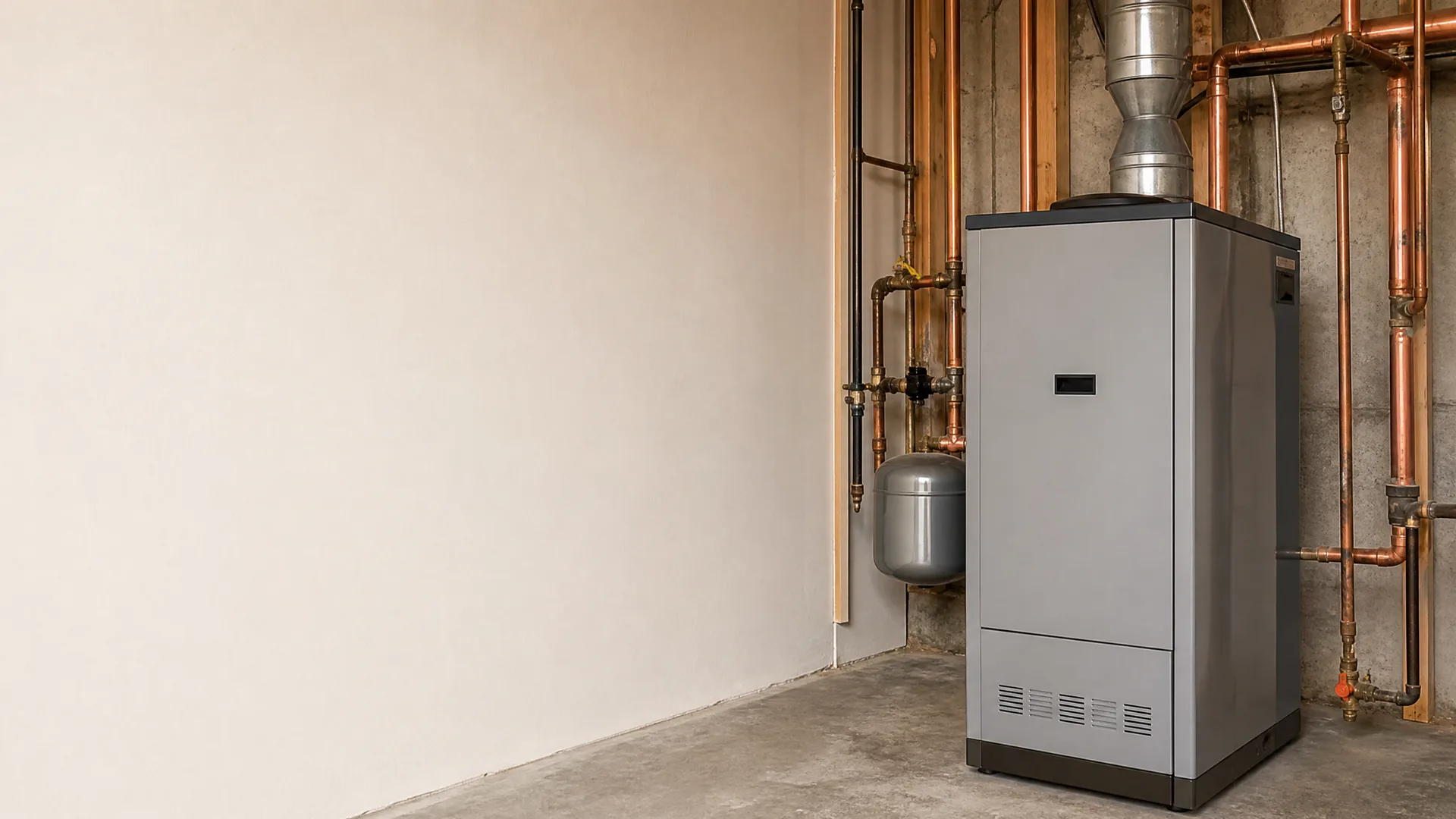
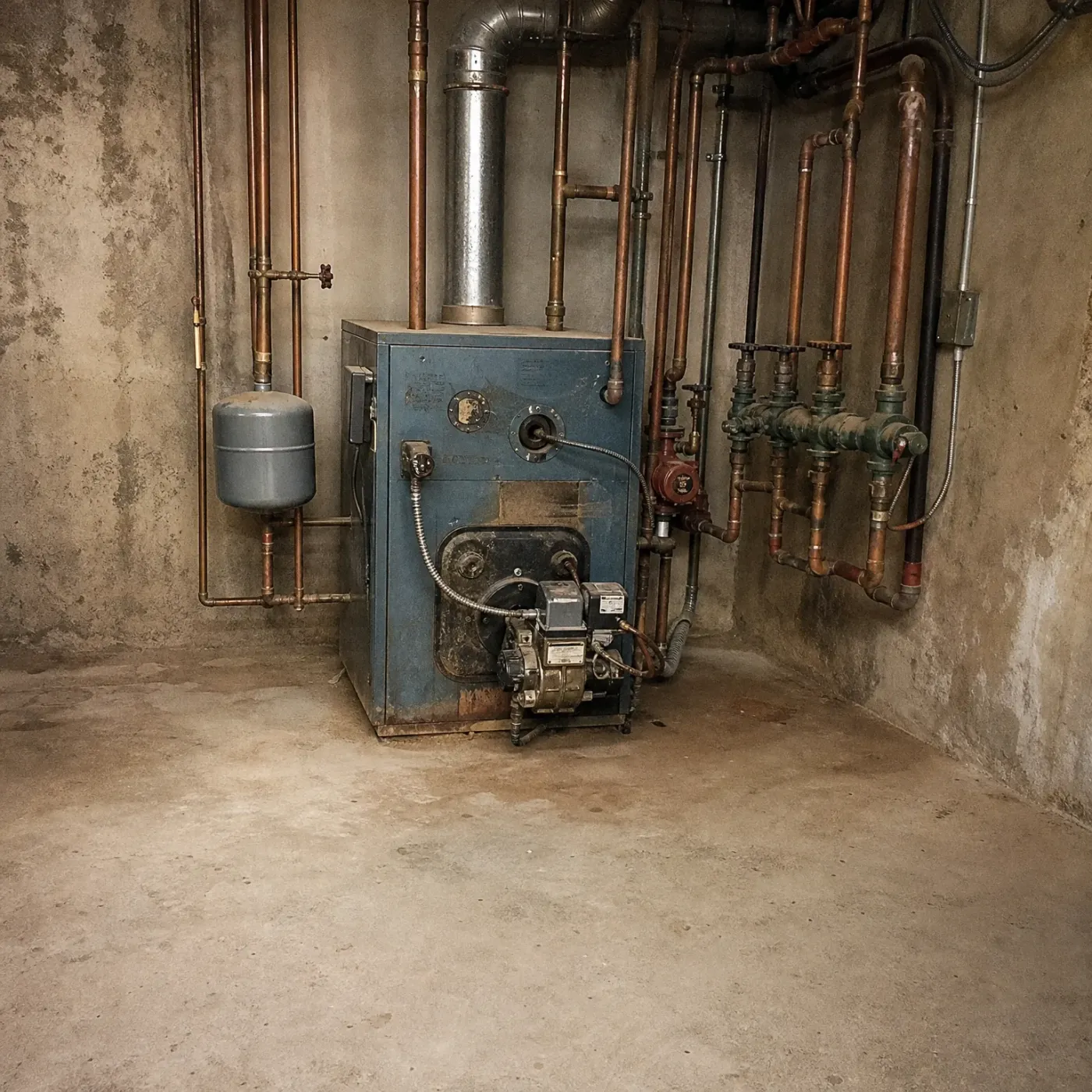
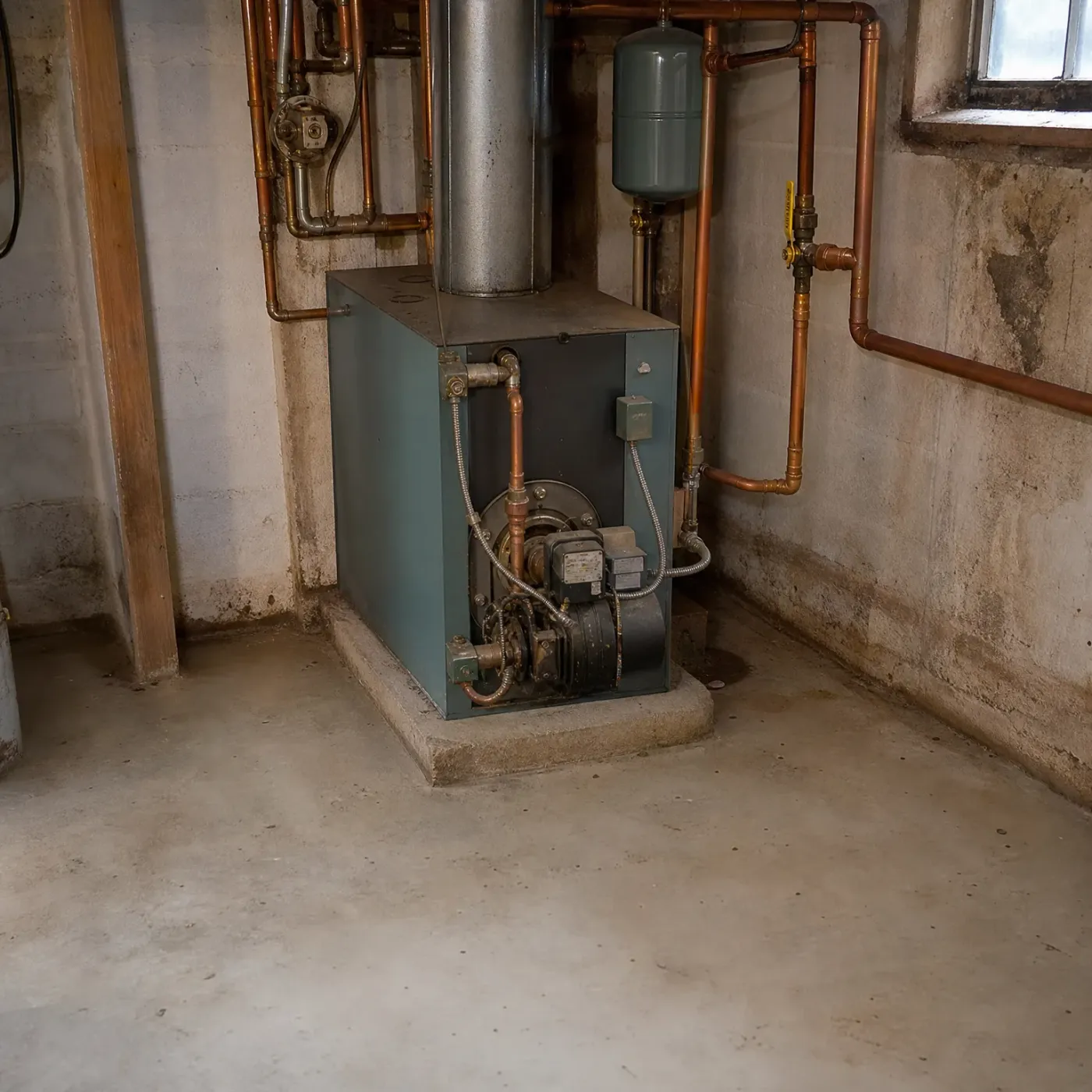
Running on borrowed time
An old boiler like this one keeps working until it doesn't. Scale builds inside the pipes, fittings weep, and the expansion tank loses its charge. Once it starts failing on the coldest nights, you're the one who feels it first.
Repair the Boiler or Replace It
Keep Repairing
A boiler past 15 years can still run fine on a rebuilt igniter or a new circulator pump if the heat exchanger is sound.
Repairs cost less upfront, which matters if the breakdown lands in the middle of a cold snap and the household needs heat back fast.
A local contractor who's serviced the unit before knows its history and can tell you if this repair is the third one this winter or the first.
Parts for older cast iron boilers are often still available, so a leak at a fitting or a bad zone valve doesn't mean the whole system is done.
If the boiler has been maintained well and the repair is minor, like a thermocouple or a pressure relief valve, waiting makes sense.
Replace Now
A boiler nearing 20 years that needs a second or third repair in a season is telling you the heat exchanger or the controls are wearing out together.
New installations run more efficiently on gas, which matters here since most homes in Wyoming heat with it through the cold months.
Replacing before a full failure means you choose the timing, instead of finding out the boiler is done on the coldest night of January.
A cracked heat exchanger or a failing flue isn't something to patch, since both can let exhaust into the house instead of out through the vent.
A new boiler installed now means you aren't gambling on how many more winters the old one has left in it.
Idle all summer, working all winter
A boiler in Wyoming doesn't wear down evenly across the year. Through the hot, dry summer it sits off, pilot or igniter quiet, pipes holding still pressure. Then October or November comes and it has to carry the house through long cold stretches without much break. That start-stop pattern, long rest then hard use, puts more strain on the heat exchanger and the circulator pump than steady, moderate running would.
What shortens the 15 to 20 years
Hard water left in the system scales the heat exchanger over time, making it work harder to pass heat into the house. A thermostat set low overnight then pushed high on the coldest mornings makes the burner cycle more than it would with steadier settings. Sediment in the bottom of the tank, if the boiler has one, blocks heat transfer the same way. None of this happens overnight, but it adds up faster than a boiler that gets flushed and checked before each winter.
What an aging boiler costs you at home
You'll likely notice it first on the coldest nights, the ones that matter most. A boiler past its years takes longer to bring rooms up to temperature, and some rooms may not get there at all. The pilot light or igniter can start acting up right when you need heat the most, usually a hard freeze in January. If you've got kids or older folks at home, that's not a gamble worth taking twice.
Once you decide to replace it, the work you'd normally face disappears. No calling around to five companies, repeating the same details about your boiler's age and your gas line each time, then sitting with quotes trying to guess who's honest. You get matched with one licensed contractor in Wyoming, someone who installs these year-round and knows which models hold up through the hard winters here.
Skip calling around
Your request goes to one pro, not a list of companies.
Skip searching for a boiler pro and answer a few questions instead.
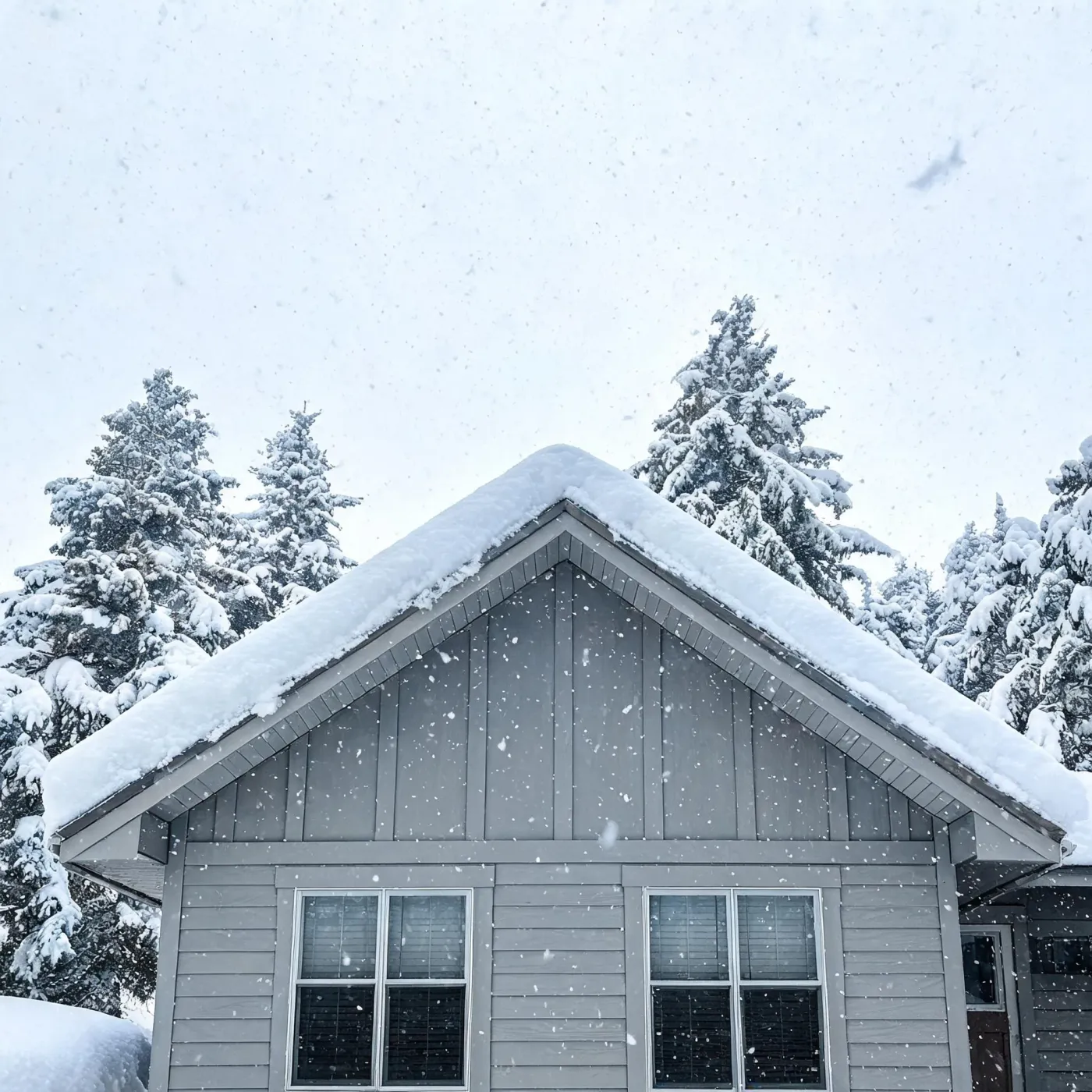
13°F is the average overnight low across a Wyoming winter, not the worst of it. Your boiler has to recover from that most nights for months, not just push through the odd cold snap, and that steady demand is what wears down a heat exchanger over the years.
NOAA nClimDiv 1991-2020 county normals weighted by homes
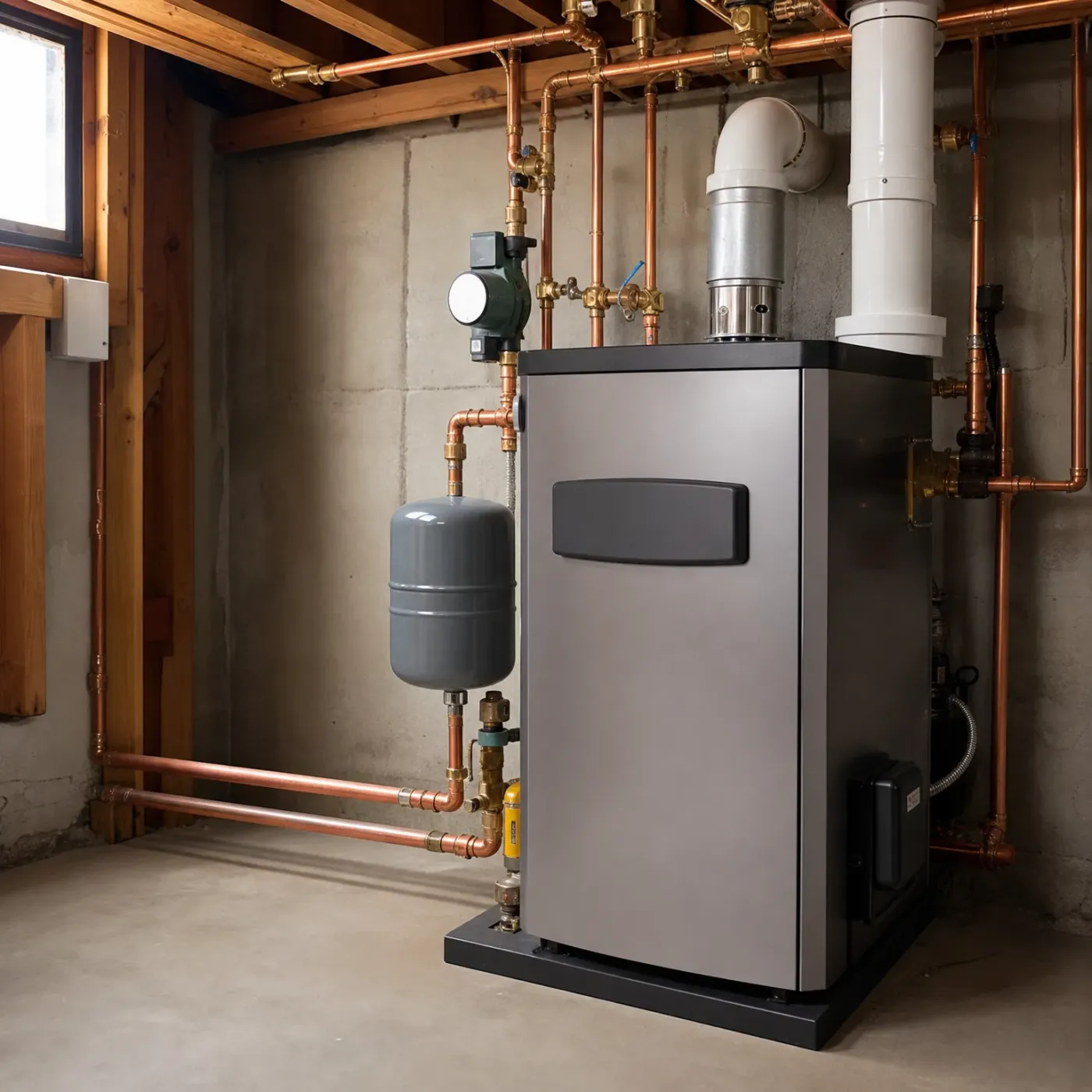
Running clean
This is a boiler doing its job. The copper piping stays tight at every brass valve, the expansion tank holds its charge, and the flue vent carries exhaust straight up without leaking at a seam. Zone boxes switch heat room to room without the unit straining to keep up.
Past its years
This is what age looks like on a boiler. The flue pipe is galvanized steel, not stainless, and corrodes from the inside where you can't see it. Old shut-off valves seize or weep, zone valves stick, and the circulators near the manifold work harder to push water through pipes that have scaled up over the years.
What are you noticing about your boiler right now
Maybe it's taking longer to get the back bedroom warm on a cold morning, or the boiler is running almost constantly overnight instead of cycling off once the house is up to temperature. You might hear a kettle-like rumbling from the heat exchanger, or notice water or rust-colored stains near the base of the unit. The pilot or igniter might need a few tries to catch. None of this means it's done, but each sign is the boiler working harder for less heat. Left alone through another Wyoming winter, that strain is what turns a repair into a full replacement, usually on the night you need the heat most.
Winter nights average 13°F statewide, according to NOAA. That's the number your boiler is working against most nights from November through March, not just on the handful of really cold snaps people remember. Every time the house drops toward that overnight low, the boiler has to bring it back up and hold it there until morning. You'll feel that most in the room farthest from the boiler, the one that's slowest to warm and first to cool back down. A furnace that's past its years will start losing that race, cycling longer and still leaving that room shy of comfortable.
NOAA nClimDiv 1991-2020 county normals weighted by homes
A boiler like this holds steady pressure in the copper lines and vents exhaust straight up through the flue without a leak at the seams.
This one sits on an oil-fired setup where corrosion and pressure loss at the fittings often show up first, long before the heat exchanger quits.
Where Your Boiler Stands
A gas boiler in Wyoming lasts about 15 to 20 years, with winter nights doing most of the wear.
Overnight lows that average 13°F push the heat exchanger hard for months, not just during cold snaps.
Longer cycle times, a boiler that won't shut off, and rooms that stay cool are signs the years are catching up.
Keeping a sound heat exchanger running with repairs works until the pressure, pilot, or ignition problems stack up.
A boiler running clean holds pressure in the lines, vents straight through the flue, and heats rooms evenly.
Fifteen to twenty years is the range for a gas boiler in Wyoming, and winter is what spends those years down. The average overnight low across the state sits near 13°F, and a boiler built to hold a house against that has to recover from it most nights between November and March. That's a different kind of load than a few hard freezes a year. It shows up as a heat exchanger working harder each winter than the one before, even if nothing is broken yet.
What you're noticing at home tells you where the boiler actually is in that span. Longer cycles, a unit that won't shut off once the house is warm, a back room that never quite gets there. Those are the heat exchanger and the ignition system telling you the easy years are behind it. None of that means replacement is due tomorrow. A boiler with a sound heat exchanger can keep going on a rebuilt igniter or a new circulator pump, and that's a reasonable way to run it for a while longer.
What changes things is when pressure, pilot, or ignition problems start showing up together instead of one at a time. That's usually the point where a boiler running clean, holding pressure in the lines, venting straight through the flue, heating every room evenly, stops being what you've got and starts being what you're chasing.
Boiler Installation
Describe it once
One installer gets your project, so there's no bidding war over it.