Tell us about the job
Takes about a minute. No obligation.
A boiler repair in Uinta County asks a contractor to work out how much of what failed was already close to failing. Homes in Uinta County, WY run heat about ten months a year, from September through June. The burner, the heat exchanger, and the ignition components cycle repeatedly across that run, and wear builds in those parts specifically, not evenly across the whole unit. By the time a homeowner calls, a contractor opening the system often finds a primary fault alongside secondary components that are close behind it. Quoting only the obvious repair misses that picture, and a thorough diagnosis prices accordingly.
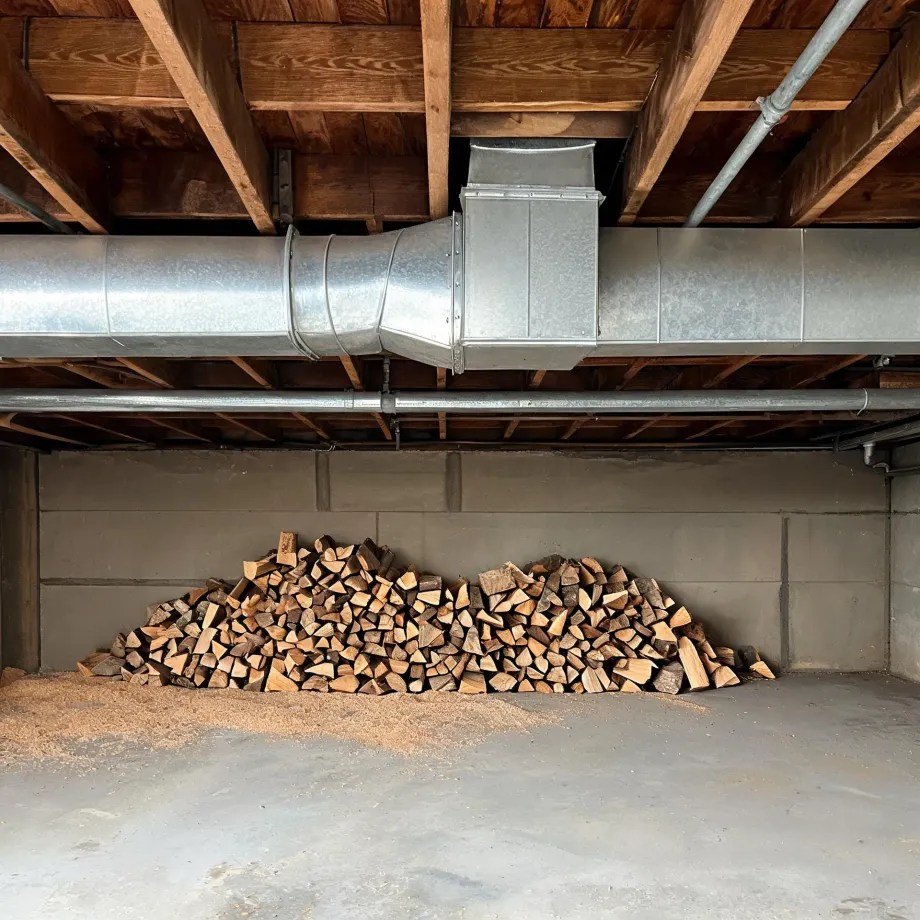
Older piping, zone valves, and expansion tanks in a house carry the wear of every system that ran through them, and a boiler swap does not reset that. Half the homes in Uinta County, Wyoming were built in 1984 or earlier (2020-2024 ACS 5-year). When a contractor opens a boiler in stock like this, the distribution side often shows what drove the failure: a zone valve that held back flow, a relief valve that vented repeatedly, sediment that settled over years of cycling. Parts for a unit of this vintage are the question, and so is whether the circulator and the piping it feeds are worth keeping once the boiler itself is priced.
The Parts of a Boiler a Contractor Checks First
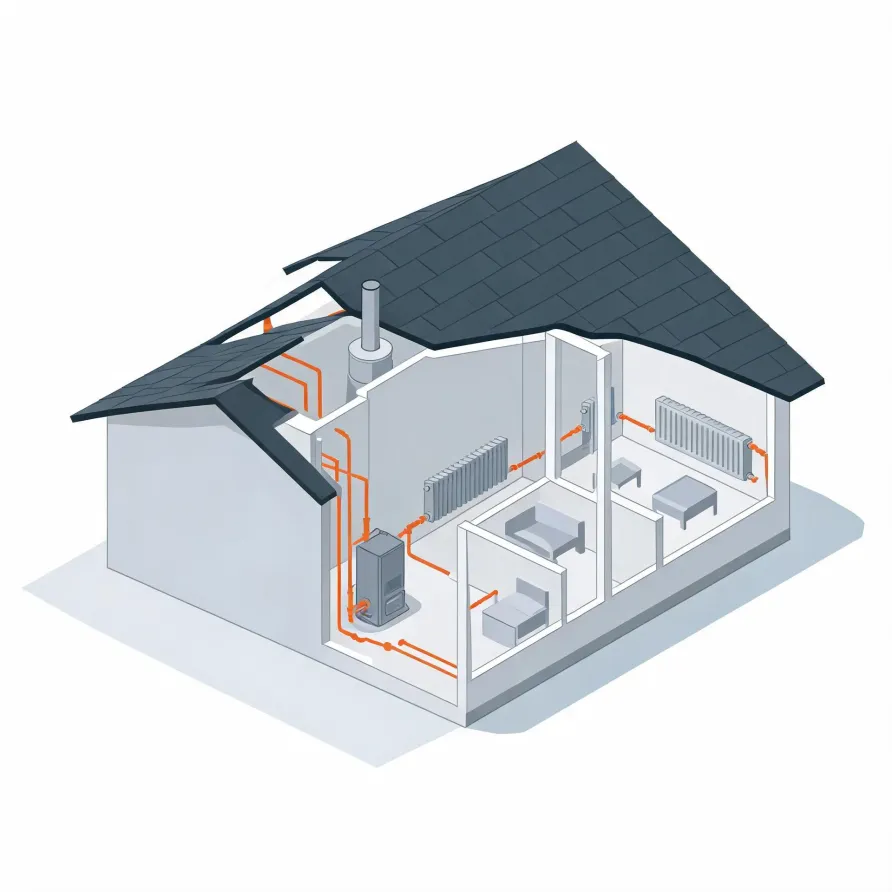
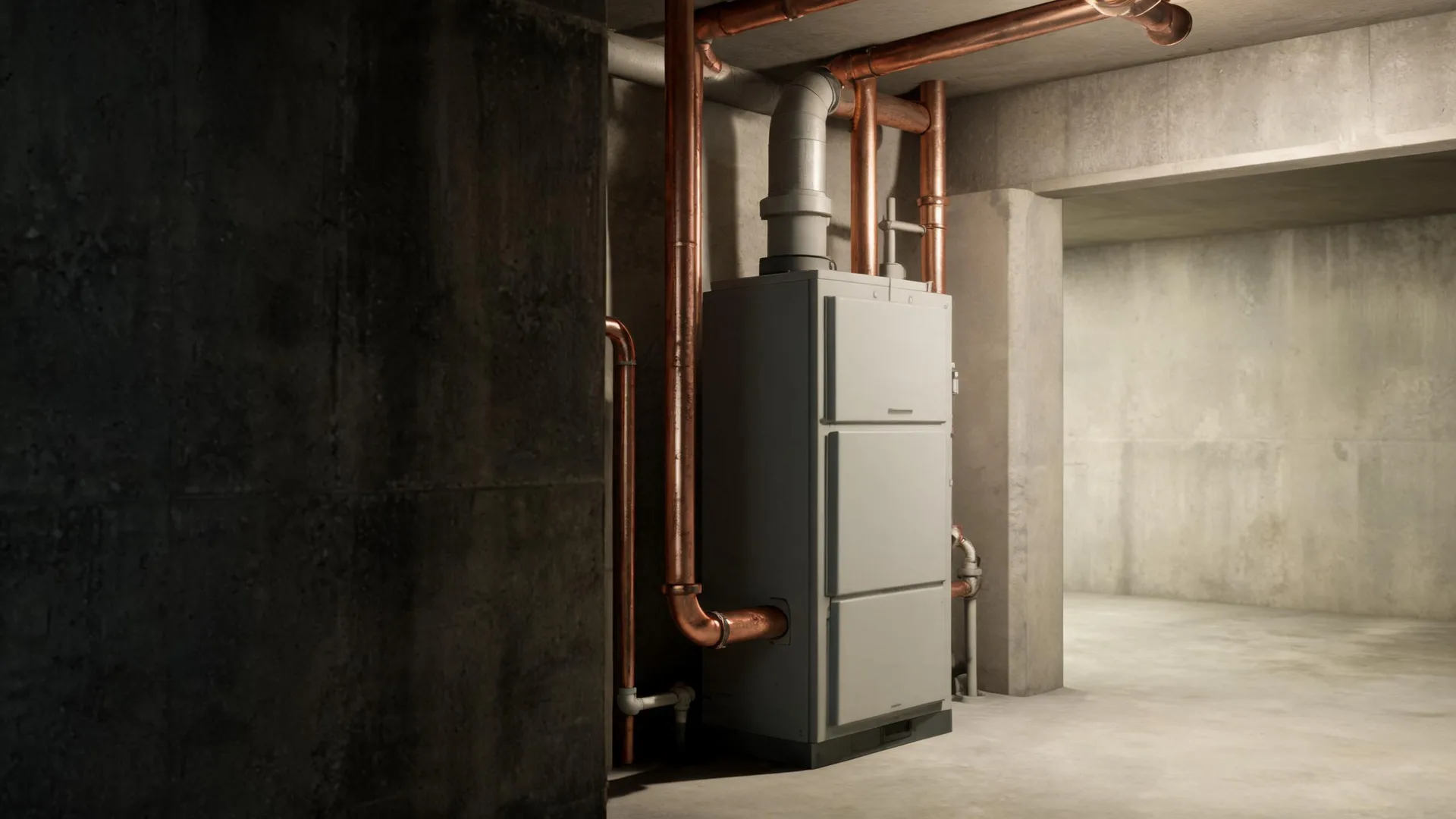
The boiler itself sits in the basement or mechanical room and is the piece a contractor goes to first. It heats water and pushes it through the system. When heat stops reaching the rooms, or pressure swings, or the unit cycles on and off without settling, the boiler's burner, heat exchanger, or pressure relief valve is where the diagnosis starts.
From the boiler, pipes carry hot water to radiators or baseboard units in each room, and a circulator pump keeps that water moving. The expansion tank, usually mounted close to the boiler, absorbs pressure changes as water heats and cools. A failed pump or a waterlogged expansion tank will show up as uneven heat or banging pipes before anything else.
The drawing shows a typical layout, and a licensed contractor determines which components apply to your specific system.
Find a contractor in Uinta CountyUinta County, by the numbers
62 severe weather events were recorded in Uinta County, Wyoming between 2015 and 2024.
NOAA National Centers for Environmental Information, Storm Events Database, bulk CSV export, events 2015-01-01 through 2024-12-31.Half the homes in Uinta County, Wyoming were built in 1984 or earlier (2020-2024 ACS 5-year).
U.S. Census Bureau, 2020-2024 American Community Survey 5-Year EstimatesUinta County, Wyoming holds 8,901 housing units (2020-2024 ACS 5-year).
U.S. Census Bureau, 2020-2024 American Community Survey 5-Year EstimatesOwners occupy 76.6% of the occupied homes in Uinta County, Wyoming (2020-2024 ACS 5-year).
U.S. Census Bureau, 2020-2024 American Community Survey 5-Year EstimatesSevere Weather Events in Uinta County
Hard weather puts real hours on a boiler. Every pressure spike, power fluctuation, and temperature extreme that moves through Uinta County is a load the equipment absorbs, and that accumulated stress is what drives repair needs over time.
62 severe weather events, 2016–2024. Source: NOAA National Centers for Environmental Information, Storm Events Database.