Tell us about the job
Takes about a minute. No obligation.

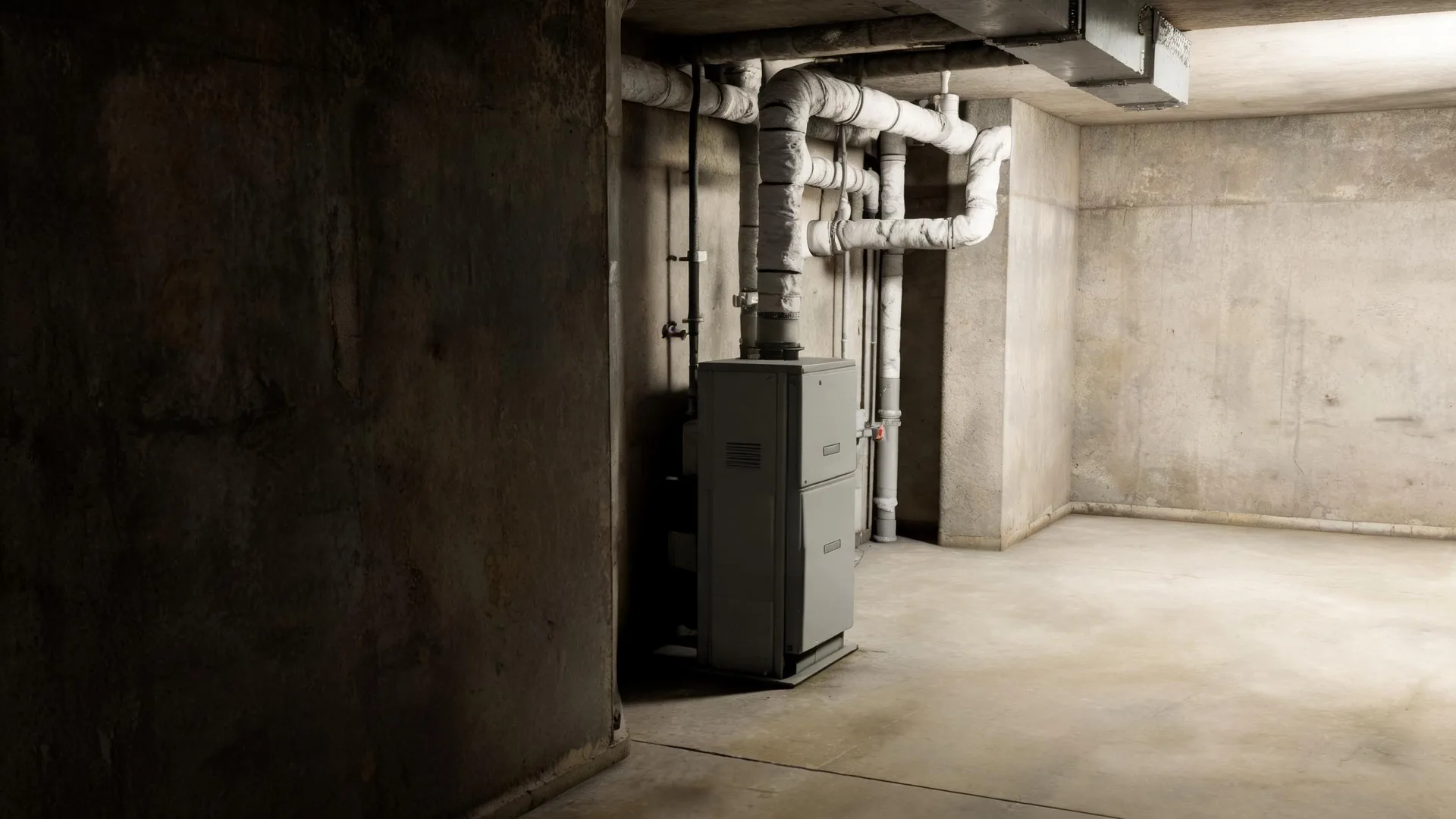
Sizing a replacement boiler in Big Horn County starts with what the burner and heat exchanger have already been asked to carry. Homes in Big Horn County, WY run heat about ten months a year, from September through June. A unit that is undersized for that load will cycle harder and more often than it was rated for, and the heat exchanger bears that strain directly. Contractors quoting a new installation here factor in that reality when they pull the load calculation, because a boiler that fits the house on paper but not the season will fail well before its rated service life.
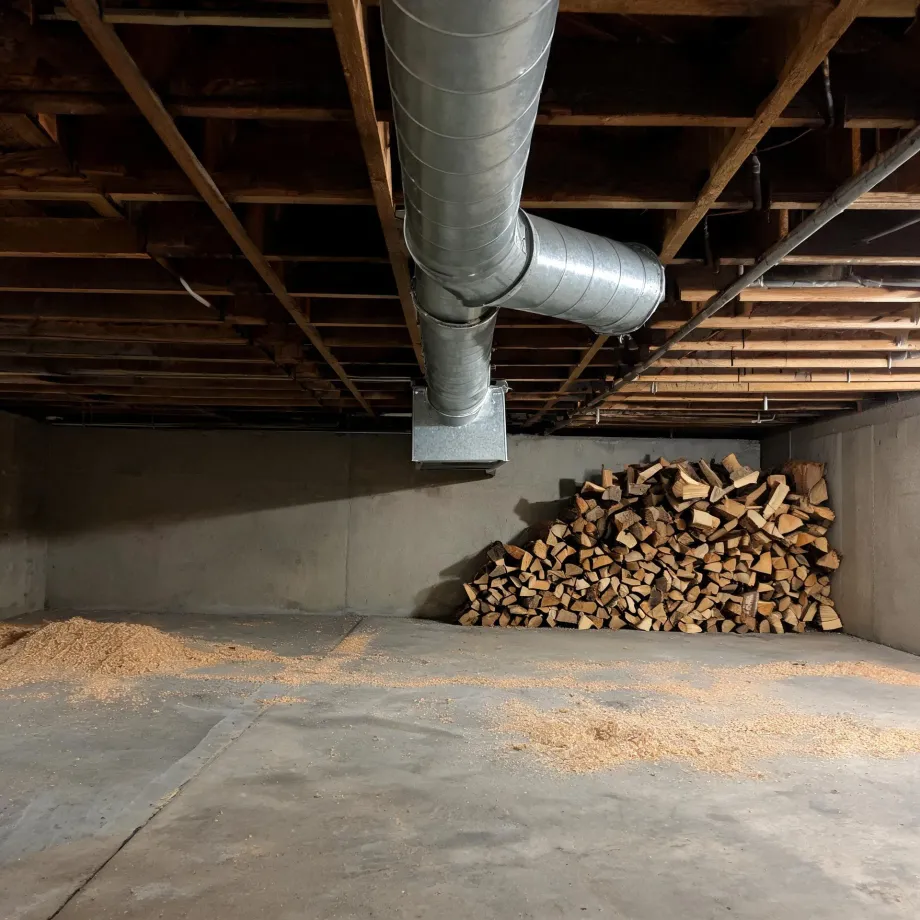
Ductwork laid down for one kind of heat does not automatically carry another. Half the homes in Big Horn County, Wyoming were built in 1968 or earlier (2020-2024 ACS 5-year). A contractor installing a new boiler in this county has to assess what the existing distribution system was built for and whether it moves air the way the new equipment needs, before anything else gets priced. That assessment is where the job either straightens out or gets complicated, and the electrical side raises the same question about capacity. What a house already has decides the scope.
What Gets Installed With a New Boiler
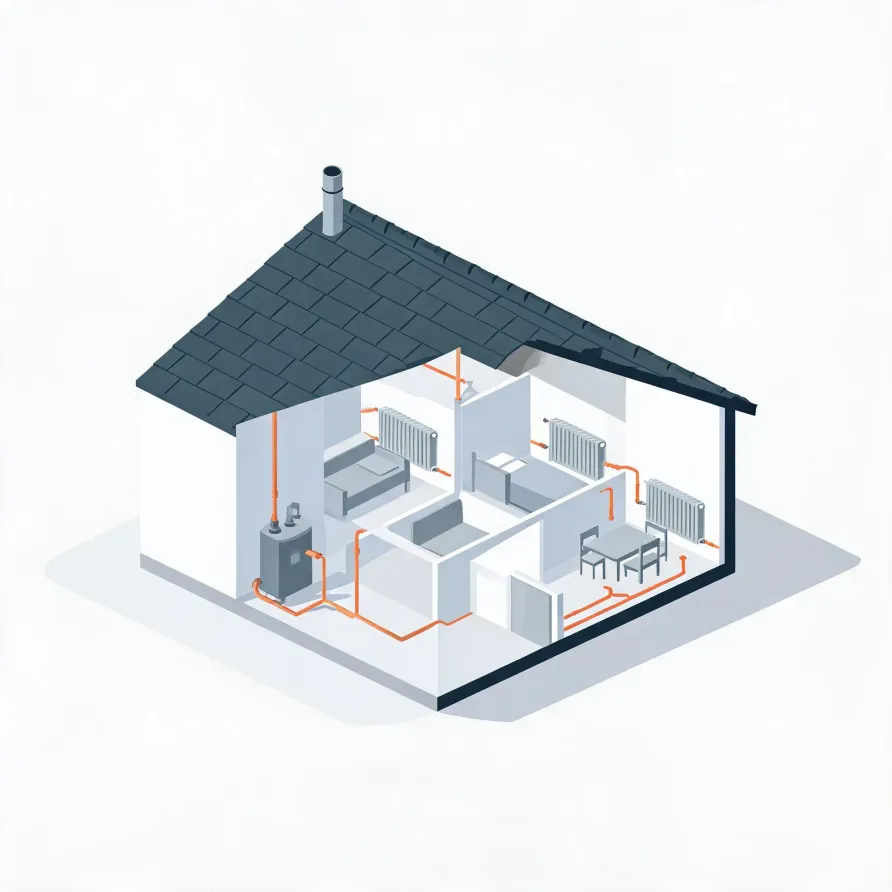
The boiler itself sits in a mechanical room, basement, or utility closet and is the unit that heats water and sends it through the system. Attached to it are the burner assembly, the heat exchanger, and the controls that govern water temperature and firing cycles. These components arrive and are set in place as a unit.
From the boiler, supply and return pipes run through the house to the heat emitters, which are the radiators, baseboard units, or radiant floor loops that release heat into each room. A circulator pump, mounted on the piping near the boiler, moves water through that loop. An expansion tank, also plumbed close to the boiler, absorbs pressure changes as the water heats and cools.
The drawing shows a representative layout, and a licensed contractor determines exactly which components and configurations apply to this house.
Find a contractor in Big Horn CountyBig Horn County, Wyoming, by the numbers
97 severe weather events were recorded in Big Horn County, Wyoming between 2015 and 2024.
NOAA National Centers for Environmental Information, Storm Events Database, bulk CSV export, events 2015-01-01 through 2024-12-31.Half the homes in Big Horn County, Wyoming were built in 1968 or earlier (2020-2024 ACS 5-year).
U.S. Census Bureau, 2020-2024 American Community Survey 5-Year EstimatesBig Horn County, Wyoming holds 5,372 housing units (2020-2024 ACS 5-year).
U.S. Census Bureau, 2020-2024 American Community Survey 5-Year EstimatesOwners occupy 75.9% of the occupied homes in Big Horn County, Wyoming (2020-2024 ACS 5-year).
U.S. Census Bureau, 2020-2024 American Community Survey 5-Year EstimatesSevere Weather Events in Big Horn County
Boilers in Big Horn County work against whatever the climate puts on them, and weather extremes accelerate wear, drive demand, and raise the stakes on proper sizing. A unit installed for these conditions is a different conversation than one installed somewhere mild.
97 severe weather events, 2015–2024. Source: NOAA National Centers for Environmental Information, Storm Events Database.